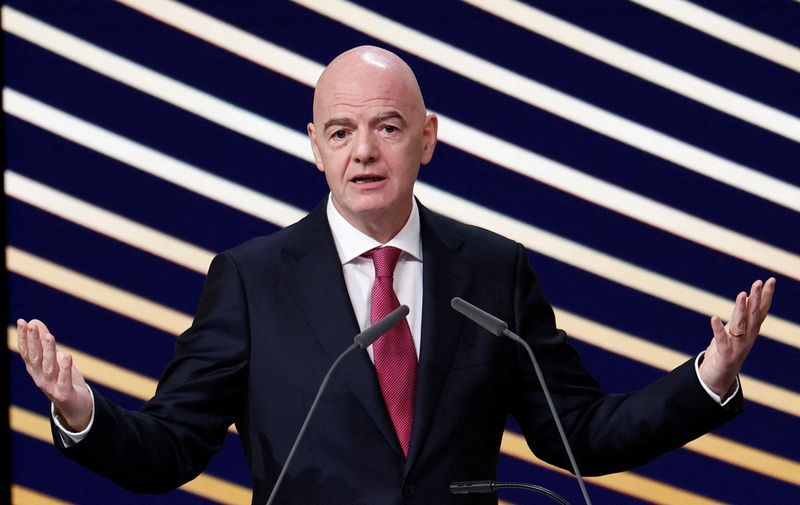
FIFA President Gianni Infantino's once-unassailable position atop world football has been fundamentally shaken by the dramatic collapse of his ambitious private equity scheme. The Swiss administrator, who had appeared certain to secure re-election for a fourth term, was forced to acknowledge on Friday that his proposal to establish a commercial entity controlling tournament operations with 20 per cent stake available to private investors was fatally divisive and no longer viable. The sudden reversal came after a remarkable three-day period in which the global football establishment turned against the plan with unprecedented ferocity, leaving Infantino's authority seriously compromised.
The catalyst for the collapse was Europe's Union of European Football Associations announcing an outright boycott of FIFA events unless the proposal was abandoned. As the wealthiest and most influential of football's six regional confederations, UEFA's ultimatum carried existential weight for FIFA's operations and revenue streams. This escalation transformed what Infantino had clearly envisioned as a fait accompli into a full institutional crisis. The fact that even confederations traditionally loyal to Infantino's leadership publicly expressed outrage at the complete absence of consultation demonstrated how profoundly the plan had miscalculated political reality within football's governance structures.
Infantino's downfall appears rooted in a fundamental failure of consensus-building that stands in sharp contrast to his previous capacity to weather controversy. The proposal emerged through a hastily arranged announcement on Tuesday after details leaked to news organisations, leaving stakeholders scrambling for information. Rather than developing buy-in through dialogue with national federations and regional confederations, Infantino had instead held private meetings with investors and selected Thrive Capital, a firm founded by Joshua Kushner with documented familial connections to U.S. President Donald Trump, to lead the investor consortium. This approach violated the customary protocols governing FIFA decision-making and signalled a troubling contempt for institutional process.
The timing compounded the political damage. Infantino was riding unprecedented goodwill following the Qatar 2022 World Cup, which generated record commercial revenues and cemented his financial management credentials within FIFA. Observers had widely assumed his re-election in Morocco in March would proceed without serious opposition. Yet rather than consolidating these gains, he immediately pivoted toward an aggressive venture that alarmed the very stakeholders whose support he needed. Victor Matheson, professor of economics at the College Of The Holy Cross in Massachusetts, captured the dramatic reversal in circumstances: "A week ago, Infantino's riding high and was almost certain to get elected overwhelmingly because he's run against such a financially successful tournament. That's all in jeopardy now."
The geopolitical dimensions of the crisis further complicated matters for Infantino. His relationship with Trump had already drawn scrutiny following FIFA's bestowal of its inaugural Peace Prize on the former and current U.S. President last December. When Trump subsequently requested during the World Cup that American player Folarin Balogun's red card suspension be rescinded for a knockout match, suspicions of inappropriate influence intensified. Although FIFA's independent disciplinary body ultimately approved Balogun's participation, the optics of apparent presidential pressure on football governance created lasting reputational damage. The involvement of Kushner in the investment scheme revived these concerns and provided ammunition to critics arguing that Infantino had become compromised by proximity to political power.
Former FIFA vice-president Jim Boyce, who worked alongside Infantino during the administrator's tenure at UEFA, openly attributed the miscalculation to inflated ego. Boyce suggested to the BBC that celebrity and Trump's attention had fundamentally distorted Infantino's judgment regarding his standing within football. Sports marketing analyst Bob Dorfman added that the Kushner involvement particularly damaged credibility: "It didn't help that you had a Kushner involved in this whole thing. Especially what was going on during the World Cup with Balogun and Trump. To have a Trump relative involved in this only made the whole thing much worse."
Key figures within Infantino's own inner circle abandoned the initiative with remarkable speed once resistance crystallised. Carlos Cordeiro, a senior adviser, resigned in protest and characterised the plan as "a bad deal for football." More damaging still was FIFA Chief Operating Officer Kevin Lamour's assertion that staff had been "deceived" by Infantino and that the scheme represented "a project of one person." These defections from within the administration signalled that institutional confidence in Infantino's judgment had fractured irreparably. The Asian Football Confederation, representing 47 member nations, formally called for comprehensive institutional reform at FIFA, reflecting broader concerns about governance standards.
Infantino's previous capacity to absorb political damage appears to have been exhausted by the cumulative toll of this episode. In 2018, he had retreated from a proposal promising $25 billion in private investment for the Club World Cup following UEFA opposition. He had similarly weathered extraordinary controversy over Qatar's selection as the 2022 World Cup host and his infamous pre-tournament declaration that he felt "gay," "disabled," and a "migrant worker." Those episodes, however, occurred when Infantino's financial stewardship of FIFA remained unquestioned and when he retained strong relationships with key confederations. The private equity gamble destroyed both foundations simultaneously.
Despite the severity of the setback, prematurely writing off Infantino may prove premature. Although rival candidates are now almost certain to emerge for the presidential election, the fundamental dynamic governing FIFA's decision-making remains unchanged. The 211 national football federations that will vote to determine Infantino's future rely substantially on FIFA funding to maintain operations, and many have benefited materially from his financial policies. He requires either a two-thirds majority in the first voting round or a simple majority in subsequent rounds to extend his presidency until 2031. Institutional memory within football suggests that demonstrated contrition combined with renewed commitment to consultation could potentially rehabilitate his position, though the bar for redemption has risen markedly. The immediate question is not whether Infantino's career is finished, but rather whether he possesses the political wisdom to rebuild the confidence he has so spectacularly squandered.

