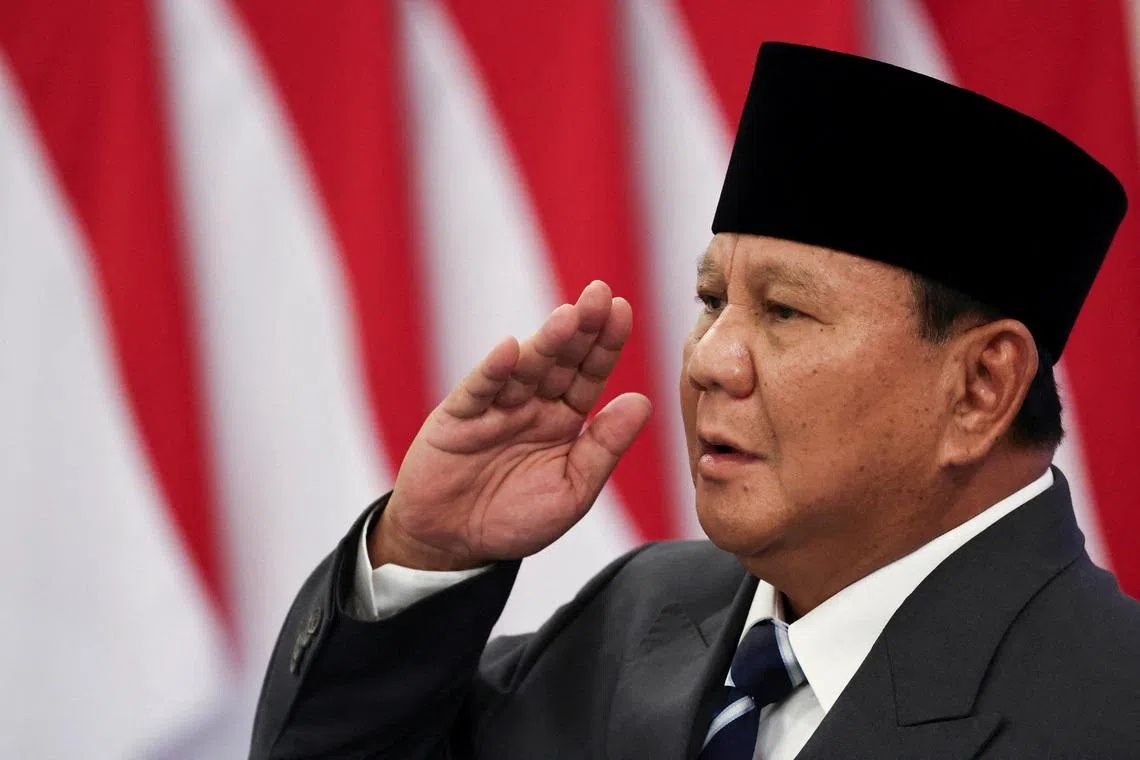
Indonesia's human rights commission has intensified pressure on the government to abandon a contentious military training component of President Prabowo Subianto's flagship village cooperative initiative, citing the deaths of five participants who collapsed during the initial phase of the 45-day programme. The commission issued its formal recommendation on Sunday, just days after the defence ministry confirmed that five trainees had died between June 17 and June 26, marking a significant setback for one of the administration's most ambitious economic initiatives.
The Red and White Cooperatives programme, launched in July of the previous year, represents a cornerstone of Prabowo's economic vision for Indonesia. Designed to address unemployment and drive growth, the initiative envisions establishing approximately 80,000 village-based cooperative enterprises nationwide. These cooperatives are intended to serve as distribution points for essential commodities, including subsidised cooking gas and agricultural inputs such as fertiliser, thereby reaching rural communities with affordable necessities while generating employment opportunities.
Central to the programme's execution is the mandatory military training requirement that nearly 35,000 prospective cooperative managers must complete before assuming their roles. The conditioning phase commenced on June 14 and is scheduled to conclude on July 31, conducted across multiple regional military training facilities throughout the archipelago. This requirement has emerged as the critical flashpoint in the government's implementation strategy, drawing sharp criticism from civil society organisations and human rights advocates.
Pramono Ubaid Tantowi, speaking on behalf of Indonesia's human rights commission, articulated the fundamental mismatch between the training methodology and the actual professional competencies required for cooperative management. He emphasised that cooperatives function as economic entities centred on business operations, member services, and organisational governance, none of which necessitate military conditioning. The commission's position reflects growing concern that the integration of military discipline into civilian economic programming represents an inappropriate expansion of military influence across non-defence sectors of society.
The defence ministry, which is spearheading the training initiative, has defended the programme while acknowledging the deaths and pledging corrective measures. Major General Ketut Gede Wetan, heading human resources development at the ministry, attributed the five fatalities to diverse underlying medical conditions including cardiac arrest, heat stroke, tuberculosis, and pneumonia. The ministry maintained that all trainees underwent pre-training medical evaluations and received clearance before participation, and that those who died received appropriate medical treatment aligned with standard protocols.
However, the disclosure that five individuals with supposedly cleared medical status died within ten days has fuelled questions about the adequacy of screening procedures and the intensity of training activities. The defence ministry's characterisation of the training as non-strenuous and focusing on civic rather than combat skills has been contradicted by the mortality outcomes, suggesting either that medical vetting procedures are inadequate or that the physical demands of the training exceed what was publicly represented.
Responding to the mounting criticism, the defence ministry announced plans to conduct a comprehensive review of the training regime. This reassessment will encompass enhanced health monitoring protocols, improved early identification of participants with underlying health vulnerabilities, and recalibration of activity intensity. The health ministry will join the defence ministry in overseeing these modifications, signalling governmental acknowledgement that the current approach requires fundamental restructuring. Despite these commitments, the announced review falls short of the outright programme termination that the rights commission is demanding.
The human rights commission has gone further in calling for criminal accountability regarding the deaths. It has urged law enforcement agencies to secure forensic autopsy results for all five deceased participants as part of a formal investigation, indicating that the body views the deaths as potentially involving culpable negligence or worse rather than as unavoidable medical incidents. This prosecutorial recommendation carries significant weight in the Indonesian context and suggests that individual officials and military personnel involved in programme management may face criminal exposure.
Prabowo's approach of embedding military involvement in civilian governance structures reflects his background as a military officer and his worldview regarding the state's organisational requirements. Since assuming the presidency in 2024, he has progressively expanded military engagement across government programmes and civilian sectors, viewing military discipline and hierarchy as mechanisms for improving implementation efficiency. However, this approach has encountered significant pushback from human rights advocates and civil society organisations concerned about militarisation of civilian governance and the subordination of rights protections to efficiency imperatives.
The commission's recommendation that capacity-building for cooperative managers emphasise managerial competence, leadership development, and financial literacy rather than military conditioning reflects international best practices in cooperative education and enterprise development. Numerous successful cooperative movements worldwide have achieved strong performance outcomes through professional business training rather than military-style discipline. The Indonesian commission's position aligns with this evidence-based approach while highlighting the disconnect between Prabowo's governance philosophy and demonstrated effectiveness in cooperative development.
The controversy surrounding the Red and White Cooperatives programme highlights broader tensions in contemporary Indonesian governance between security-oriented state-building approaches favoured by military-affiliated leaders and rights-centred development frameworks championed by civil society. With the human rights commission now formally opposing the military training component and demanding investigation into the deaths, the government faces a critical choice between modifying its approach or risking further criticism and potential legal consequences. The outcome of this clash will likely shape how subsequent Prabowo-linked initiatives balance military participation with civilian professional standards.

