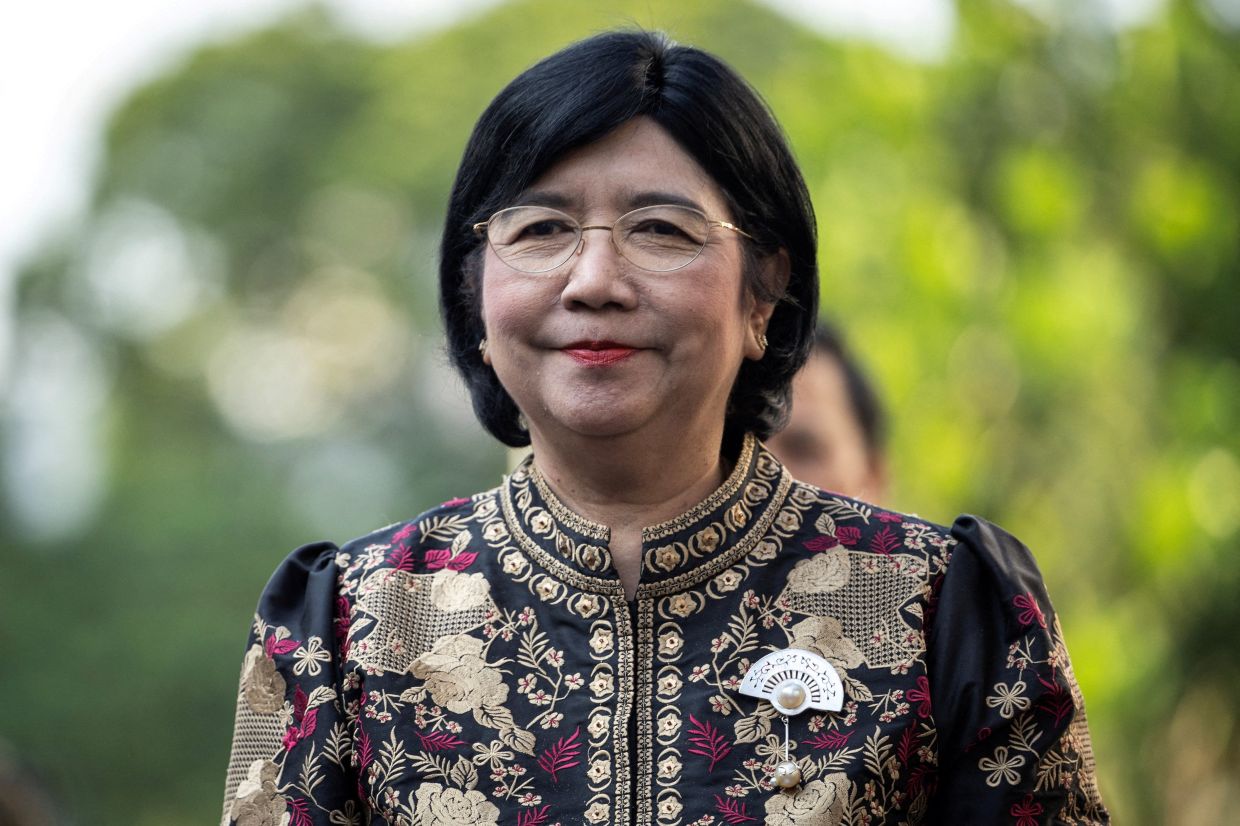
Indonesia's President Prabowo Subianto has formally nominated Destry Damayanti as the sole candidate to helm Bank Indonesia, marking a significant step in stabilizing the country's monetary leadership after weeks of uncertainty. The announcement, confirmed by a presidential spokesperson on Monday, comes roughly a month after Perry Warjiyo stepped down without public explanation, triggering fresh concerns among global investors about the institution's independence and the broader investment climate in Southeast Asia's largest economy.
Destry brings substantial credentials to the role, having served as the central bank's senior deputy governor since 2019 and, more recently, as interim leader steering the institution through a transitional period. Her elevation to the top job would represent a continuity play, allowing her to build on institutional knowledge accumulated over years of high-level monetary policy work. Financial markets have already responded positively to the clarity her nomination provides, with the rupiah strengthening to its best level against the US dollar since mid-June, signalling investor relief at the resolution of what had become an awkward succession gap.
The timing of Warjiyo's resignation had rattled confidence in Indonesia's economic management. Departing without clear explanation created a vacuum that fuelled speculation about internal conflicts within the institution or pressure from political quarters. For investors already skittish about fiscal discipline in the world's largest Muslim-majority democracy and concerns over market transparency, the sudden leadership change added another layer of uncertainty to an already challenging investment thesis. The G20 member has been struggling to maintain momentum as global growth slackens and capital flows weaken across emerging markets.
The parliamentary process now enters its formal phase, with the coalition government holding a one-month window to either endorse or reject the nomination. The political arithmetic strongly favours approval. Prabowo's coalition commands a substantial majority in parliament, and there is no recent precedent for rejection of a sitting president's nominee for central bank chief—parliament last turned down a presidential choice in 2008. Barring unexpected developments, Destry's confirmation appears virtually assured, allowing Bank Indonesia to move forward with full leadership in place.
The central bank's monetary balancing act has grown increasingly complex under mounting pressure to simultaneously support Prabowo's growth agenda while managing inflation and currency stability. The administration has signalled ambitions to accelerate expansion to 8 percent annually, a marked acceleration from current growth hovering near 5 percent. Warjiyo's tenure saw the institution raise benchmark interest rates by 100 basis points this year and deploy rupiah hedging incentives alongside high-yielding short-term securities designed to attract foreign capital and buttress the currency. These measures reflect the delicate juggling act facing any central bank in a country balancing growth aspirations against external sector vulnerability.
Destry will inherit an institution navigating treacherous waters. Indonesia's fiscal position has come under scrutiny, with observers questioning the sustainability of government spending trajectories. The currency remains under intermittent pressure from capital outflows affecting the broader emerging market complex, while inflation dynamics require careful management. Beyond the immediate technical challenges, the new governor must preserve and reinforce Bank Indonesia's institutional independence—a touchstone of credibility that matters immensely for medium-term policy effectiveness and investor confidence.
The geopolitical backdrop adds further complexity to the central bank's remit. Tensions in the Middle East stemming from the Iran conflict inject an additional source of risk into energy prices and global supply chain stability, factors that filter through to emerging market economies highly dependent on energy imports. Indonesia, despite being an energy exporter, remains exposed to these dynamics through their effects on global growth, commodity markets, and financial conditions.
Destry's appointment signals an effort to project stability and institutional continuity at a moment when both are at a premium. Her long tenure at the institution means she understands its machinery, personnel, and institutional culture intimately. Yet her elevation also crystallizes the tension between the central bank's mandate for price and currency stability and the government's growth objectives. How she navigates this inherent tension over the coming months will shape not only Indonesia's monetary trajectory but also investor perceptions of whether the institution can maintain the autonomy necessary to fulfill its core functions.
The rupiah's immediate rally reflects market belief that the nomination removes a significant source of uncertainty and positions the central bank to continue pursuing measured, technocratic policy. However, the underlying vulnerabilities afflicting the broader economy remain in place. Confidence in Indonesia's economic stewardship has been eroding amid fiscal concerns and questions about governance of its capital markets. A capable, independent central bank under Destry's leadership could help restore some measure of investor faith, but it cannot alone address structural challenges requiring broader fiscal and institutional reforms. The coming months will test whether the central bank and the government can align their objectives without compromising the monetary institution's fundamental independence.

