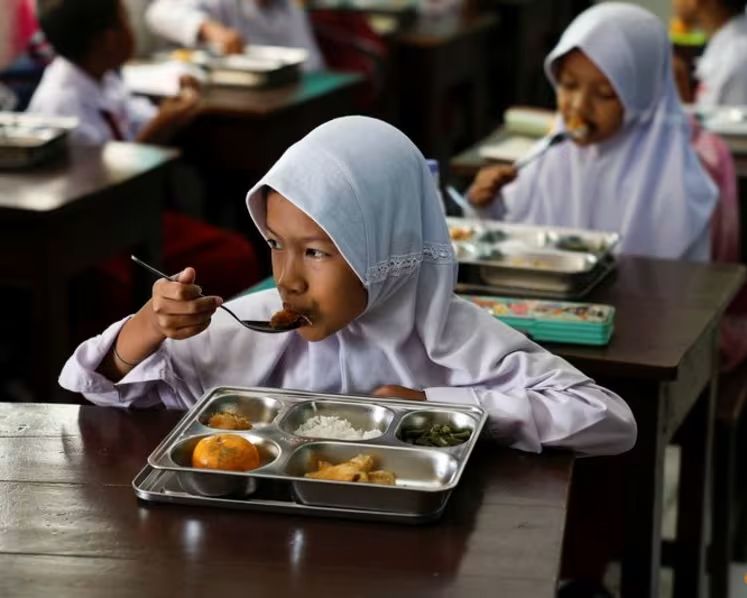
President Prabowo Subianto's marquee free meals initiative has suffered another significant setback with the resignation of the National Nutrition Agency head, signalling deepening institutional instability within one of Indonesia's most ambitious social programmes. Nanik Sudaryati Deyang, who assumed leadership of the agency barely four months ago in June, announced her departure on Wednesday citing personal health concerns, but her exit comes amid a tempestuous backdrop of budgetary reductions, criminal investigations, and operational dysfunction that has plagued the programme since its January 2025 launch.
This marks the second dramatic leadership overhaul in little more than a month, underscoring the escalating crisis engulfing what Prabowo positioned as a transformative election pledge. Her predecessor was unceremoniously dismissed by the president last month and subsequently arrested on corruption allegations tied to the multibillion-dollar scheme, following a dramatic raid on agency headquarters. The rapid succession of leadership changes raises troubling questions about the stability and oversight of a programme designed to serve as a cornerstone of the administration's social welfare agenda.
Nanik attributed her decision to health grounds, posting on Facebook that she required overseas medical treatment for a cardiac condition. She revealed that her physician had warned her that extreme stress had caused arterial blockage, a concerning physical manifestation of the pressures accompanying her stewardship of the deeply troubled initiative. Though she framed her departure as medically necessary, the timing coincides precisely with the agency's announcement of its second consecutive budget reduction, a circumstance that compounds perceptions of institutional dysfunction.
The agency confirmed that its 2026 funding allocation had been slashed from 268 trillion rupiah to 229 trillion rupiah, representing approximately 12.79 billion US dollars. This reduction brings the total retrenchment to more than 100 trillion rupiah below the original budgetary commitment of 335 trillion rupiah, a dramatic contraction that severely compromises the programme's operational capacity. Officials cautioned that additional budget cuts remain possible pending further governmental review, introducing further uncertainty into procurement and meal distribution logistics.
The free meals scheme represents Prabowo's most prominent and fiscally demanding campaign commitment, intended to extend complimentary nutrition to 83 million Indonesians including schoolchildren and pregnant women. Prior to the latest budgetary revision, agency figures indicated that roughly 62.5 million individuals had received meals through the programme, suggesting that operational realities have consistently fallen short of ambitious projections. The magnitude of these shortfalls, combined with the widening funding gap, raises serious questions about whether the initiative can ever achieve its stated objectives.
Since inception, the programme has been beset by cascading operational and quality challenges that have eroded public confidence and invited scrutiny from health authorities. Multiple documented incidents of mass food poisoning, persistent logistical bottlenecks in meal distribution, and widespread complaints about nutritional standards have transformed what was intended as a flagship achievement into a cautionary emblem of governmental overreach and poor execution. These practical failures have become a focal point for broader anxieties regarding Indonesia's fiscal sustainability and budgetary prioritisation during a period of macroeconomic uncertainty.
Nanik offered a defensive characterisation of the programme, insisting that detractors misrepresented it as merely another political initiative when it constituted rather a serious nutritional intervention focused on child welfare. This framing attempts to elevate the scheme beyond partisan debate, yet the mounting evidence of mismanagement, corruption, and operational inadequacy has made such rhetorical repositioning increasingly difficult. The resignation of leadership figures, combined with criminal investigations into programme administration, suggests systemic problems that transcend mere political disagreement.
In her Facebook announcement, Nanik indicated that Prabowo was contemplating the establishment of a supervisory governance board for the agency and that she had been approached to chair this new structure. This proposal implies acknowledgement at the presidential level that existing institutional arrangements have proven inadequate to manage the programme's complexity and scale. The creation of an additional oversight layer, however, may signal further bureaucratic complications rather than genuine reform if fundamental operational challenges remain unaddressed.
Uncertainty surrounding succession further complicates the agency's trajectory. Nanik indicated that her replacement would be a junior colleague from within the organisation, yet the National Nutrition Agency had not formally announced an appointment at the time of her resignation. This leadership vacuum comes at a precisely problematic moment, as the agency simultaneously grapples with budget restrictions, ongoing criminal proceedings related to programme administration, and mounting public scepticism about its operational competence and financial stewardship.
For Malaysian observers, Indonesia's experience with the free meals initiative offers instructive lessons regarding the challenges of scaling massive social programmes under resource constraints and institutional weakness. The programme's trajectory illustrates how ambitious social policy commitments, when inadequately planned and resourced, can devolve into fiscal drains characterised by corruption, inefficiency, and public health risks. As Southeast Asian governments contemplate similar large-scale welfare expansions, Indonesia's difficulties provide cautionary context regarding the necessity of robust institutional frameworks, realistic budgetary commitments, and transparent governance mechanisms.

