President Prabowo Subianto's ambitious free nutritious meal programme, intended to address malnutrition across Indonesia, has become a focal point of public controversy as rival demonstration movements mobilise across the archipelago. The competing protests reveal a society deeply divided over the costs and benefits of one of the new administration's most visible policy commitments, exposing fault lines between fiscal hawks concerned about government spending, beneficiaries dependent on the programme's continuation, and those investigating alleged mismanagement within the implementing agencies.
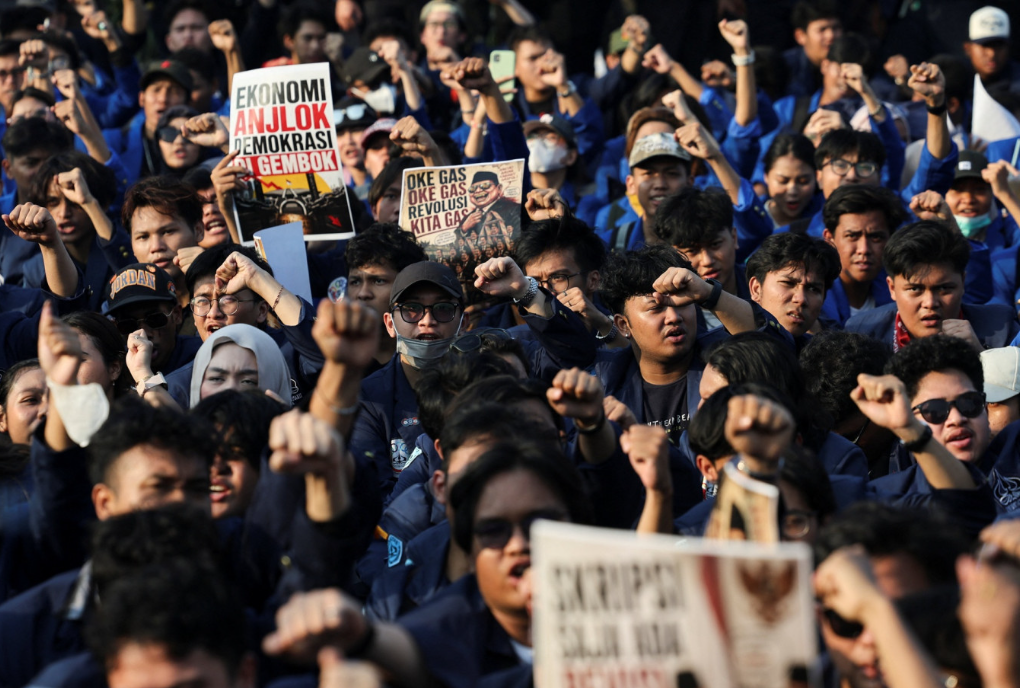
Student activists in Bali took to the streets outside the Regional Legislative Council building in Denpasar on Monday, demanding a thorough government and audit review of the scheme. Their concerns extend beyond the meal programme itself, encompassing broader economic anxieties and questions about democratic governance that have resonated across Indonesia's university campuses. The protesters questioned the rationale for allocating such substantial resources to the initiative at a moment when government agencies are implementing austerity measures elsewhere, creating a perception of misplaced priorities within the state budget. The explicit call for investigation into food poisoning incidents and corruption allegations suggests that implementation failures have crystallised student opinion against the programme's continuation in its current form.
In the capital, mobilisation reached a larger scale when thousands of students linked to the Indonesian Islamic Student Movement gathered outside the House of Representatives complex on Monday. Their demonstration followed a previous Friday protest at the same location, indicating sustained momentum around the issue. The timing proved significant, coming shortly after authorities arrested three senior officials from the National Nutrition Agency, the body responsible for overseeing programme distribution. Student organisers from universities including Trisakti, Mercu Buana, and Esa Unggul framed their activism as a confrontation with what they characterised as extravagant government expenditure, explicitly calling for suspension of the multi-trillion-rupiah scheme alongside broader economic reforms and improved teacher compensation.
Yet across the archipelago, a contrasting narrative has emerged from those positioned to lose most from programme reductions. Kitchen workers in Batam staged competing demonstrations outside the local legislative council, warning that efficiency measures implemented by the government threatened their daily livelihoods. Approximately 1,500 workers in Batam alone face income disruption from the shift to five-day meal distribution and suspension during school holiday periods, according to protest coordinator Langga Husein. These workers highlighted an often-overlooked dimension of the programme's impact: the downstream employment opportunities created by meal preparation and distribution. Their argument that vulnerable populations including pregnant women and breastfeeding mothers require nutritional support regardless of school calendars introduces practical considerations that student-led protests challenging the programme's fiscal justification may underestimate.
The programme itself represents an extraordinary budgetary commitment. Originally allocated Rp 335 trillion—approximately US$15 billion—for this year, it targets roughly 83 million beneficiaries encompassing schoolchildren and pregnant women across the nation. Launched in January of the previous year as a cornerstone of efforts to combat childhood malnutrition and stunting, the initiative emerged from Prabowo's campaign commitments and carries significant political weight within his administration. Yet the scale of this expenditure became a lightning rod during a period when government departments faced pressure to reduce spending, creating a tension between the programme's symbolic importance and fiscal discipline concerns articulated by student protesters and some economic observers.
Corruption allegations have compounded the programme's difficulties and credibility challenges. The recent arrest of three National Nutrition Agency officials on suspicion of graft has provided concrete evidence of implementation failures, lending weight to student demands for comprehensive investigation and institutional overhaul. These arrests have shifted the debate from abstract questions about programme efficiency to documented instances of alleged malfeasance within the implementing bureaucracy. The convergence of corruption investigations with food safety incidents—including documented cases of food poisoning linked to meal distribution—has created a compound legitimacy crisis that extends beyond questions of fiscal prudence to encompass public health and institutional integrity.
Government officials have responded defensively to mounting criticism, insisting that the programme will continue despite reform demands. Government Communications Agency head Muhammad Qodari emphasised that improvement rather than suspension represents the appropriate policy response. The administration has already implemented changes, reducing the overall budget allocation to Rp 228.4 trillion according to National Nutrition Agency Deputy Head Agustina Arumsari, and introducing operational efficiencies including suspension of meal distribution during late June through mid-July school holidays. Additionally, the government plans to cease meal provision at 76 schools located in affluent areas deemed capable of meeting nutritional requirements without state support. These modifications represent an attempt to address efficiency concerns while maintaining programme continuity.
Support for programme continuation extends beyond Jakarta and regional capitals to include agricultural constituencies and local economies integrated into the supply chain. Residents rallying in Bandar Lampung emphasised how the programme stimulates rural development by absorbing significant volumes of locally produced commodities including corn, rice, cassava, fruits, and vegetables. According to field coordinator Maradoni, agricultural price improvements resulting from large-scale procurement have benefited farmers and broader rural economies, creating constituencies invested in the programme's survival. Comparable pro-continuation demonstrations have materialised across West Nusa Tenggara, East Java, and other regions, suggesting that support remains substantial among populations experiencing direct economic benefits.
The intensity of competing mobilisations reflects deeper tensions within Indonesia's post-Subianto political economy. Student activists drawing from Islamic and secular university movements perceive the free meal programme as symptomatic of fiscal mismanagement in a period of economic uncertainty. Kitchen workers, farmers, and beneficiary communities conversely view the programme as essential infrastructure supporting their material survival and rural development. The Batam Student Movement Alliance coordinator Muryadi Agus Priawan articulated a conception of student activism as exercising democratic oversight, suggesting that campus mobilisation serves a necessary social control function ensuring that government policies genuinely serve public interest rather than perpetuating wasteful expenditure.
For Malaysian observers, Indonesia's free meal programme controversy carries instructive dimensions. Southeast Asia confronts shared challenges around childhood malnutrition and stunting despite economic development, making nutritional interventions politically salient across the region. Yet the Indonesian experience demonstrates how even well-intentioned large-scale programmes face vulnerabilities to corruption, implementation failures, and fiscal sustainability questions that generate public backlash. The competing protest movements reflect legitimate but conflicting interests—fiscal discipline versus employment preservation, cost control versus rural development, democratic accountability versus social welfare provision. As Malaysia considers comparable policy responses to nutrition challenges, the Indonesian case provides cautionary evidence that programme design, institutional capacity, and corruption prevention require as much attention as symbolic policy commitments.
The unfolding controversy suggests that Prabowo's administration faces a difficult balancing act between maintaining a signature campaign commitment and responding to accumulating evidence of implementation problems and fiscal strain. Complete programme suspension appears unlikely given political costs and beneficiary constituencies, yet continuation without substantial reforms risks further institutional damage and public trust erosion. The competing demonstrations illustrate how a single policy initiative has mobilised multiple constituencies with genuinely incompatible interests, a dynamic likely to persist as Indonesia navigates the programme's next phase of evolution.