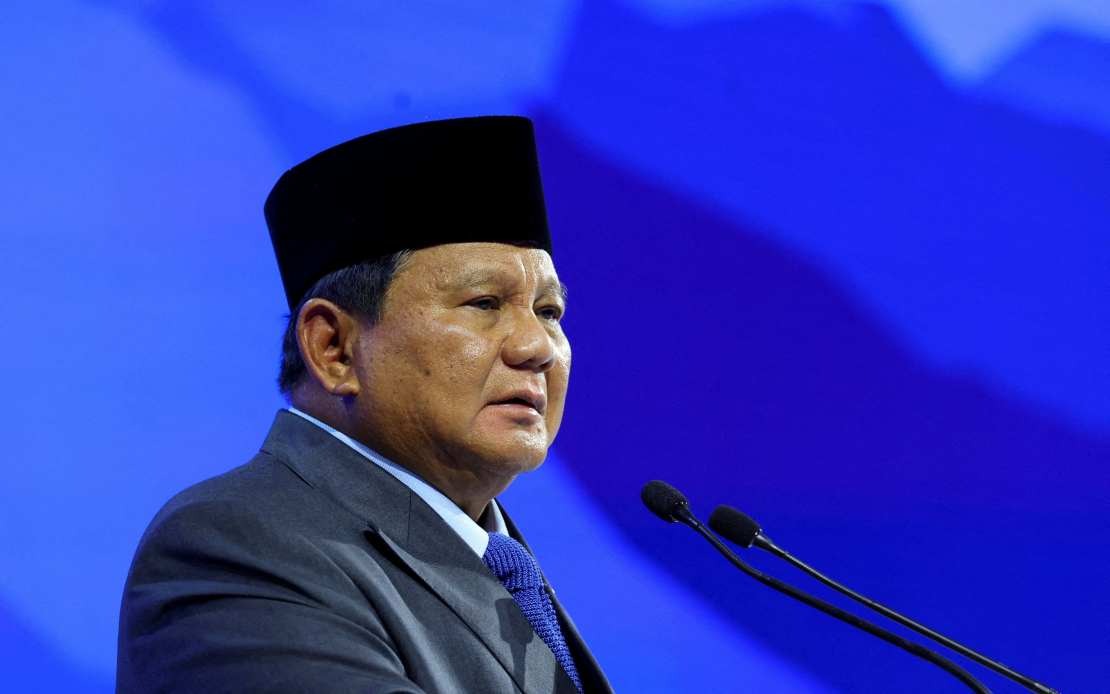
President Prabowo Subianto has signalled that Indonesia's ongoing forest and land fires are beginning to respond to control measures, with the head of state suggesting the situation could stabilize completely in the coming fortnight. Speaking during the launch of Indonesia's 100-gigawatt solar power initiative in Jembrana, Bali, Prabowo outlined the scale of resources deployed to combat the blazes, a crisis that has periodically disrupted air quality across the region and threatened neighbouring countries including Malaysia.
The firefighting response has mobilized an extensive arsenal of equipment and manpower. Prabowo detailed the commitment of dozens of helicopters, more than a dozen fixed-wing aircraft, hundreds of water wells and pump systems, alongside several thousand personnel engaged in suppression and prevention activities. This level of deployment reflects both the severity of the situation and the government's determination to contain what could otherwise spiral into another transboundary haze emergency affecting Southeast Asia. For Malaysian readers familiar with previous fire seasons that degraded air quality across the peninsula, the scale of Indonesia's mobilization underscores the transnational dimensions of the crisis.
Understanding the broader meteorological context proves essential to evaluating these projections. Prabowo emphasized that the world is experiencing an exceptionally strong El Niño phenomenon this year, anticipated to rank among the most intense on record. This weather pattern amplifies drought conditions across the Indonesian archipelago, creating ideal conditions for fires to spread rapidly through vegetation and peatland areas. The president's acknowledgment of this climatic driver demonstrates recognition that fire management cannot rely solely on suppression tactics but must account for underlying atmospheric conditions that facilitate ignition and propagation.
The president's personal engagement in field operations reflects the political significance attached to fire management. Prabowo travelled to West and Central Kalimantan on Saturday to inspect firefighting efforts and coordinate response operations, subsequently moving to Sumatran territories on Monday to oversee suppression activities there. This hands-on approach contrasts with previous administrations' handling of fire crises and signals an attempt to project decisiveness and active crisis management. For regional observers, such presidential visibility carries weight in demonstrating governmental presence in the outer islands, areas that sometimes experience infrastructure and resource allocation challenges relative to Java.
The effectiveness of coordinated effort among disparate agencies forms a critical element in Prabowo's narrative. He highlighted collaboration among regional administrations, national ministries, military forces, police services, and the National Disaster Management Agency (BNPB) as evidence that institutional mechanisms are functioning cohesively. Such coordination remains crucial in archipelago-wide operations, where communication across geographically dispersed territories and institutional hierarchies can prove complicated. The president's framing suggests that inter-agency dynamics—historically a friction point in Indonesian governance—are operating smoothly in this context.
The recent earthquake in East Nusa Tenggara provides instructive comparison for evaluating governmental response capacity. On August 15, a magnitude 7.7 seismic event struck the Flores region, killing 103 people and leaving 1,666 injured, with over 185,000 individuals displaced as of Tuesday afternoon. Prabowo cited the rapid and extensive scale of the earthquake response as validation of his administration's disaster management capabilities, framing both the seismic response and fire suppression as evidence of institutional readiness. The earthquake response involved coordinating rescue operations, medical services, temporary shelter, and recovery planning across a densely affected area—challenges of a different character from fire suppression but requiring equivalent logistical sophistication.
The seismic activity itself underscores Indonesia's multi-layered vulnerability to natural disasters. The BNPB recorded over 7,000 aftershocks following the primary August 15 tremor, including 141 instances felt by residents, indicating sustained crustal stress in the region. This seismic sequence compounds challenges facing communities already managing post-earthquake reconstruction, as tremor-induced building damage can undermine shelters and displace already vulnerable populations. For Malaysian observers, the situation illustrates how neighbouring countries face compounded disaster risks that can overwhelm response capacity if multiple crises occur in proximity.
Fire management in Indonesia carries implications extending beyond national borders. Transboundary haze episodes have historically affected Malaysia, Singapore, and Brunei, degrading air quality to unhealthy levels and generating diplomatic tensions over responsibility allocation. Any prolonged delay in controlling the current fires risks creating similar regional air quality emergencies. Prabowo's two-week timeline, if realized, would prevent escalation to the point where cross-border atmospheric transport becomes the dominant concern for Southeast Asian governments and populations. However, fire forecasting carries inherent uncertainty, and El Niño conditions can persist unpredictably, introducing risk that the prescribed timeline may slip.
The timing of Prabowo's announcement warrants consideration within the broader context of his young presidency. Taking office in October 2024, the administration faces multiple concurrent pressures: managing natural disasters, advancing energy transition (evidenced by the solar programme launch), stabilizing commodity markets, and establishing governance credibility. Demonstrating competence in fire suppression—a recurring challenge with significant public health and diplomatic dimensions—contributes to legitimacy building. Success in meeting the two-week timeline would constitute a tangible achievement to point toward, whilst failure would invite criticism from domestic and regional observers.
The mobilization of renewable energy infrastructure and disaster response efforts simultaneously reflects a strategic approach to national challenges. Solar power expansion and fire suppression both address long-term sustainability concerns, though on different timescales. Fire prevention through landscape management, which would complement suppression efforts, remains resource-intensive and requires sustained political will beyond individual fire seasons. Whether Prabowo's administration develops comprehensive peatland protection policies and fire prevention regimes alongside emergency response systems will determine whether current initiatives represent temporary crisis management or constitute elements of durable structural change.

