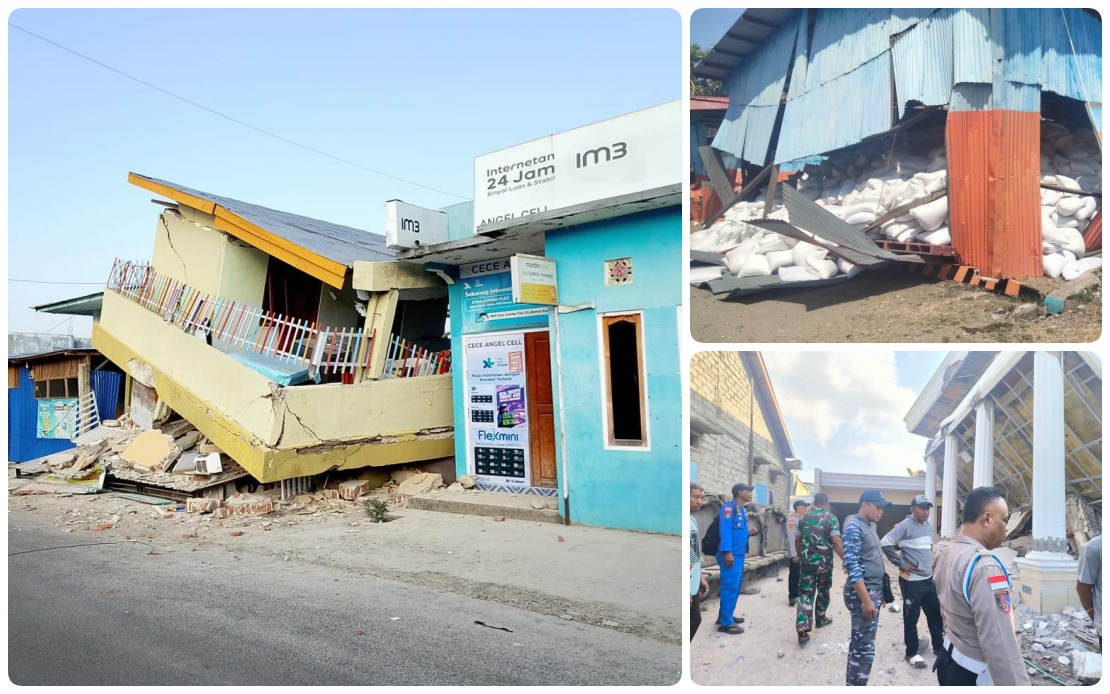
Indonesia's Flores Island faces an ongoing seismic crisis following a powerful magnitude 7.7 earthquake that struck early Sunday morning, with authorities grappling to manage its immediate aftermath while monitoring a relentless stream of aftershocks that have unsettled survivors and complicated relief operations. The National Disaster Management Agency (BNPB) reported that the Meteorology, Climatology and Geophysics Agency (BMKG) had documented 995 aftershocks by mid-afternoon Sunday, though the vast majority went unnoticed by residents, creating an undercurrent of anxiety despite the lack of dramatic physical reminders of ongoing seismic activity.
The initial tremor struck at 4:58 am local time with its epicentre located approximately 30 kilometres offshore from Mbay in Nagekeo district at a depth of 15 kilometres, triggering immediate tsunami warnings across the region. Officials terminated the tsunami alert by 7:31 am after monitoring revealed that sea levels had stabilised without further significant surges, preventing what could have compounded an already catastrophic disaster. The earthquake's timing—occurring in pre-dawn darkness when most residents were asleep—likely influenced both casualty patterns and initial reporting challenges as emergency responders struggled to establish a complete picture of the devastation.
Casualty figures have climbed to at least 53 deaths with 135 individuals injured across the seven affected regencies and cities, according to BNPB Deputy for Prevention Abdul Muhari. Notably, authorities have reported no missing persons, a development that suggests either relatively effective evacuation responses or incomplete data gathering, with emergency officials acknowledging they were still updating and verifying casualty information as rescue operations entered their second day. The absence of reported missing persons stands in contrast to the scale of destruction typically expected from earthquakes of this magnitude, raising questions about whether secondary searches might yet identify additional casualties as damage assessments deepen.
The persistence of evacuees in temporary shelters reflects multiple compounding psychological and practical factors beyond immediate earthquake damage. As of midnight Saturday, approximately 9,290 people occupied evacuation sites, many remaining reluctant to return to homes despite structural integrity concerns being addressed. BNPB attributed continued displacement partly to lingering psychological trauma stemming from the catastrophic 1992 Flores earthquake and tsunami that devastated the region three decades earlier, suggesting that collective institutional memory of disaster significantly influences contemporary population behaviour during seismic events. The psychological weight of that historical disaster—which remains seared into community consciousness—appears to outweigh residents' material interest in returning to damaged but potentially habitable homes.
Emergency response operations have shifted focus toward comprehensive victim assistance, basic needs provision, and structural damage documentation as rescue phases transition into recovery management. The BNPB established dedicated response coordination posts in both Labuan Bajo and Maumere, establishing twin logistical hubs in those cities plus Jakarta to streamline the deployment of relief commodities, specialised equipment, and rescue personnel across the affected zone. This multi-location logistics infrastructure reflects lessons learned from previous Indonesian disasters, enabling faster distribution of supplies to remote island communities where transport infrastructure remains vulnerable to earthquake damage.
Infrastructure restoration has progressed unevenly across the region, with the BNPB reporting that road access through Reok in Manggarai—previously rendered impassable by earthquake-triggered landslides—had been cleared sufficiently to accommodate fuel tanker trucks. This restoration holds particular significance given that fuel supply disruptions can cascade across emergency response operations, affecting generator functions, transportation, and medical facility operations. Simultaneously, electricity had been partially restored in several districts hit by widespread blackouts, though comprehensive power infrastructure repair would likely require sustained effort given the magnitude of initial damage.
The 1992 seismic precedent looms large over contemporary response efforts, fundamentally shaping official strategies and public psychology. That earlier earthquake and subsequent tsunami claimed thousands of lives and remains one of Indonesia's most devastating natural disasters, establishing deep-rooted community expectations regarding earthquake hazard severity and institutional capacity to respond. The current evacuation centres and layered response protocols reflect institutional memory from that tragedy, suggesting that contemporary Indonesian disaster management has incorporated hard-won lessons, though the psychological scarring proves difficult to address through logistical measures alone.
For Malaysian observers and regional stakeholders, this Flores earthquake underscores the persistent seismic vulnerability characterising the entire Indonesian archipelago and broader Southeast Asian tectonically active zones. Malaysia's own earthquake preparedness frameworks, particularly regarding Sabah and Sarawak's exposure to regional seismic activity, benefit from careful observation of how Indonesian authorities manage mass casualty scenarios and large-scale displacement. The coordination mechanisms demonstrated through BNPB's multi-site response infrastructure and inter-agency communication protocols offer potential models for regional disaster management cooperation, particularly given increasing recognition that seismic events transcend national boundaries in their impacts on maritime populations and regional stability.
The magnitude of aftershock activity—nearly 1,000 separate tremors—represents a significant scientific and practical challenge that extends recovery timelines beyond standard earthquake response paradigms. Aftershock sequences of this intensity can persist for weeks or months, complicating structural assessments, delaying reconstruction confidence, and extending psychological strain on displaced populations. For Indonesian authorities managing multiple simultaneous crises across seven administrative units, the aftershock stream demands sustained resource allocation and technical expertise at precisely the moment when economic pressures mount to transition from emergency response to reconstruction, creating political and logistical tensions that characterise post-disaster recovery phases across the region.

