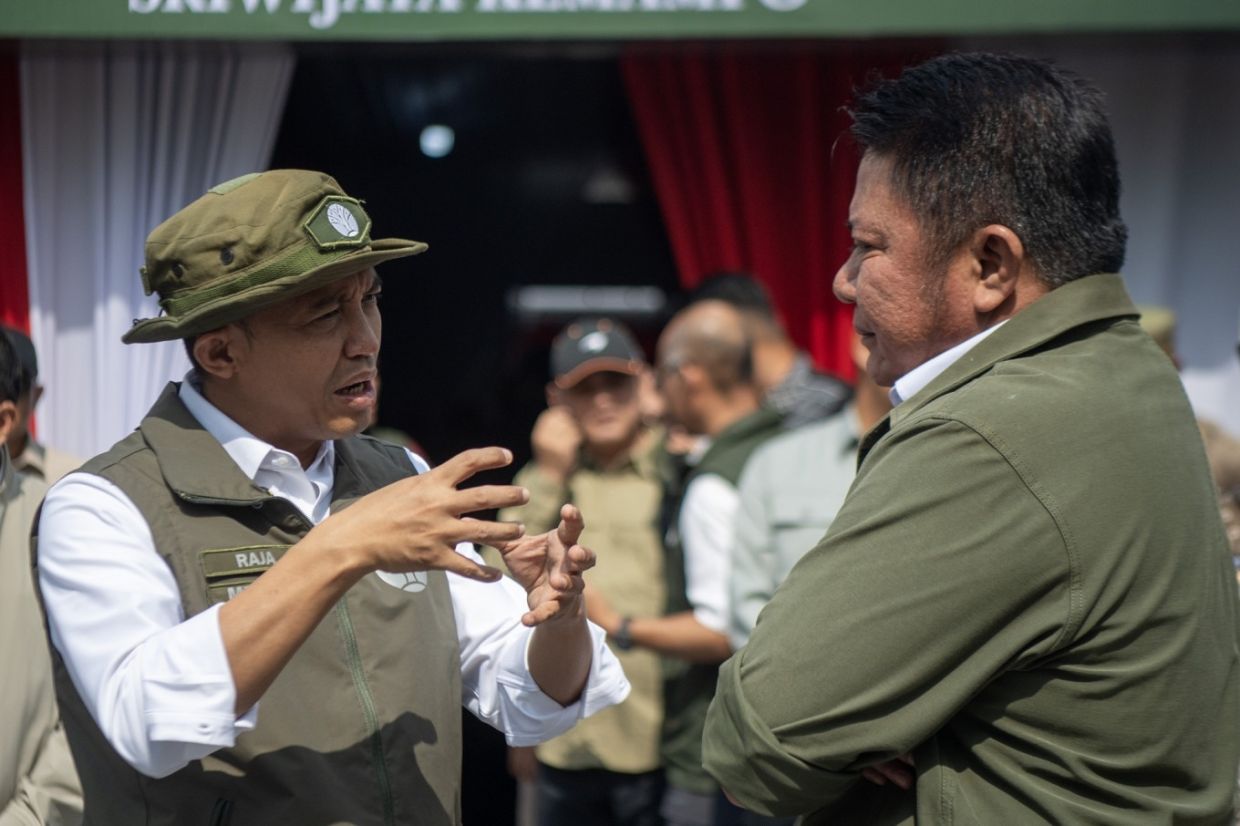
Indonesia's Corruption Eradication Commission (KPK) has reopened its investigation into allegations against Forestry Minister Raja Juli Antoni, focusing on whether the minister genuinely returned the entirety of bribes purportedly handed to him by Suhardiman Amby, the regent of Kuantan Singingi in Riau province. The graft-fighting agency's spokesperson Budi Prasetyo disclosed on Thursday that investigators harbour doubts about inconsistencies in the amounts the minister claims to have received and subsequently returned to the Kuantan Singingi official.
According to the KPK's findings, Suhardiman allegedly presented Raja Juli with an envelope during their June 2 meeting—a gathering between ministry representatives and local administrators—containing Singapore dollars valued at S$14,000, equivalent to approximately US$10,919. The encounter appears significant because it preceded a controversial proposal from the regency administration seeking to convert more than 1,800 hectares of limited production forest into alternative land classifications. Beyond the minister's alleged reception, other forestry ministry personnel reportedly received illicit payments totalling S$12,500 from various Kuantan Singingi officials, complicating the corruption web that investigators are attempting to untangle.
Raja Juli's account of events, presented to the KPK on July 3, maintains that he rejected Suhardiman's attempted bribery at the time of receipt. He further claimed to have surrendered the envelope at Kuantan Singingi Police headquarters on June 12, a full ten days after the initial transaction, asserting he possessed no legitimate authority to retain such a gift. This timeline and his professed refusal form the cornerstone of his defence against corruption allegations. However, the KPK's renewed examination suggests investigators remain unconvinced by the completeness and veracity of this narrative, prompting them to scrutinise whether the quantities reported match those genuinely transferred between the two officials.
Under Indonesian law, public officials who receive improper gifts linked to their governmental position must declare such transactions to the KPK within thirty days of acceptance, not to local police forces. Failure to comply with this statutory obligation exposes offenders to severe consequences, including maximum prison sentences of twenty years and financial penalties reaching Rp 1 billion, roughly US$55,867. The legal framework makes clear that the appropriate institution for handling such disclosures is the national anti-corruption body, raising questions about whether Raja Juli's reported surrender to local police adequately satisfied his legal obligations or whether his actions circumvented proper procedure.
The investigation has expanded considerably from its initial parameters. Budi disclosed that Raja Juli and Suhardiman had convened on multiple occasions beyond the June meeting, with investigators confirming at least three separate encounters occurring in April, May, and June respectively. The spokesperson remained deliberately vague regarding whether these earlier meetings shared connection to the forest reclassification initiative, yet their frequency and timing suggest a developing relationship between the two officials that potentially facilitated the eventual bribery attempt. This pattern of repeated contact indicates more than isolated interaction and warrants careful examination of what discussions transpired across these sessions.
Suhardiman himself faces serious accusations in a separate yet interconnected corruption case. The Kuantan Singingi regent, a politician affiliated with President Prabowo Subianto's Gerindra Party, was arrested and designated a suspect by the KPK in late June. His alleged offence involved accepting kickbacks from the regional administration's secretary, Zulkarnain, in exchange for facilitating Zulkarnain's appointment to the secretarial position. This initial prosecution subsequently evolved as investigators detected the regent's parallel efforts to benefit the regency through forest conversion permits, broadening the case's scope to encompass alleged payments to the Forestry Ministry apparatus itself.
The situation has intensified scrutiny of Raja Juli's position beyond the investigative sphere. As secretary-general of the Indonesian Solidarity Party (PSI) in addition to his ministerial role, the politician now confronts public pressure and parliamentary scrutiny. House of Representatives Commission IV, the parliamentary body responsible for overseeing forestry planning matters, summoned the minister for questioning regarding the allegations. However, Raja Juli's apparent unavailability cast doubt on his commitment to transparency; on July 14, he failed to appear at a scheduled meeting with Commission IV, with Commission IV deputy chair Alex Indra Lukman of the Indonesian Democratic Party of Struggle attributing the absence to an umrah pilgrimage.
The Forestry Ministry issued a statement reaffirming its institutional commitment to respecting and facilitating the KPK's investigation while pledging complete cooperation with any information requests the agency might submit. Yet this bureaucratic assurance rings somewhat hollow given the practical difficulties the investigation faces and the minister's apparent reluctance to engage with parliamentary oversight mechanisms. The ministry further maintained that no forest reclassification status changes have been implemented for Kuantan Singingi, characterising the three proposals submitted by the regency administration as either formally rejected or still undergoing verification procedures.
For Malaysia and the broader Southeast Asian region, this Indonesian case illustrates the persistent institutional vulnerabilities that allow corruption networks to flourish despite established anti-corruption frameworks. The KPK's dogged pursuit demonstrates that these agencies possess investigative capacity and legal authority, yet their effectiveness remains constrained by political connections and the ability of officials to navigate bureaucratic complexities. The involvement of President Prabowo Subianto's party through Suhardiman introduces political dimensions that complicate prosecutorial independence and public confidence in impartial justice, a concern resonating across Southeast Asia where corruption often intertwines with factional political interests.
The forest reclassification dimension carries particular relevance for neighbouring countries managing their own vast timber and plantation resources. When officials leverage their regulatory authority over land-use classifications in exchange for personal enrichment, the resulting decisions frequently compromise environmental protection and sustainable resource management principles. Kuantan Singingi's attempted conversion of 1,800 hectares exemplifies how corruption corrodes environmental governance, a challenge affecting Indonesia, Malaysia, and other regional economies whose economic interests in forestry create opportunities for malfeasance. The KPK's investigation, despite its gradual pace, sends necessary signals that such schemes will eventually face institutional accountability, though timeliness and decisive penalties remain ongoing concerns within Indonesia's anti-corruption architecture.

