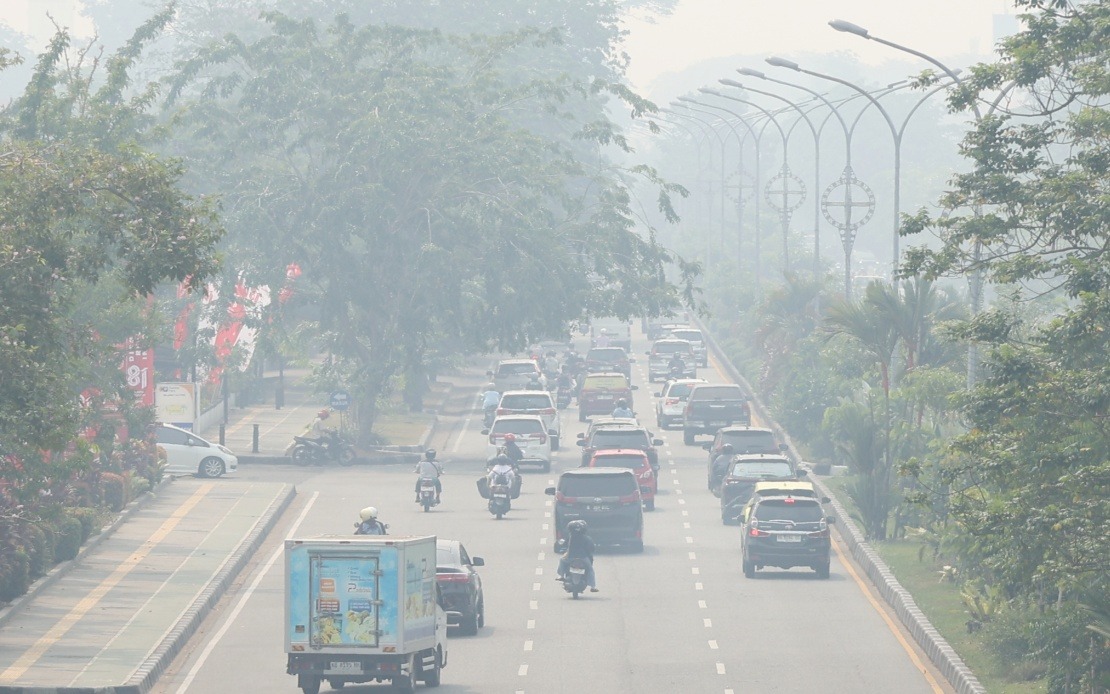
Indonesia is grappling with a dangerous air quality crisis as uncontrolled forest and peatland fires continue to spread across its western and central regions. The situation has reached critical proportions, with air pollution measurements in some areas exceeding thresholds that demand immediate public health intervention. The Health Ministry confirmed on Wednesday that Jekan Raya, a subdistrict within Palangka Raya in Central Kalimantan, recorded an Air Pollutant Index reading of 573 based on monitoring data from 17 air-quality stations, placing it firmly in the hazardous category where the general population faces serious respiratory risks.
The scale of the environmental emergency extends well beyond Central Kalimantan's most affected areas. Environmental Health Director Then Suyanti disclosed that Muaro Jambi Regency in neighbouring Jambi province also reached hazardous levels, recording an API of 302. Multiple additional locations across the broader fire-affected region have registered very unhealthy air quality readings, ranging between 201 and 300 on the pollution index. These zones of concern span geographically across Pelalawan in Riau, the municipalities of Penukal Abab Lematang Ilir and Ogan Ilir in South Sumatra, Southeast Pontianak in West Kalimantan, and the districts of Gunung Mas and Katingan in Central Kalimantan itself.
The health implications of such severe pollution levels are profound and cannot be understated. When air quality reaches hazardous classifications, medical authorities recommend that all demographics—not merely vulnerable populations—cease outdoor activities entirely. The ministry has issued explicit guidance that prolonged outdoor exposure during hazardous periods substantially elevates health risks, with particularly acute dangers for children, elderly citizens, and those with pre-existing respiratory or cardiovascular conditions. This guidance extends to areas merely registering very unhealthy readings, where citizens are urged to minimise time spent outside and reduce physical exertion in open spaces.
Responding to the public health emergency, Indonesia's Health Ministry is preparing comprehensive intervention measures designed to protect vulnerable populations and maintain essential services. A formal circular from the ministry's secretary-general is expected within the coming two days, outlining specific protocols for government agencies and educational institutions. Among the contemplated measures is authorization for schools to transition to distance learning whenever air quality measurements deteriorate beyond safe thresholds, ensuring educational continuity while protecting student health.
The geographical and demographic scale of this crisis is staggering. Agus Jamaludin, heading the ministry's Health Crisis Centre, revealed that the ongoing fires have directly affected approximately 3.4 million people distributed across seven provinces. These provinces—Riau, Jambi, and South Sumatra on the island of Sumatra, together with West, Central, East, and South Kalimantan on the island of Borneo—have collectively declared emergency alert status. This designation, while serious, remains distinct from full emergency response protocols, reflecting authorities' assessment that current containment efforts may yet prevent complete crisis escalation.
Casuality reports reveal that while the situation remains grave, immediate injuries have been limited. Jamaludin confirmed that 42 individuals have sustained minor injuries attributable to the fires. More concerning are two serious burn injuries documented in South Kalimantan, with both victims currently receiving hospitalised treatment. Notably, neither fatalities nor mass evacuations have been recorded to date, though authorities have mobilised 321 health personnel across the affected provinces to provide emergency medical support and manage potential surge in respiratory-related presentations.
The underlying environmental situation remains deeply problematic according to satellite surveillance data. The Forestry Ministry's monitoring systems detected 805 hotspots classified as high-confidence fire sources and an alarming 11,313 medium-confidence hotspots across Indonesia as of late Tuesday evening. The spatial distribution of these fire sources reveals particular concentration in the six provinces designated as priority intervention zones. South Sumatra leads with 239 high-confidence hotspots, followed by Central Kalimantan with 113, South Kalimantan with 89, and West Kalimantan with 86. Jambi and Riau province contribute seven and one high-confidence hotspots respectively, suggesting that while the eastern sectors face greatest immediate intensity, northern Sumatra continues requiring vigilant monitoring.
Medium-confidence hotspots present an even more extensive challenge, with West Kalimantan registering the highest concentration at 2,447 potential fire sources. Central Kalimantan follows with 2,168 medium-confidence hotspots, indicating that while high-intensity fires currently centre on South Sumatra, the broader Kalimantan region harbours significant potential for fire expansion. South Sumatra contains 1,161 such sources, South Kalimantan 710, while Riau and Jambi register 199 and 197 respectively. This distribution pattern suggests that firefighting efforts must maintain strategic focus on the high-confidence hotspots whilst simultaneously preventing medium-confidence sources from advancing to active combustion.
For regional observers, particularly Malaysian stakeholders, this Indonesian crisis carries significant implications. Malaysia, sharing maritime borders and atmospheric circulation patterns with affected Indonesian provinces, historically experiences transboundary haze during fire seasons. The severity of current pollution levels in Central Kalimantan and surrounding regions raises concerns about potential downstream air quality degradation across the Strait of Malacca and potentially affecting Malaysian air quality in coming weeks. Malaysian authorities typically increase air quality monitoring and public health advisories during peak Indonesian fire seasons, and the current situation warrants heightened preparedness.
The underlying challenge facing Indonesian authorities reflects systemic vulnerabilities in land management and enforcement capacity. Peatland fires, which constitute a significant proportion of Southeast Asian burning incidents, prove particularly difficult to extinguish once ignited and generate disproportionate smoke volumes relative to their physical extent. Dry season conditions across Sumatra and Kalimantan create ideal combustion environments, whilst economic incentives for land clearing—whether for agricultural development, palm plantations, or timber extraction—motivate deliberate burning practices. Previous years have witnessed similar cycles, suggesting that institutional mechanisms for preventing fire initiation remain inadequate despite international pressure and domestic policy frameworks.
The coordination between Indonesia's Health Ministry, Forestry Ministry, and provincial authorities demonstrates governmental recognition of crisis severity. Mobilising over 300 health personnel, preparing emergency protocols for schools and public institutions, and conducting continuous satellite monitoring reflect serious response efforts. However, the persistence of thousands of hotspots indicates that firefighting and fire suppression capabilities remain insufficient relative to the scale of burning. Success in reducing air pollution will ultimately depend on whether ground-level suppression efforts can outpace fire expansion, a challenge compounded by the vast geographical areas involved and the complex terrain of Indonesian peatlands.

