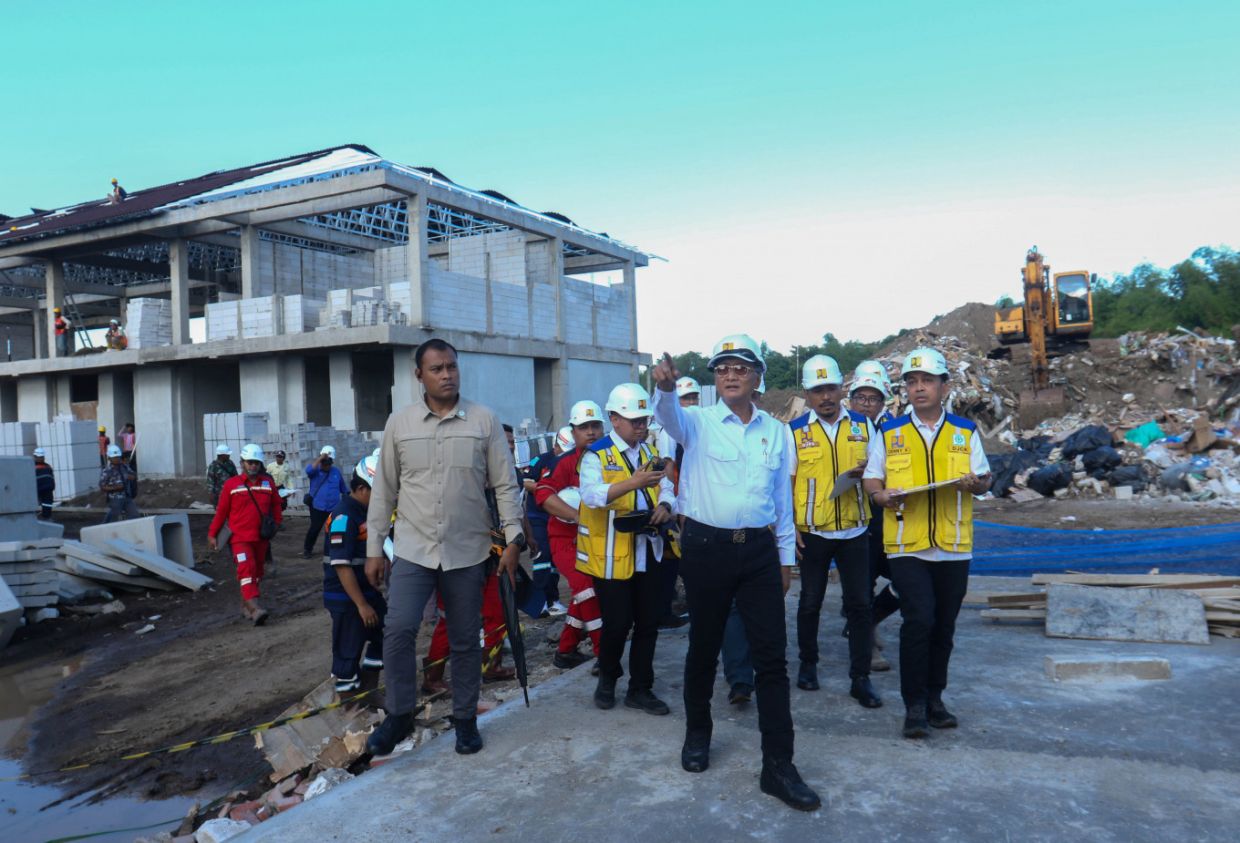
Public Works Minister Dody Hanggodo finds himself at the centre of a growing political controversy after an official ministry letter identified his wife and daughter as participants in a forthcoming delegation to the United States, prompting questions about government accountability and the appropriate use of state resources.
The dispute became public after a document from the Public Works Ministry circulated widely on social media, revealing that eight individuals were slated to travel to New York between July 13 and 19. The letter, signed on June 29 by Ministry Secretary-General Apri Artoto, explicitly named Irma Hermawati, the minister's wife, and Aurellia Tsabitha Meidirama, his daughter, as delegation members. Notably, the document indicated that Irma would travel using a diplomatic passport while Aurellia would hold an ordinary travel document.
The delegation's stated purpose is to attend a High-level Meeting on the Midterm Review of the New Urban Agenda, a gathering convened by the United Nations General Assembly and coordinated by the UN Human Settlements Programme (UN-Habitat). This meeting, scheduled for July 16 and 17 in Manhattan, addresses global urbanisation challenges and represents an important international forum. The inclusion of ministerial family members in such an official delegation is not unusual in many countries, yet the transparency surrounding their participation has become the flashpoint for public concern.
The ministry's response attempted to defuse controversy by asserting that no government budget would finance the family members' participation. Apri insisted that all expenses related to Irma and Aurellia's travel would be covered personally, and that their inclusion in the travel documents was merely a procedural necessity to facilitate visa applications through the Foreign Ministry. He further defended the issuance of a diplomatic passport for the minister's wife as consistent with existing regulations governing such documents.
However, these explanations have failed to satisfy critics and oversight bodies. Maneger Nasution, a member of Indonesia's Ombudsman institution, called for the ministry to demonstrate substantially greater transparency regarding the decision to include family members and to provide concrete assurances about the allocation of resources. Nasution emphasised that the ministry must demonstrate not only that no state funds would be spent but also that the participation of family members is legitimate, lawful, and entirely free from conflicts of interest or abuse of ministerial authority.
The controversy arrives at a sensitive moment for the Indonesian government. President Prabowo Subianto has championed an austerity agenda aimed at reducing unnecessary expenditures and improving fiscal discipline across state institutions. Public perception that high-ranking officials are bending rules to accommodate family members during international travel sits uncomfortably with this messaging and undermines confidence in the administration's commitment to fiscal responsibility.
Dody's background adds another layer of complexity to the scrutiny. Before joining the Democratic Party and entering politics, he maintained business relationships with prominent South Kalimantan entrepreneur Andi "Haji Isam" Syamsuddin Arsyad, whose commercial operations encompass companies deeply involved in President Prabowo's ambitious food estate initiative in Merauke, South Papua. These historical connections have kept the minister within the focus of observers concerned about potential conflicts of interest in his decision-making.
The 60-year-old minister has previously expressed concerns about what he characterised as a "deep state" operating within government structures to undermine his position. This claim followed the leak of an internal audit document from his ministry that alleged unnamed influential actors were attempting to involve him in corruption charges. Whether such suggestions are credible or defensive posturing remains unclear, but they illustrate an environment of institutional tension within the Public Works Ministry.
For Southeast Asian observers, this episode highlights broader governance challenges facing the region. Many developing nations grapple with balancing the practical realities of government operations—where ministerial family members sometimes participate in international delegations—against public expectations for transparency and accountability. The Indonesian case demonstrates how procedural decisions that might be routine can become politically damaging when public confidence in institutional integrity is already fragile.
The incident also illuminates the power of social media in Indonesian political discourse. The rapid circulation of the ministry letter on digital platforms and the swift public response underscore how information transparency, or the perception of opacity, can shape political narratives independently of official explanations. In an environment where citizens increasingly scrutinise government spending and official behaviour, bureaucratic procedures that lack visible public justification invite suspicion.
Moving forward, the ministry faces pressure to provide more detailed clarification about decision-making processes regarding delegation composition and to establish clearer protocols governing the participation of government officials' family members in international missions. The Ombudsman's intervention suggests that formal investigative processes may follow, potentially extending this controversy beyond immediate public relations management.
This episode reflects Indonesia's ongoing negotiation with questions of governance, transparency, and the relationship between official position and private interest. For Malaysia and other regional economies facing similar pressures around public accountability and institutional trust, the Indonesian experience offers instructive lessons about the political costs of perceived opacity in government operations, particularly when such opacity conflicts with broader austerity messaging.

