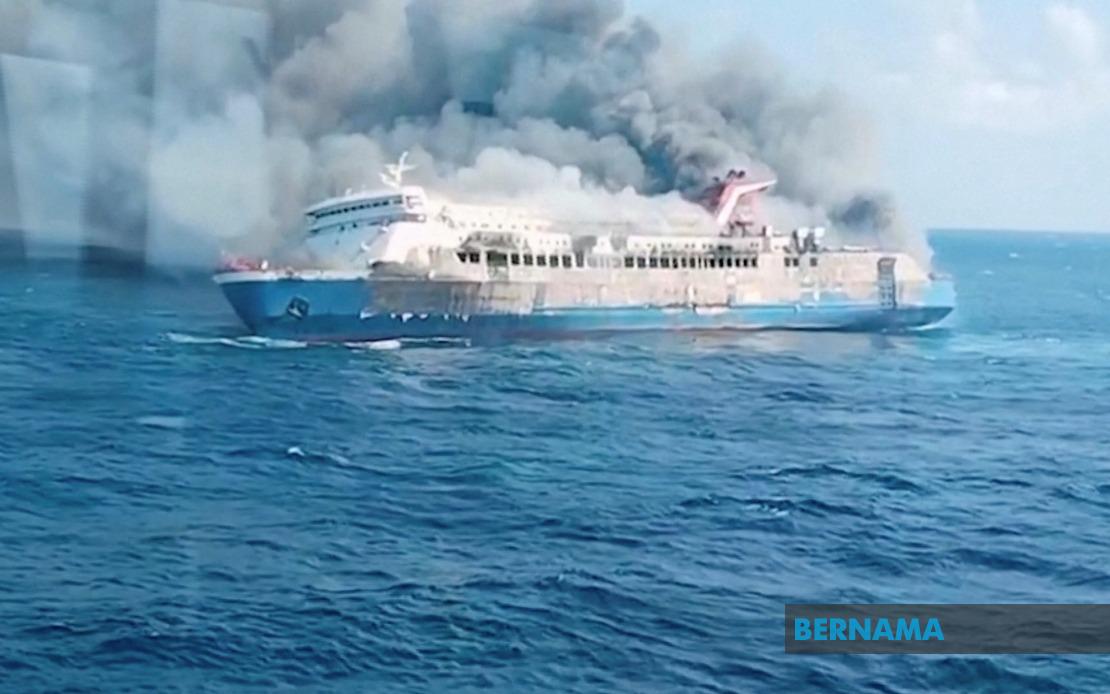
A major maritime disaster unfolded in Indonesian waters north of Sumenep on the island of Madura when the passenger ferry KMP Mutiara Sentosa II erupted in flames on Monday morning, prompting an urgent search and rescue operation now into its second day. The vessel, which had 232 passengers and 39 crew members aboard, caught fire at approximately 8.24 am local time, with the rapidly spreading flames destroying much of the ship's structure. The incident has highlighted the challenges facing Indonesian maritime authorities in responding to catastrophes in busy shipping lanes serving eastern Java and Madura.
Responding to the emergency with escalating resources, the Surabaya Search and Rescue Office has significantly expanded its deployment of naval and air assets to comb the waters north of Madura for survivors and victims. Nanang Sigit, chief of the Surabaya SAR Office, indicated that the search intensified considerably on the second day of operations, bringing in the Indonesian Navy's KRI Bung Hatta-370 warship alongside other state maritime vessels including the State Ship Grantin P.211 and patrol vessel Manyar 5003. The East Java Police also contributed helicopter support to the aerial search efforts, extending the operation's coverage across the northern waters where the ferry went down.
The immediate evacuation efforts have achieved partial success, with rescue teams managing to pull 229 survivors from the sea and transport them in stages to Tanjung Perak Port in Surabaya, where medical personnel have examined them for injuries and trauma. However, the situation remains grave, with authorities still searching for dozens of passengers and crew whose fate remains unknown. The recovery of five bodies so far underscores the tragedy's scale, with the deceased being transferred to Bhayangkara H.S. Samsoeri Mertojoso Hospital in Surabaya for identification and processing.
This incident comes as a stark reminder of maritime safety concerns across Southeast Asia, where aging vessel fleets and sometimes inconsistent safety standards continue to pose risks to travellers. Indonesia's ferry networks play a crucial role in connecting its scattered archipelago, yet incidents like the KMP Mutiara Sentosa II fire demonstrate how rapidly peaceful civilian transport can transform into disaster. The speed at which the flames consumed the vessel suggests potential issues with fire suppression systems, emergency protocols, or the structural design of the ship itself—questions that will likely form part of inevitable investigations once the immediate rescue operation concludes.
The deployment of military assets reflects the seriousness with which Indonesian authorities are treating the search effort, with the Navy contributing significant operational capacity to supplement civilian maritime rescue capabilities. Such multi-agency coordination, while essential in emergencies, also highlights the resource constraints that developing maritime nations face in maintaining continuous search and rescue readiness across their territorial waters. The Surabaya office's ability to mobilize helicopters, warships, and patrol vessels within hours of the disaster demonstrates institutional preparedness, yet the scale of the incident has clearly strained available resources.
For Malaysian observers, the incident serves as a sobering case study in maritime risk management relevant to regional ferry operations. Malaysia operates similar inter-island and cross-strait passenger services, and shared maritime safety standards remain an important consideration for Southeast Asian governments. The rapid escalation from passenger transport to mass casualty event underscores why international maritime safety conventions and regular inspections of aging vessels remain critical, particularly for developing economies where aging fleets may operate alongside newer vessels in the same waters.
The recovery operation's second-day status suggests that search efforts will continue at least through the coming days, with authorities maintaining hope of locating additional survivors despite the passage of time. Experience from similar maritime disasters indicates that survival rates decline sharply after the first 24 to 48 hours in open water, placing increasing urgency on the search teams' work. The fact that nearly 230 people have been successfully rescued provides some measure of consolation amid the tragedy, yet the unknown fate of the remaining individuals weighs heavily on families and Indonesian society.
The KMP Mutiara Sentosa II incident will inevitably prompt reviews of ferry safety regulations and enforcement mechanisms across Indonesia. Questions about vessel age, maintenance standards, fire prevention equipment, crew training, and passenger capacity will feature prominently in post-incident analyses. Regional maritime authorities will also likely examine whether existing safety protocols are adequate for managing similar emergencies, potentially leading to recommendations for enhanced monitoring and stricter compliance requirements.
As the search continues, the broader implications for regional maritime transport security remain significant. For Malaysian shipping companies and ferry operators, as well as regulators overseeing such services, the Madura incident reinforces the necessity of rigorous safety standards, regular inspections, and comprehensive crew training programmes. The incident demonstrates that maritime disasters, while statistically rare, remain highly consequential events that demand investment in prevention, preparedness, and rapid response capabilities across Southeast Asian waters.

