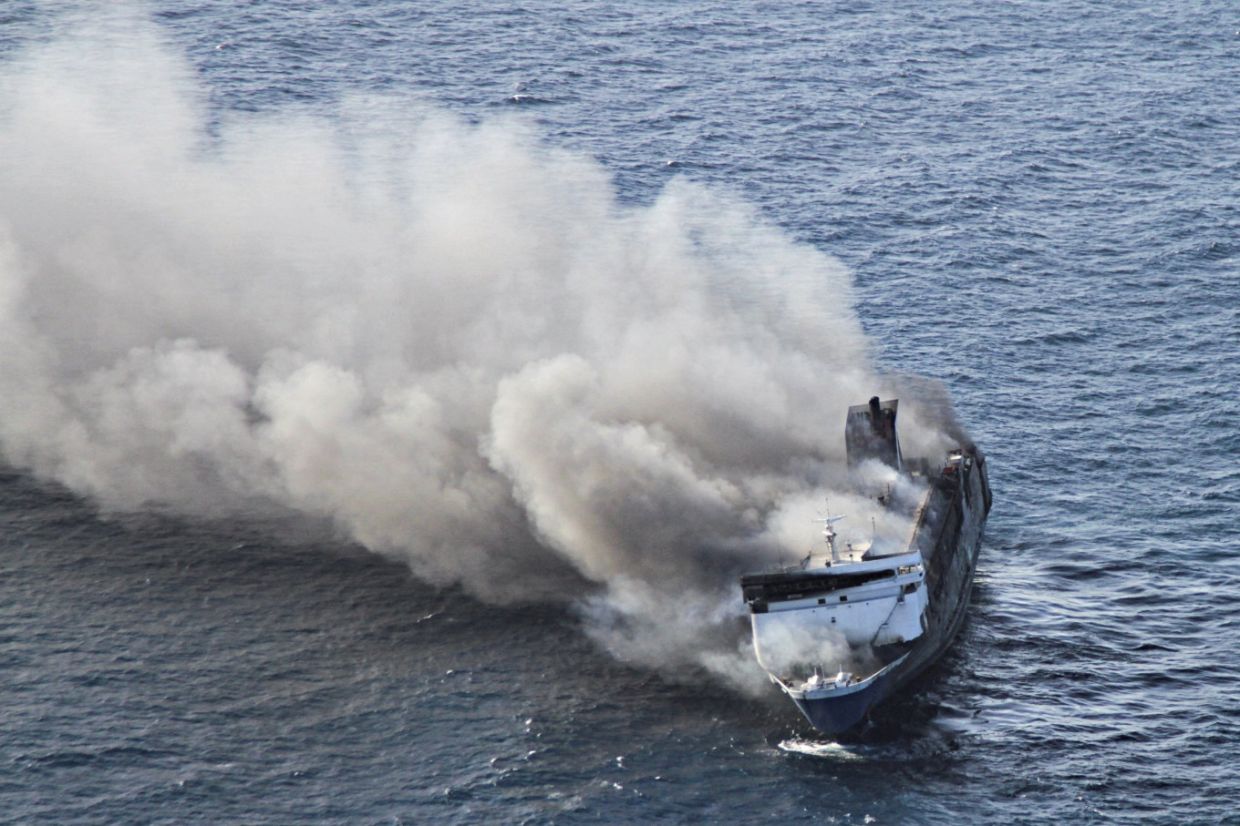
The sudden outbreak of fire aboard the KMP Mutiara Sentosa II on the morning of August 2 has rekindled a critical conversation about the robustness of Indonesia's maritime oversight architecture. The vessel, operating the commercial route between Surabaya in East Java and Makassar in South Sulawesi, caught ablaze with 236 passengers—predominantly logistics truck drivers—and 39 crew members on board. The incident claimed at least five lives, with two additional passengers still unaccounted for, leaving families and industry observers searching for explanations about how such a tragedy could unfold on a supposedly certified passenger vessel.
What distinguishes this fire from isolated maritime accidents is the pattern of negligence it appears to reveal. Udin Karo Karo, who chairs the Makassar–Surabaya Truck Drivers Association, documented a particularly troubling sequence of events during the evacuation. According to his account, crew members failed to execute orderly evacuation procedures, forcing approximately 40 percent of drivers to fend for themselves as flames spread through the 160-meter-long, 25-meter-wide vessel. More alarmingly, passengers were compelled to abandon ship by jumping into the sea with only life jackets for protection, as neither lifeboats nor inflatable rescue rafts were deployed or even visible during the emergency response. This catalogue of failures suggests that the gap between safety regulations on paper and actual shipboard practices remains dangerously wide.
The contractor operating the KMP Mutiara Sentosa II, PT Atosim Lampung Pelayaran (ALP), has a troubling history that amplifies concerns about systemic regulatory failures. The company previously operated the KMP Mutiara Sentosa I, which also caught fire near Madura on May 19, 2017, killing five people. The fact that two vessels from the same operator have experienced similar catastrophic incidents within a five-year span suggests either profound technical deficiencies within the company's fleet management or inadequate oversight mechanisms that failed to prevent recurring hazards. This pattern indicates that whatever corrective measures were implemented following the 2017 fire proved insufficient to prevent a tragic repeat.
Edi Priyanto, Deputy Chairman of the East Java Occupational Safety and Health Council, offered a diagnostic assessment that reaches beyond immediate technical causes to examine organizational culture. He argued that the underlying vulnerabilities extend to the company's approach to safety management, its capacity to learn from previous incidents, and its risk management infrastructure. His observation carries particular weight because it reframes maritime disasters not simply as mechanical failures but as symptoms of organisations that have failed to institutionalise safety as a core operational value. When similar fires occur on vessels from the same operator, the question is no longer whether the ship was poorly maintained, but whether the company has fundamentally committed itself to preventing recurrence.
The speed at which this latest fire spread and the apparent dysfunction of emergency response systems warrant investigation that goes deeper than identifying the initial ignition source. Priyanto emphasised that authorities should examine why the blaze propagated so rapidly throughout the vessel and whether safety management systems, maintenance standards, crew training, and emergency procedures functioned as designed. This comprehensive investigative approach reflects international best practices, where maritime accidents are treated as failures of integrated safety systems rather than isolated equipment malfunctions. For Indonesian regulators, adopting such methodology would represent a significant maturation of how the country approaches maritime safety oversight.
Transportation Minister Dudy Purwagandhi acknowledged the gravity of the situation by announcing that the government would conduct a comprehensive evaluation of PT ALP contingent upon findings from the National Transportation Safety Committee (KNKT). However, his statement also reveals a concerning sequencing of priorities: the government appears inclined to wait for investigation results before assessing a company that has now been involved in at least two major maritime disasters. A more assertive regulatory posture might involve immediate operational reviews and heightened scrutiny of the company's fleet even as the formal investigation proceeds, particularly given the pattern of incidents.
Abdul Hadi, a member of the House of Representatives Commission V responsible for transportation and infrastructure oversight, articulated a perspective that shifts focus from individual incidents to systemic failure. He characterised the recurrence of ferry disasters within short timeframes not as unfortunate coincidences but as indicators that Indonesia's maritime safety architecture requires fundamental recalibration. His warning carries legislative weight and suggests that a formal parliamentary review of maritime oversight mechanisms may be forthcoming. When legislators begin to question whether safety inspections have become routine administrative procedures rather than rigorous safety assessments, it signals that confidence in regulatory institutions has eroded significantly.
The broader context for this ferry fire extends beyond the KMP Mutiara Sentosa II itself. Just one month before the Madura incident, another ferry carrying more than 70 passengers sank while transiting waters near Selayar, a small island south of Sulawesi. That disaster claimed at least four confirmed lives, with fourteen additional passengers presumed lost when search operations concluded. The clustering of significant maritime incidents within compressed timeframes raises questions about whether Indonesia's shipping standards, inspection regimes, or vessel certification processes have become insufficiently stringent, or whether economic pressures on operators are incentivising cost-cutting that compromises safety.
The human consequences of these regulatory shortcomings are profound and measurable. The truck drivers who travel regularly between Surabaya and Makassar depend on ferry services for their livelihoods, yet they have evidently placed their lives in the hands of operators and regulators who failed to provide adequate safety protections. Families of the deceased are confronted not only with grief but with the knowledge that their relatives' deaths may have been preventable through more rigorous oversight. The compensation discussions that will inevitably follow underscore the economic dimension of maritime safety: when accidents occur due to regulatory failures, society ultimately bears the costs through litigation, insurance claims, and social welfare expenses.
Moving forward, the investigation by the National Transportation Safety Committee will provide technical details about the fire's origin and the vessel's condition at the time of the incident. However, the more consequential work will involve examining why Indonesian maritime oversight has permitted companies with documented safety failures to continue operating passenger services. Abdul Hadi's call for safety inspections to move beyond administrative formality toward substantive assessment reflects a recognition that certification processes themselves may require overhaul. For Malaysian observers, the Indonesian situation offers a cautionary example of how regulatory erosion can occur gradually, with oversight bodies issuing approvals that no longer meaningfully correspond to actual vessel safety.
The KMP Mutiara Sentosa II fire ultimately represents a failure of the governance ecosystem that connects vessel operators, regulatory authorities, port administrators, and industry associations. No single failure point can explain why 236 people were placed aboard a vessel where emergency procedures apparently were not executed, where evacuation equipment was either absent or inaccessible, and where crew training appeared inadequate for managing a maritime emergency. Restoring confidence in Indonesia's maritime safety system will require not only company-level reforms but institutional changes that make regulatory oversight genuinely protective rather than perfunctory.

