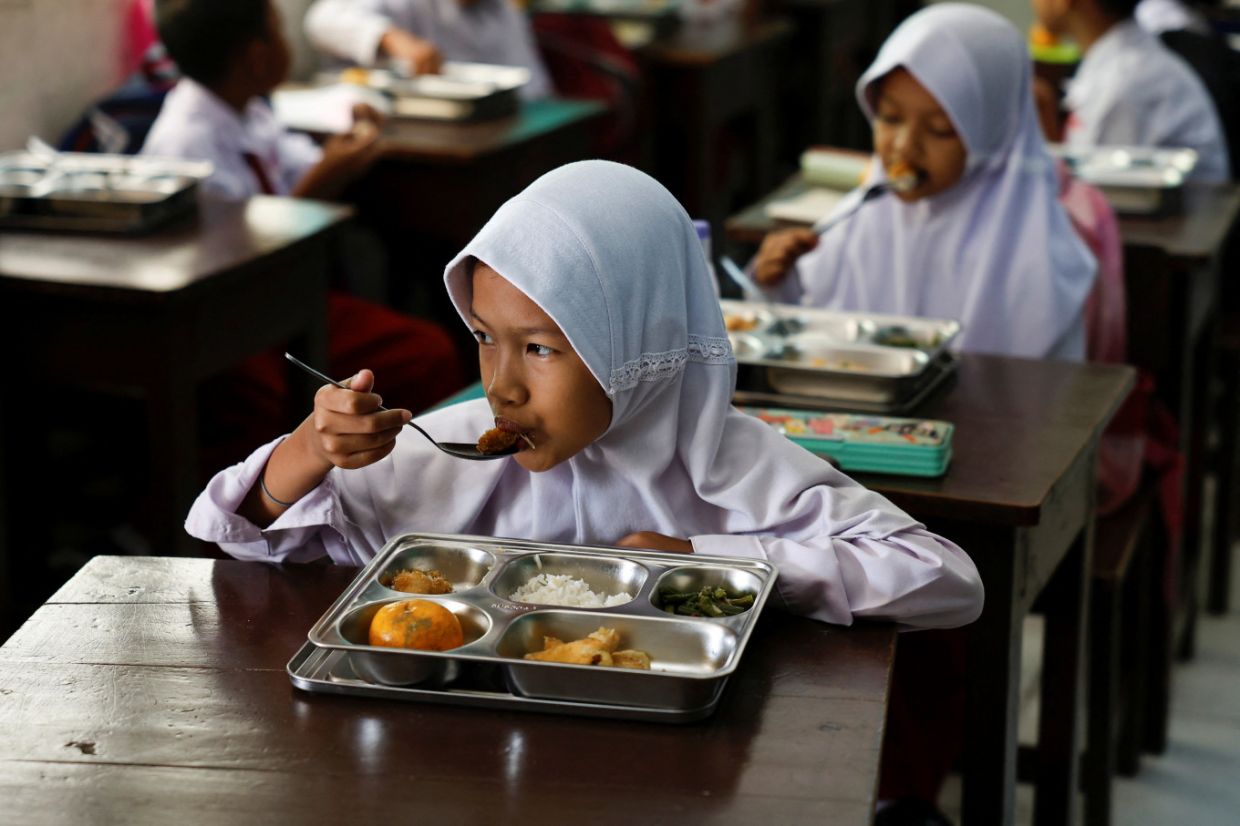
Controversy is mounting in Jakarta over proposed amendments to Indonesia's education system law, with teachers unions and civil society groups warning that the revisions contain language that could be weaponised to restore funding for President Prabowo Subianto's free nutritious meals initiative through education coffers. The Indonesian Teachers Association (P2G) has flagged concerns that the bill, which is currently under parliamentary scrutiny, includes ambiguously worded clauses treating health services as a foundational education function—a formulation that could be stretched to encompass the government's multitrillion-rupiah meal program despite a recent Constitutional Court order forbidding exactly that.
The crux of the controversy revolves around a single provision in the draft legislation dated July 8, which instructs the government and communities managing schools to "provide health services, including those concerning mental health, at educational institutions in a manner that is integrated with the national health policies as well as the national education goals". While the language appears innocuous on its surface, P2G national coordinator Satriwan Salim has interpreted it as dangerously open-ended, suggesting authorities could argue that the free meals scheme—framed as a health intervention—falls squarely within the scope of educational mandates. The ambiguity troubles him because it creates a legal pathway around an inconvenient court judgment.
The timing of this legislative push is significant and deliberate. On July 30, Indonesia's Constitutional Court dealt the government a decisive blow when it ruled that the free meals program, despite its social merits, does not constitute an education expense and therefore cannot be drawn from the education budget. This decision validated petitions from teachers, university lecturers, students and civil society organisations who argued that diverting education funds to nutritional programmes violated the Constitution's mandate that at least 20 percent of annual state spending be reserved exclusively for education infrastructure, teacher salaries and learning quality. The stakes are substantial: this fiscal year, the government channelled Rp 223 trillion (US$12.5 billion) from the Rp 769 trillion education allocation towards meals, effectively consuming nearly one-third of constitutionally mandated education spending.
The court's order stipulates that the meals programme must be removed from the education budget beginning with the 2028 state budget, though it stopped short of declaring the initiative itself unconstitutional—merely its funding source. Yet government officials appear reluctant to abandon the programme or find alternative revenue streams. Constitutional law scholar Feri Amsari has offered a sobering assessment of any attempt to work around the ruling through legislative revision. He argues that the Constitutional Court's interpretation of the Constitution binds all future legislation, not merely the state budget law, and that no amount of regulatory engineering—whether through budget reclassification, legislative rewording or nomenclatural adjustment—can overturn the substantive principle established by the ruling.
Civil society watchdogs have echoed Amsari's concerns with renewed urgency. The MBG Watch coalition, which supported the original petitioners, describes the risk of legislative circumvention as genuine and imminent. Agus Sarwono from Transparency International Indonesia, a coalition member, warns that attempts to maintain education financing for the meals programme through "changes in budget nomenclature, budget engineering or regulatory adjustments" would constitute an outright denial of the Constitutional Court's authority. This is not merely academic; it represents a fundamental tension between the executive branch, which favours the meals programme's continuation, and the judiciary, which has set boundaries on how it may be financed.
The broader institutional context heightens these anxieties. Indonesia has witnessed previous instances where government bodies have delayed or resisted implementing Constitutional Court rulings despite their binding legal character. A December 2025 ruling banning active-duty police officers from holding concurrent government posts offers a recent precedent of judicial decisions that struggle to gain traction against bureaucratic resistance. This track record suggests that a court order, however unambiguous, does not guarantee compliance if political winds blow against it. The appetite to circumvent the meals ruling appears genuine enough that civil society monitors consider continued vigilance essential.
House Commission X, which oversees education and has taken the lead in deliberating the bill, has responded to mounting criticism with assurances rather than concrete commitments. Commission chair Hetifah Sjaifudian, a Golkar Party legislator, acknowledged that concerns have reached the commission's attention and insisted the bill "was not yet ready for publication". She pledged that "every provision in the Sisdiknas bill will be drafted carefully so it does not leave room for multiple interpretations or conflict with the spirit of the Constitution". Yet critics note these promises come after the problematic language was already drafted, raising questions about whether good intentions can remediate flawed legislative architecture.
Sjaifudian further committed to ensuring the education budget serves its primary function of improving learning quality, enhancing teacher welfare and strengthening educational services rather than funding programmes tangential to education's core mission. She welcomed public participation in the deliberation process and signalled that the bill remains subject to revision. These statements suggest parliamentary receptiveness to criticism, though whether the commission will substantially rewrite the health services clause or merely clarify its scope remains unclear. The parliamentary deliberation process itself has become a proving ground for whether Indonesia's institutions can resist the temptation to circumvent judicial decisions through legislative sleight of hand.
For Southeast Asia more broadly, Indonesia's experience carries cautionary implications. The region's developing democracies frequently grapple with tensions between judicial independence and executive convenience. When a government programme enjoys political support and budgetary momentum, the temptation to find legal workarounds—rather than simply accepting a court's interpretation—can prove overwhelming. Indonesia's handling of this particular dispute will signal whether its Constitutional Court possesses sufficient institutional strength to enforce its rulings against resourceful political actors, or whether carefully calibrated legislative language can ultimately hollow out judicial determinations.
Teachers have particular reason to watch this dispute closely. They have long argued that education budgets face chronic underfunding relative to genuine pedagogical needs—teacher salaries, classroom infrastructure, learning materials and student support services remain perennially squeezed. The redeployment of education funds toward meals, however well-intentioned, has come at the expense of these core functions. If the proposed bill succeeds in reopening the funding question, teachers will lose not merely a legal victory but potentially face further budget competition from non-educational priorities masquerading as educational necessities. The stakes extend beyond constitutional principle to material conditions in Indonesian classrooms.

