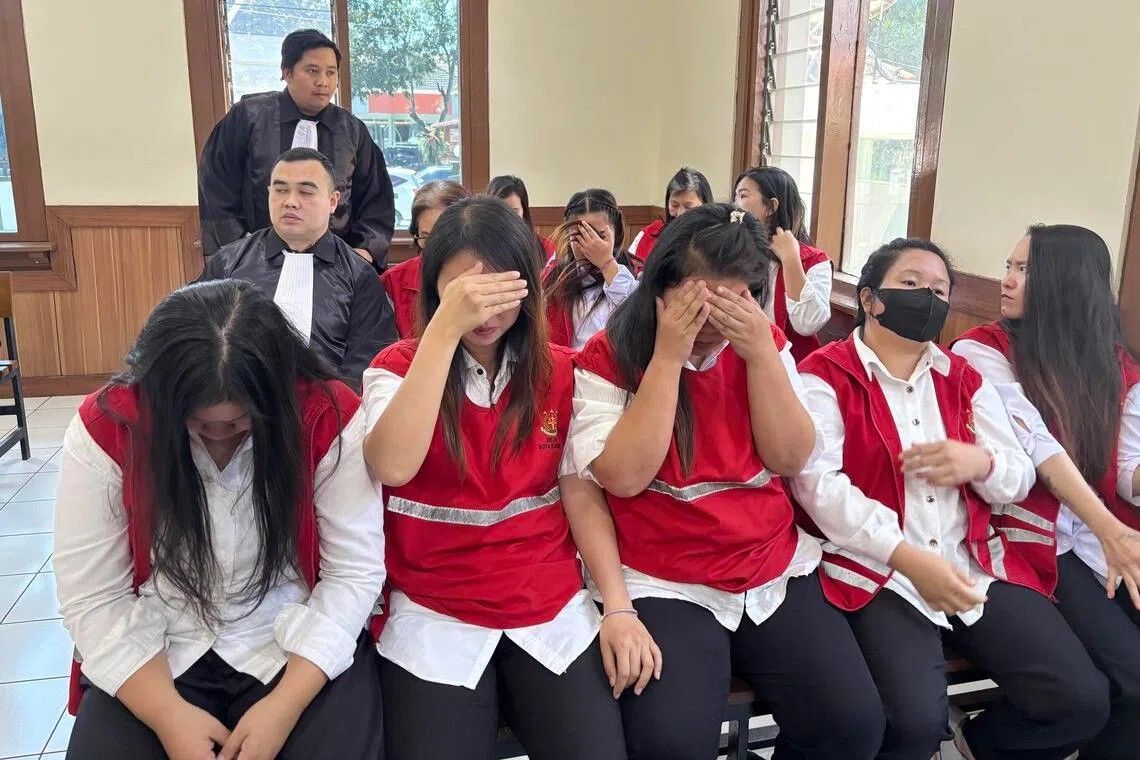
A major baby-smuggling operation spanning Indonesia and Singapore has resulted in the conviction of all 19 defendants, with the mastermind sentenced to seven years imprisonment on July 21. Lie Siu Luan, a 70-year-old woman operating under aliases including Popo and Lily, orchestrated the trafficking of at least 34 infants over a two-year period, according to findings by the Bandung District Court in West Java. The verdict marks a significant milestone in Indonesia's efforts to combat the exploitation of vulnerable newborns, with at least 12 of the trafficked children identified as destined for Singapore, where each infant commanded a price of 200 to 250 million rupiah—approximately S$18,110.
Judge Gatot Ardian Agustriono, presiding over a three-judge panel, delivered the guilty verdict against Lie after establishing that she had systematically recruited babies, fabricated adoption documentation, and coordinated their illegal movement across international borders. The court determined that Lie's role extended beyond mere involvement to active coordination of the entire smuggling apparatus, making her criminally responsible for the recruitment, harboring, and transfer of infants for purposes of exploitation. The sentence imposed—seven years—fell short of prosecutors' recommendations for a decade-long imprisonment, suggesting the court may have taken into consideration factors such as admissions of guilt and cooperation during proceedings, though no official reasoning for the variance was disclosed.
The broader syndicate comprised 18 additional members, predominantly women, who operated distinct functions within the trafficking network. Astri Fitrinika, identified as the organization's chief recruiter, received a sentence of six years and seven months, equivalent to Lai Su Hua, who specialized in the falsification of state documents required to facilitate adoptions. Two other key recruiters, Djaka Hamdani and Elin Marlina, received identical sentences of six years and seven months. The remaining 14 defendants, most of whom allegedly worked as caregivers providing temporary shelter and care for the infants prior to their transfer, received shorter sentences of three years and four months, reflecting their lower positions within the hierarchical structure of the smuggling enterprise.
The trafficking operation functioned with notable sophistication, suggesting careful planning and established networks rather than ad-hoc criminal activity. By generating forged adoption paperwork and establishing care arrangements, the syndicate created the appearance of legitimate international adoption transactions. This veneer of legitimacy would have enabled the infants to be transported across borders with reduced scrutiny, a critical operational requirement for sustaining such a large-scale enterprise over the two-year investigation period spanning 2023 to 2025. The involvement of document forgers and dedicated caregivers points to a well-compartmentalized operation where different actors performed specialized roles, minimizing individual exposure while maximizing operational resilience.
The conviction carries significant implications for Singapore and Southeast Asia more broadly, as it exposes vulnerabilities in transnational child protection frameworks. Singapore's role as a destination market for trafficked infants indicates that demand exists within wealthier developed economies for underground adoption channels, perhaps reflecting constraints within formal international adoption systems or the desire to circumvent established regulatory safeguards. The fact that approximately one-third of the trafficked infants were directed toward Singapore suggests organized networks exist specifically targeting prosperous nations in the region, with sources in Indonesia and potentially other Southeast Asian countries. This pattern demands closer coordination between regional law enforcement agencies and more rigorous screening of incoming international adoptions.
During their trial, which commenced in April and culminated in these July convictions, both Lie and Astri acknowledged most charges against them, though they maintained that the infants were voluntarily surrendered by biological parents rather than obtained through coercion or abduction. Both defendants insisted that all children received appropriate care and experienced no abuse or exploitation during their time in the syndicate's custody. These claims, while potentially relevant to assessments of culpability or mitigation, do not address the fundamental illegality of the operation or the vulnerability of the infants involved. Even if parents consented to relinquishing their children, the use of forged documents and the circumvention of adoption regulatory frameworks constitute serious crimes that undermine child welfare protections.
The economic dimension of the trafficking operation warrants scrutiny as it reveals the financial incentives driving such criminal enterprise. At 200 to 250 million rupiah per infant, the syndicate was generating between 6.8 and 8.5 billion rupiah in total revenue across the 34 identified cases, a sum that distributes meaningfully across 19 participants and likely compensated for the substantial operational risks involved. For context, this pricing is considerably below market rates for legitimate international adoptions in developed countries, yet far exceeds typical costs within Indonesia, suggesting substantial profit margins even after accounting for operational expenses. Such profitability creates powerful motivation for similar criminal networks to establish competing operations, indicating that disrupting one syndicate may be insufficient without addressing underlying demand and regulatory gaps.
Indonesia's approach to prosecuting this case demonstrates the country's growing capacity to investigate and prosecute transnational human trafficking offenses, reflecting improvements in investigative techniques and judicial handling of complex criminal networks. The Bandung District Court's coordination across multiple defendants and the coordination with international authorities to identify the Singapore connection indicate institutional development in combating this category of crime. However, the sentence disparity—ranging from just over three years to seven years across defendants with varying degrees of culpability—suggests sentencing guidelines remain inconsistent. This variability could undermine deterrent effects if perpetrators calculate that their expected sentences are manageable relative to potential profits.
For Malaysia and other Southeast Asian nations, this case underscores critical vulnerabilities in regional child protection frameworks that extend beyond Indonesia. The apparent ease with which a syndicate could operate across borders for two years while trafficking dozens of infants suggests that detection mechanisms remain inadequate and that cooperation between immigration, adoption, and law enforcement agencies requires strengthening throughout the region. Malaysia, as a major commercial hub and transportation nexus in Southeast Asia, could potentially serve as a transit point for such operations. Examining whether comparable smuggling networks might operate through Malaysian territory or whether similar demand patterns exist domestically represents an urgent policy priority for Malaysian authorities.
The broader human rights implications of this case center on the rights and welfare of the infants involved, who remain vulnerable despite the criminal convictions. Identification, reunification, and psychological rehabilitation of the 34 trafficked children—particularly the dozen sent to Singapore—requires sustained effort from multiple agencies across jurisdictions. International protocols for victim identification and support in child trafficking cases remain underdeveloped in Southeast Asia, meaning many infants may never receive specialized post-trafficking care designed to address trauma and attachment disruption. The conviction of the perpetrators, while legally satisfying, achieves limited practical benefit for the victims unless accompanied by comprehensive victim support mechanisms and ongoing monitoring of children's welfare.

