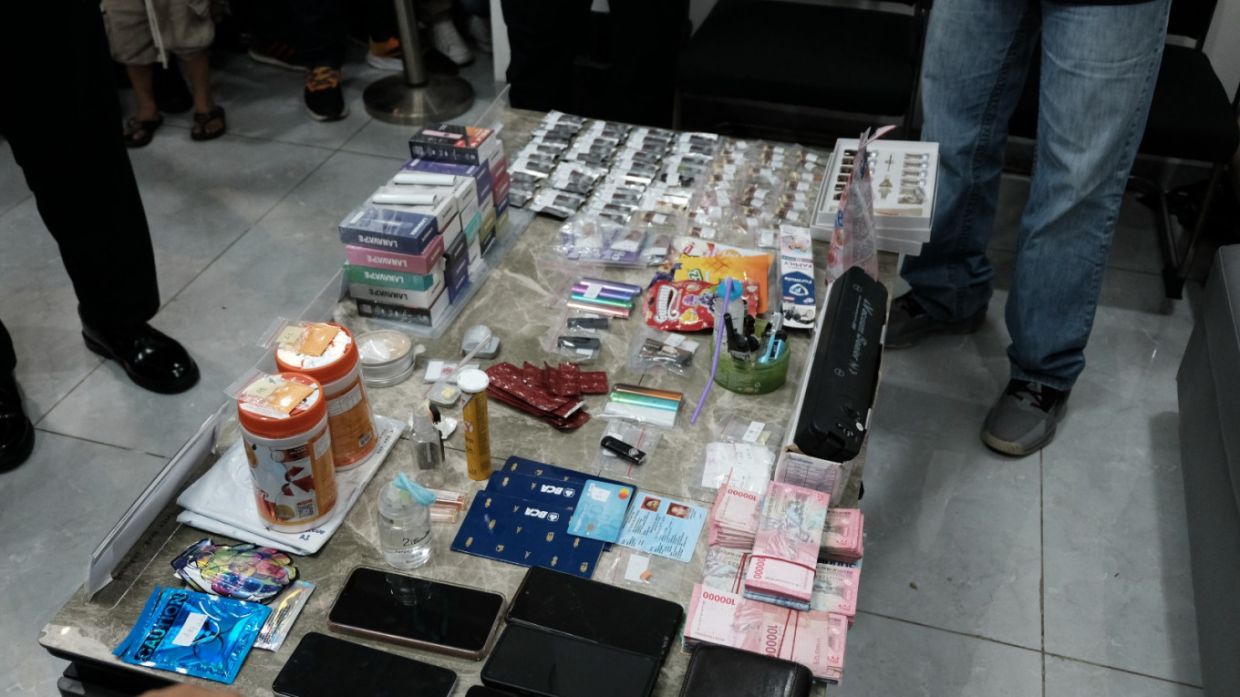
Indonesian law enforcement has successfully dismantled an elaborate drug trafficking organisation with clear Malaysian connections, marking another significant chapter in the ongoing battle against transnational narcotics operations in Southeast Asia. The joint operation by Indonesia's National Narcotics Agency (BNN) and the Customs and Excise Directorate General resulted in the arrest of six Indonesian nationals in Batam, though authorities continue hunting two Malaysian nationals believed to orchestrate the supply of etomidate and other controlled substances into the Riau Islands territory.
The syndicate's operational sophistication reveals how organised criminal networks have adapted their methods to evade detection across international borders. According to Insp. Gen. Aswin Sipayung, BNN's deputy for enforcement, the network operated with disciplined compartmentalisation—managing illicit seaport routes for drug entry, executing repackaging operations, and establishing distribution channels throughout the Riau Islands. This structured hierarchy, common among established trafficking organisations, reflects the professionalisation of drug crime in the region and the significant profits driving such enterprises.
The investigation's genesis traces to a seemingly routine customs examination at Jakarta's Soekarno-Hatta International Airport, where vigilant officers identified a suspicious parcel ostensibly containing Orange Fiber Xtra food supplement originating from Malaysia. Laboratory analysis at the Customs and Excise Laboratory in Jakarta revealed the package's true contents: MDMA, ketamine, and additional hazardous substances concealed within legitimate-appearing packaging. This discovery initiated a methodical joint tracing operation that would ultimately expose the broader criminal infrastructure.
The enforcement action unfolded across multiple locations and dates, beginning when a suspect identified as BAP was apprehended in Batam on Wednesday whilst attempting to collect the intercepted shipment. His subsequent interrogation provided the operational intelligence necessary for officers to rapidly move against additional targets. Within the same timeframe, three further suspects—ED, NC, and TFS—were arrested at a hotel in Baloi, with ED identified as the individual who had placed the original order. The speed and coordination of these arrests demonstrate the effectiveness of real-time intelligence sharing between agencies.
Raids conducted at residential locations yielded substantial quantities of narcotics and paraphernalia. Officers discovered vape cartridges filled with etomidate, ecstasy pills, methamphetamine powder, and ketamine at an apartment in Teluk Tering and a boarding house establishment in Batu Ampar's Sakura Garden area, where two additional suspects—AJ and DA—were apprehended. The use of electronic cigarette delivery devices for etomidate represents an emerging smuggling methodology that exploits modern consumer technology for drug distribution, a technique likely to become increasingly prevalent without enhanced border scrutiny.
Simultaneously, customs personnel at Batam Centre International Ferry Terminal intercepted a separate smuggling attempt when Malaysian passenger PS arrived from Johor Bahru's Stulang Laut International Ferry Terminal carrying 48 etomidate-containing cartridges. This parallel interdiction underscores the systematic nature of operations utilising multiple entry points and reinforces concerns about the vulnerability of maritime border crossings between Malaysia and Indonesia's island territories. Such incidents highlight ongoing challenges in securing porous water boundaries where ferry services facilitate regular passenger movement.
The cumulative seizures from the operation reflect the scale of the criminal enterprise. Officers confiscated more than 1,076 grams of MDMA, 50 grams of methamphetamine, 25.6 grams of ketamine powder, 86 H5 tablets, 10 ecstasy pills, and 170 vape cartridges containing etomidate alongside 12 vials of etomidate totalling 226 grams. The cache also included 88 vape devices, nine bongs used for methamphetamine consumption, sealing and weighing equipment, and four vehicles—including a Toyota Alphard van, Toyota Agya hatchback, Chery SUV, and two motorcycles—indicating significant investment in logistics infrastructure.
A particularly concerning dimension of the syndicate's operations involved deliberate deception tactics designed to circumvent border controls. Suspects repackaged drugs and etomidate cartridges into dried food containers and food supplement sachets, then resealed packages using plastic devices to create authentic-appearing commercial products. This approach exploits the massive volume of legitimate food trade crossing international borders and the practical limitations of thorough inspection of all cargo, presenting a systemic vulnerability in contemporary border security frameworks.
The investigation's ongoing scope remains unresolved, with authorities investigating possible connections between this network and a narcotics production facility previously raided by BNN and Customs personnel in Batam. Such linkages, if confirmed, would suggest integrated manufacturing and distribution operations rather than discrete trafficking cells, substantially elevating the threat assessment and suggesting the existence of production capacity within Indonesian territory supplied by Malaysian precursor chemicals or finished products.
Two Malaysian nationals identified as SL and WKC have been placed on wanted lists, with authorities designating them as principal suppliers to the syndicate. Their fugitive status underscores the cross-border mobility challenges facing law enforcement and the difficulty of extraditing suspects across national jurisdictions when diplomatic and legal obstacles complicate apprehension. The Batam Customs and Excise Office, led by Agung Widodo, estimated the enforcement action prevented approximately 6,770 potential drug users from accessing these substances and prevented approximately Rp10.8 billion (US$599,000) in projected state healthcare rehabilitation expenditure.
The arrested Indonesian suspects face severe legal consequences under Indonesia's Law No. 35/2009 on Narcotics, specifically Articles 114(2), 132(1), and 112(2), which establish penalties ranging from five years' minimum imprisonment to capital punishment, alongside maximum fines of Rp10 billion. These stringent penalties reflect Indonesia's zero-tolerance approach to narcotics trafficking and represent some of the world's harshest drug sentencing frameworks, though questions persist regarding deterrent effectiveness given the apparent persistence of transnational operations.
For Malaysian policymakers and enforcement agencies, this operation reinforces ongoing concerns about the country's role within regional drug trafficking networks. The involvement of Malaysian nationals as alleged primary suppliers, combined with the utilisation of Malaysian ferry terminals and departure points, suggests that Malaysian territory and ports continue serving as critical nodes within international drug supply chains. Enhanced cooperation with Indonesian authorities, strengthened port security protocols, and intensified investigation of suspected precursor chemical trafficking routes originating from or transiting Malaysia remain essential priorities for countering this persistent transnational threat.

