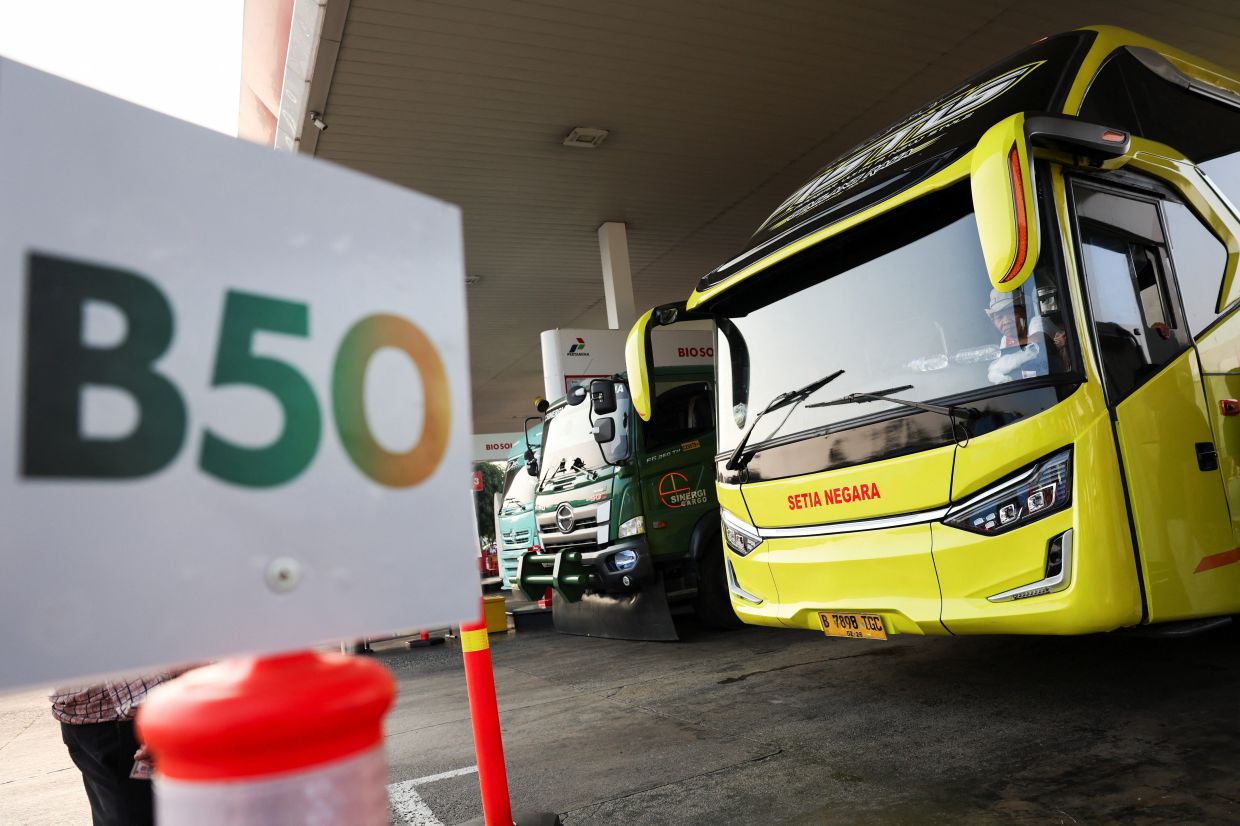
Indonesia, the world's largest palm oil producer, has officially rolled out its B50 biodiesel programme, marking an ambitious escalation in the mandatory blending of palm oil-derived fuel that officials say will substantially cut the nation's diesel import bill while creating new domestic demand for the country's largest agricultural export. Energy Minister Bahlil Lahadalia announced at a ceremony in Karawang, West Java, where President Prabowo Subianto was present, that the increase from the previous 40% blend to 50% would drive crude palm oil consumption upward to between 16.3 million and 17 million metric tons annually, representing a meaningful jump from the current 15.2 million tons.
The initiative sits among the world's most aggressive mandatory biodiesel blending mandates and reflects Jakarta's dual strategy of leveraging its vast palm oil reserves to address energy security while bolstering the profitability of a sector that underpins Indonesia's economy and rural employment. By thickening the biodiesel blend, the government aims to curtail its vulnerability to volatile global crude oil markets and the hard currency demands of petroleum imports, a persistent drain on the national budget. For Malaysian observers, the programme carries significant implications given the regional dynamics of palm oil production, pricing, and competition between Southeast Asia's two largest producers.
According to energy ministry figures, the B50 transition is projected to deliver import savings of 170 trillion rupiah—approximately $9.41 billion—this year alone, a figure that dwarfs the roughly 133 trillion rupiah in savings anticipated for 2025. Such substantial reductions underscore the financial stakes at play and why policymakers in Jakarta view biodiesel mandates as critical fiscal levers. The calculation assumes relatively stable global oil prices; however, should crude costs spike sharply, the savings could prove even more dramatic, making the economic case for the programme even more persuasive to a government navigating complex macroeconomic pressures.
President Prabowo took the occasion to position Indonesia as a champion of carbon emission reductions on the global stage, though the environmental credentials of expanded palm oil-based biofuels remain contested internationally. He disclosed that he had initially advocated for a B100 mandate—100% palm oil biodiesel—but that his cabinet advisers had counselled that a 50% blend would suffice to eliminate import dependence while remaining technically and logistically feasible. Notably, Prabowo indicated that the government intends to pursue even more ambitious targets, suggesting that a 60% blend should become the focus of future policy discussions, signalling that this latest programme may be merely one waypoint on a longer trajectory toward maximising palm oil integration into the fuel supply.
Energy Minister Lahadalia confirmed that the government has commenced research into a 60% biodiesel mixture, laying groundwork for the next phase of escalation. This forward-looking stance reflects confidence in the technical and supply-chain capabilities of Indonesia's palm oil and biodiesel sectors, though it also raises questions about whether sufficient processing infrastructure and refining capacity exist to handle such volumes without disruption. The ministry's willingness to publicly commit to exploring 60% blends signals a long-term policy commitment that should shape investment decisions by biodiesel producers and palm oil exporters across the region.
Under the previous B40 regime, Indonesia allocated 15.64 million kilolitres of biodiesel this year, representing a 4.68% increase over last year's consumption of 14.94 million kilolitres, a steady demand trajectory that created baseline expectations for the sector. However, the shift to B50 introduces substantially new requirements. Energy ministry officials have indicated that Indonesia will need between 16.7 million and 18 million kilolitres of fatty acid methyl ester—the primary chemical component of biodiesel—to meet the new mandate, a range that reflects uncertainty about seasonal demand fluctuations and vehicle fleet consumption patterns. The upper end of that estimate represents a roughly 20% jump from previous annual volumes, signalling a material expansion of production and logistical demands.
One notable administrative detail is that the government has not yet formally issued additional production quotas required under the B50 framework, leaving industry participants in a state of expectant uncertainty. This gap between policy announcement and operational implementation is not unusual in major transition periods, but it does create a window of ambiguity for biodiesel producers and refiners who must plan capital expenditure, feedstock procurement, and capacity expansion. The delay may reflect ongoing internal deliberations about how to allocate the expanded production rights among existing licence holders, whether to issue new permits, and how to balance competing interests within Indonesia's palm oil and petroleum sectors.
Businesses operating under the old B40 regime have been granted until the end of September to deplete their remaining stocks of 40% blend biodiesel, providing a transition window that allows retailers and logistics operators to sell through existing inventory before shifting entirely to B50 product. This grace period, while administratively helpful, is relatively compressed and will require coordination across supply chains to avoid bottlenecks or product stranding. For distributors and fuel retailers, particularly those operating outside major urban centres, the transition may present operational and inventory management challenges.
The B50 programme's implications extend beyond Indonesia's borders. For Malaysia, which competes directly in global palm oil markets and maintains significant biodiesel production capacity, Indonesia's deepening domestic biodiesel mandate represents both competitive pressure and a cautionary policy signal. As Indonesia locks in more of its palm oil output for domestic biofuel consumption, less of that commodity reaches international markets, potentially supporting global palm oil prices—a benefit for Malaysian producers. However, Indonesia's success in deploying its palm oil to meet domestic energy needs via biodiesel blending also demonstrates an alternative development pathway that Malaysia might consider, especially if global pressure on deforestation and sustainability concerns continue to constrain traditional palm oil export markets.
The B50 rollout also reflects broader geopolitical and economic currents shaping Southeast Asia. Energy independence and import substitution remain core development objectives for large regional economies, and Indonesia's biodiesel strategy aligns with those ambitions. By mobilising its abundant palm oil feedstock to reduce reliance on imported crude and petroleum products, Jakarta is executing a form of resource-based industrial policy that converts a primary commodity into value-added fuel products consumed domestically. This approach generates employment and profit opportunities throughout the supply chain—from smallholder farmers and plantation companies to refineries and distribution networks—thereby dispersing the benefits of the oil palm sector more broadly across Indonesian society.
Looking ahead, the success of the B50 programme will depend on seamless supply chain coordination, sustained government commitment despite any economic or political headwinds, and the continued technical viability of higher-blend biodiesel in Indonesia's vehicle fleet. The government's concurrent research into 60% blends suggests official confidence that scaling will proceed smoothly. However, international experience with aggressive biofuel mandates shows that technical challenges, fuel quality issues, and consumer acceptance can sometimes complicate implementation. Indonesia will need to carefully monitor these factors as it expands palm oil biodiesel penetration, while also remaining attentive to international scrutiny regarding deforestation, environmental impact, and sustainability certification—issues that could affect market access and investment sentiment if not managed transparently.

