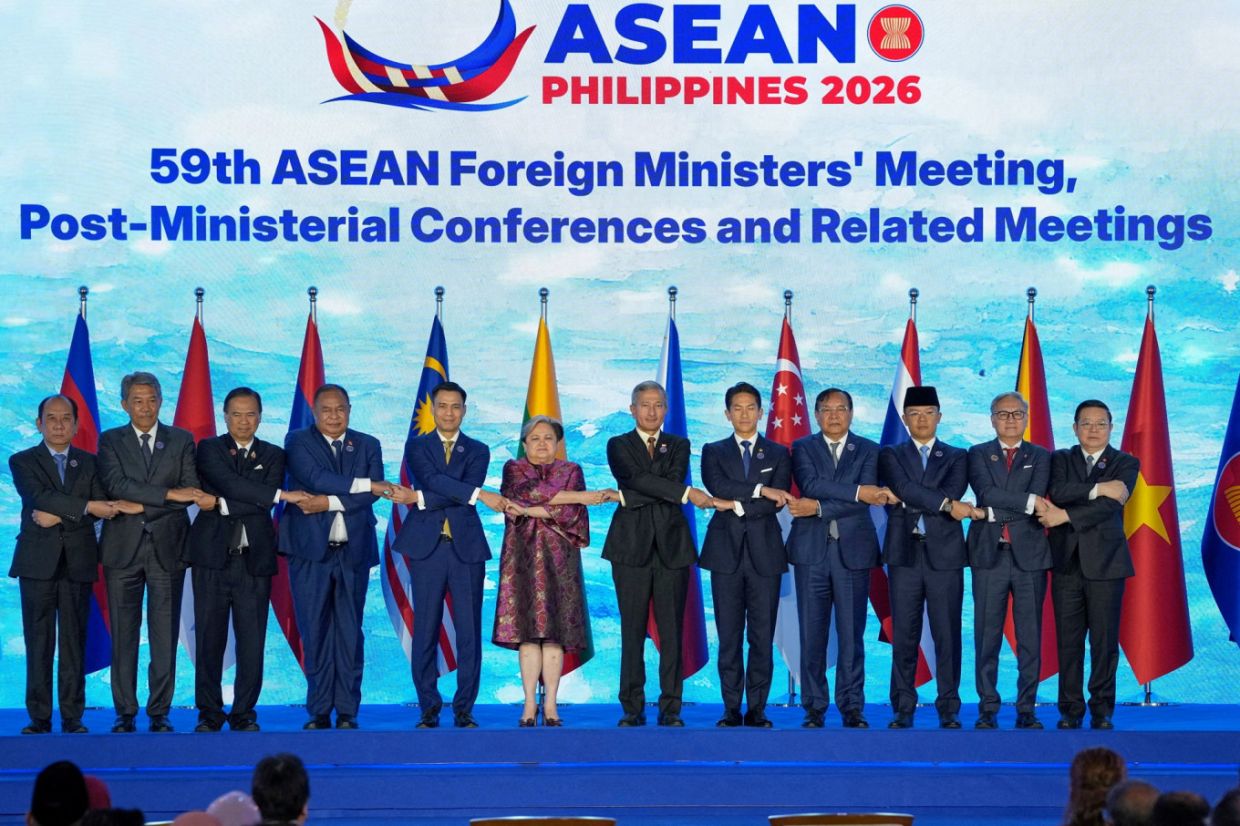
Indonesia has issued a forceful challenge to the Association of Southeast Asian Nations, demanding that the bloc transition from making promises to producing measurable outcomes through binding regional agreements and strategic partnerships. The appeal underscores growing anxiety within the 10-member organisation (soon to be 11 with Timor-Leste's inclusion) that mounting geopolitical pressures could overwhelm Asean's capacity to respond coherently, potentially exposing the weakness of an institution built on consensus and measured diplomacy.
The call crystallised during Tuesday's closed-door plenary session at the 59th Asean Foreign Ministers Meeting in Manila, where diplomats from across the region gathered to align positions before engaging with external partners the following day. Indonesian Foreign Minister Sugiono framed the moment as pivotal, suggesting that recent global upheavals—particularly the escalating Middle East conflict—had created both an imperative and an opportunity for Asean to demonstrate its relevance and institutional strength.
Sugiono's intervention reflected deeper anxieties about Asean's trajectory. He pointed to the bloc's amendment of its charter in May to welcome Timor-Leste as a landmark achievement, yet posed a stark question: could Asean actually deliver on its stated objectives? This formulation hinted at a pattern where Asean forums generate communiqués and frameworks that frequently remain unimplemented, a persistent criticism from analysts and civil society observers who argue that the organisation's consensus-based decision-making often masks fundamental disagreements among members.
The Middle East crisis has emerged as an acute test of Asean's unity and practical capacity. Ministers issued a joint statement expressing concern about the conflict's economic repercussions, the welfare of citizens abroad, and risks to regional stability. Yet beneath this measured language lies a more troubling dynamic: the energy disruptions stemming from volatility in the Strait of Hormuz have pushed several Asean nations toward deepening energy partnerships with China, potentially weakening the bloc's negotiating position on contentious issues like the South China Sea.
For Malaysian readers and investors, this shift carries significant implications. The region's energy security architecture is undergoing subtle but consequential recalibration. Trade data revealed that the Philippines, serving as this year's Asean chair, more than doubled its solar panel imports from China in the first half of 2024 compared to the same period last year. This pattern—accelerated by external supply shocks—illustrates how crisis circumstances can rapidly alter dependency relationships within the region, with ramifications for trade patterns, technological adoption, and strategic alignment that extend across Southeast Asia.
The South China Sea remained a focal point of concern, with Sugiono emphasising the urgency of completing the Code of Conduct, a multilateral agreement meant to establish rules governing one of the world's most strategically vital and contested waters. The negotiations have dragged on for nearly two decades, and Indonesia signalled impatience with the glacial pace. Sugiono's remark—that people have waited 24 years for maritime rules and should not wait another 12 months—underscored frustration with a process that has yielded technical progress but no binding agreement, leaving competing claims and strategic ambiguities unresolved.
This stalled negotiation process carries particular weight for Malaysia, Vietnam, Brunei, and the Philippines, all of whom hold overlapping maritime claims in the region. The longer the Code of Conduct remains incomplete, the greater the risk that individual nations pursue bilateral arrangements with major powers, fragmenting what Asean initially envisioned as a unified regional framework. Indonesia's pressure to accelerate the process reflects recognition that the geopolitical window for achieving consensus may be narrowing as external powers—notably China—consolidate their presence and regional states separately pursue strategic partnerships.
The Myanmar crisis also resurfaced on Tuesday's agenda, with ministers convening a dedicated session to assess progress on the Five-Point Consensus, Asean's peace roadmap for restoring order in Myanmar. This issue has proven persistently divisive, with member states unable to forge unified positions on engaging Myanmar's military administration. Philippine Foreign Secretary Theresa P. Lazaro indicated that discussions had moved toward practical reforms, including a review of how progress is measured and potential adjustments to Asean's special envoy mechanism. The target of completing this review by November's leaders' meeting suggests Asean leadership recognises that the existing approach has yielded limited results and requires recalibration.
For Southeast Asia's stability, the Myanmar situation remains foundational. Unresolved conflict, humanitarian deterioration, and uncertain political trajectories in Myanmar create cascading effects across the region—refugee flows, cross-border instability, and competition among external powers for influence. Asean's inability to broker a durable settlement undermines the organisation's credibility as a conflict mediator and reinforces perceptions that member states prioritise bilateral relationships with external partners over collective regional problem-solving.
The structural challenge facing Asean extends beyond any single issue. Indonesia's appeal to deliver on promises reflects a deeper institutional fragility: the bloc operates through consensus, meaning that determined opposition from any member can block progress. This mechanism, designed to respect sovereignty and prevent domination by larger members, frequently produces lowest-common-denominator outcomes that satisfy no one. The Myanmar case illustrates this pathology—some members favour engaging the junta pragmatically while others advocate isolation—leaving Asean paralysed between incompatible approaches.
Wednesday's sessions with Asean's dialogue partners—including the United States, China, Russia, India, Japan, and others—would add another dimension to these discussions. External powers increasingly view Asean as a venue for advancing their own strategic interests, and the bloc's perceived weakness invites competing suitors to work around or within Asean frameworks to advance bilateral relationships. This dynamic risks further fragmenting regional cohesion as member states balance commitments to Asean consensus with pursuit of bilateral great power partnerships.
Indonesia's intervention should be understood not merely as criticism but as a call for institutional reform. By naming the credibility problem directly, Sugiono signalled that Asean faces a choice: either elevate its decision-making capacity and commitment enforcement, or accept diminishing relevance as external powers increasingly shape regional outcomes through bilateral arrangements and ad hoc coalitions. For Malaysia and other medium-power Asean members, the stakes are considerable—a weakened Asean provides less leverage in negotiations with China, India, and the United States, while fragmenting regional responses to shared challenges like maritime security, supply chain resilience, and humanitarian crises.
The path forward requires more than rhetorical commitment. Asean must develop enforcement mechanisms, establish clearer timelines for agreements like the Code of Conduct, and establish criteria for measuring progress on initiatives like the Myanmar Five-Point Consensus. Without institutional innovation, Indonesia's challenge to deliver on promises risks becoming yet another communiqué quickly forgotten in the face of persistent member state divergence and external pressure.

