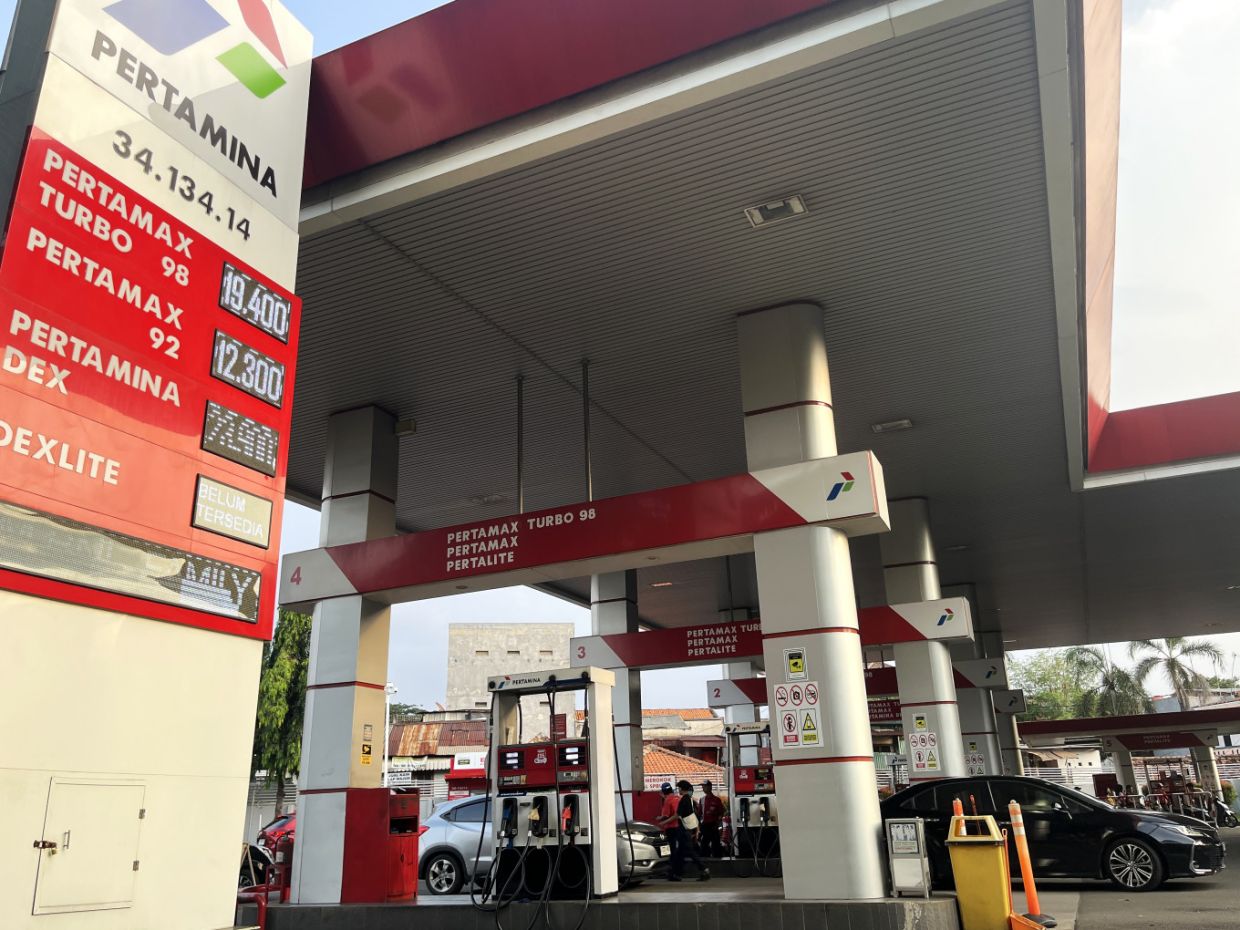
Indonesia's government is pursuing a fresh approach to contain mounting fuel subsidy costs by using vehicle ownership patterns as a gatekeeper for access to Pertalite, the country's subsidised RON 90 petrol. Coordinating Economy Minister Airlangga Hartarto revealed on Friday that policymakers view the type of vehicle someone drives as a reliable indicator of their socioeconomic standing, making it a practical tool for determining who should be permitted to purchase discounted fuel. This shift signals Jakarta's determination to refine its subsidy architecture after years of budget strain, though the government has stopped short of naming which vehicle categories would face restrictions.
The proposal represents part of a broader targeting strategy that would prevent households classified in the two highest socioeconomic deciles—the ninth and tenth—from purchasing Pertalite. Finance Minister Purbaya Yudhi Sadewa has indicated that excluding these top 20% of earners could trim the subsidy bill by roughly 10%, a meaningful reduction given Indonesia's chronically squeezed fiscal space. The government plans to trial this approach over the coming months, beginning with decile 10 households, framing the initiative as ensuring subsidies reach genuinely deserving beneficiaries rather than imposing blanket restrictions.
However, the proposal has collided with public scepticism about the accuracy of Indonesia's socioeconomic classification system. When Finance Ministry announcements triggered widespread online checking of personal decile status, many Indonesians discovered their classifications seemed misaligned with their lived circumstances. Middle-income Indonesians were startled to find themselves ranked in decile 10, the wealthiest bracket, sparking a social media firestorm questioning whether the government's data reflected economic reality. This backlash underscores a persistent challenge in emerging economies: the difficulty of creating workable targeting mechanisms when household economic status is fluid, informal livelihoods predominate, and administrative data remains fragmented.
In response to public concern, Airlangga encouraged citizens to await revised socioeconomic classifications. Statistics Indonesia (BPS) is conducting its 2026 national socioeconomic survey, Susenas, alongside an Economic Census intended to refresh the decile groupings. The government's reliance on updated survey data suggests an acknowledgement that current classifications may be outdated or incomplete, particularly given Indonesia's dynamic economic landscape. This recalibration period offers Jakarta an opportunity to strengthen the data infrastructure underlying subsidy policy, though questions linger about whether any survey can truly capture the complexity of household economic circumstances across an archipelago of over 270 million people.
The vehicle-based mechanism Airlangga outlined would represent a departure from Indonesia's previous subsidy restriction attempts. Earlier proposals had involved limiting Pertalite and Solar, Pertamina's subsidised diesel fuel, according to engine capacity and vehicle classification, with drivers required to register via smartphone to verify eligibility. That scheme was shelved as the government opted instead to raise subsidised fuel prices in 2022—a decision that has held firm for nearly three years despite volatile global crude markets. The persistence of unchanged prices reflects political sensitivities surrounding fuel costs in a developing nation where transportation expenses significantly impact working-class households and supply chains for essential goods.
Indonesia's chronic fuel subsidy burden stems from structural factors that make targeting both economically vital and politically treacherous. Following Russia's invasion of Ukraine in 2022, surging global oil prices collided with a weakening rupiah, threatening to send subsidy expenditures soaring well beyond budgeted allocations. For a government managing competing development priorities and infrastructure investments, fuel subsidies represent a persistent fiscal drain. Yet Indonesia's vast informal sector, dispersed rural populations, and reliance on petrol-powered transport across provinces make any restriction scheme complex to administer. Vehicle ownership itself may be an imperfect proxy for wealth—a transport driver might operate an older vehicle worth far less than a middle-class professional's saloon.
The timing of this vehicle-based approach reflects Jakarta's search for politically sustainable reform after the 2022 price adjustment largely cooled public pressure for further action. Rather than imposing another contentious price increase, targeting wealthy vehicle owners appeals to egalitarian sentiment and avoids directly burdening lower-income transport users and small businesses. However, the risk persists that inaccurate targeting could exclude genuinely poor households who own modest vehicles, or fail to capture wealthier individuals who purchase fuel through multiple household members or alternative arrangements.
For regional observers, Indonesia's struggle with subsidy reform holds lessons for Southeast Asia's broader energy policy environment. Malaysia, Thailand, and Vietnam all grapple with similar tensions between maintaining affordable fuel for citizens and managing fiscal sustainability. Indonesia's attempt to harness administrative data and vehicle registries for targeting signals growing sophistication in subsidy design, yet also exposes the practical limits of using narrow economic proxies in developing economies. The vehicle-based approach could offer a replicable model if successfully implemented, though its effectiveness ultimately depends on robust data governance and public buy-in.
Pertamina's recent decisions underscore the pressures driving these policy adjustments. The state-owned energy company raised prices for non-subsidised fuels by approximately 32% in June this year, responding to crude oil volatility and market conditions. This dual-track pricing—maintaining cheap Pertalite for eligible consumers while charging more for premium products—creates recurring tensions within Indonesia's fuel distribution system. Restricting access to subsidised grades for wealthier consumers could reduce pressure on Pertamina's finances and narrow the incentive for fuel arbitrage, where buyers purchase cheap Pertalite for uses beyond personal vehicles.
Airlangga's emphasis that the government is "not restricting" but rather "making sure the subsidy goes to the right people" reveals the political language surrounding reform efforts. This framing attempts to reposition subsidy targeting as pro-poor redistribution rather than benefit withdrawal, a narrative calculation that acknowledges public sensitivity to perceived deprivation. Success will depend on whether Indonesians accept vehicle ownership as a legitimate sorting mechanism and whether implementation mechanisms function reliably across the sprawling archipelago. Should the vehicle-based trial proceed, outcomes over the coming months could reshape how Southeast Asian governments approach subsidy governance in an era of fiscal constraint and tightening global energy markets.

