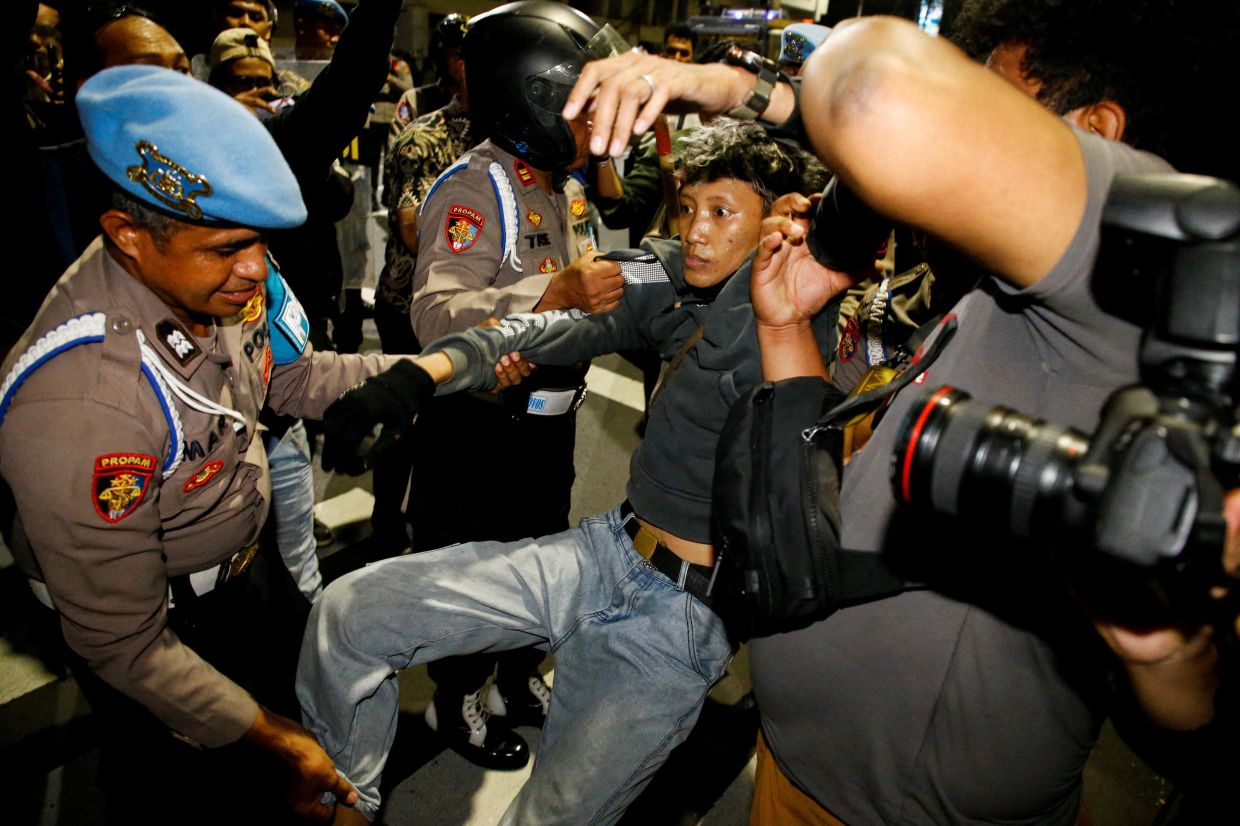
Indonesian police have pressed charges against four individuals in connection with an anti-government demonstration held in Surabaya, the nation's second-largest city, marking another escalation in public discontent over the government's economic policies. Surabaya police chief Luthfie Sulistiawan disclosed the charges on Sunday, June 28, against those accused of property destruction and assault on officers during the Friday rally near a municipal government building.
The gathering drew approximately 100 participants who assembled to voice opposition to two contentious government initiatives: a substantial fuel price increase implemented earlier in the month and the continuation of a free school meals programme that has become mired in allegations of corruption and food safety violations. The demonstration reflected broader frustrations within Indonesian society regarding the administration's economic direction and the apparent mismanagement of social welfare programmes designed to address pressing national concerns.
Accounts from the scene indicate that some protesters escalated their actions beyond peaceful demonstration, with certain participants hurling firecrackers and rocks in the direction of government facilities. In response, law enforcement officials employed what they characterised as "firm actions" to break up the gathering, resulting in the apprehension of 24 individuals on the day itself. However, the majority of those detained were subsequently released without formal charges, suggesting that police applied graduated enforcement measures during the dispersal operation.
The fuel price adjustment, which increased the cost of non-subsidised gasoline by approximately 30 percent, represented a significant policy shift by Jakarta aimed at alleviating mounting fiscal pressures on the state budget. The timing of this measure coincided with economic disruptions stemming from the Middle East conflict, which has created upward pressure on global crude oil prices and constrained supplies. This situation presents a particular challenge for Indonesia, which despite being an oil-producing nation, remains a net importer and maintains an extensive fuel subsidy system that drains considerable government resources.
The free school meals initiative, championed by the government as a mechanism to combat child malnutrition across the archipelago, has encountered severe implementation difficulties since its rollout. Tens of thousands of individuals have reported falling ill following consumption of meals provided under the scheme, triggering widespread investigations into food preparation standards, hygiene protocols, and procurement procedures. The accumulation of poisoning incidents, combined with emerging evidence of financial irregularities within the programme's administration, has severely damaged public confidence in the initiative and prompted authorities to suspend portions of its operations pending comprehensive reviews.
Protest movements have extended well beyond Surabaya, with particularly significant demonstrations occurring in Jakarta, where student activists have mobilised thousands to challenge both the fuel price increases and the continuation of the problematic meal scheme. These student-led movements have become a focal point for broader societal frustration, representing efforts by younger Indonesians to hold the government accountable for what they perceive as misguided economic policies and the inadequate oversight of major public programmes. The scale and persistence of these demonstrations indicate that opposition sentiment extends across multiple demographic groups and geographic regions.
The charge of property destruction carries particular significance in Indonesia's legal framework, as it provides authorities with leverage to pursue prosecution beyond the immediate dispersal of the protest itself. Combined with allegations of assault against law enforcement personnel, the four individuals now face formal legal proceedings that could result in substantial penalties. This approach by authorities suggests a strategy of using criminal charges against protest leaders or those perceived as orchestrating more aggressive actions as a deterrent against future demonstrations.
Additionally, authorities have identified six other individuals requiring further investigation after drug screening detected controlled substances in their systems during the Friday operations. This development introduces a secondary enforcement angle, as authorities can pursue separate narcotics-related charges independent of the protest-specific allegations. The identification of drugs in participants' systems adds complexity to the narrative and provides investigative pathways that extend beyond the immediate cause of the gathering.
The underlying economic circumstances that precipitated these protests reflect systemic challenges facing Indonesia's policymakers. The government's decision to reduce fuel subsidies responds to legitimate budgetary constraints, yet the implementation generates immediate consumer pain that translates into political pressure and street mobilisation. For Malaysia and other Southeast Asian economies similarly dependent on energy imports and burdened by subsidy systems, Indonesia's experience demonstrates the precarious political calculations required when adjusting pricing policies that affect ordinary citizens' purchasing power and household budgets.
The convergence of fuel price dissatisfaction with widespread food safety concerns within a high-profile government programme creates a particularly volatile political environment. Rather than representing isolated incidents, these grievances reflect deeper anxieties about governance capacity, institutional accountability, and the distribution of economic burdens across Indonesian society. The government's response through criminal charges against protesters indicates determination to maintain order, yet may simultaneously reinforce perceptions among opposition elements that the administration responds to criticism through enforcement rather than substantive policy dialogue or corrective action.

