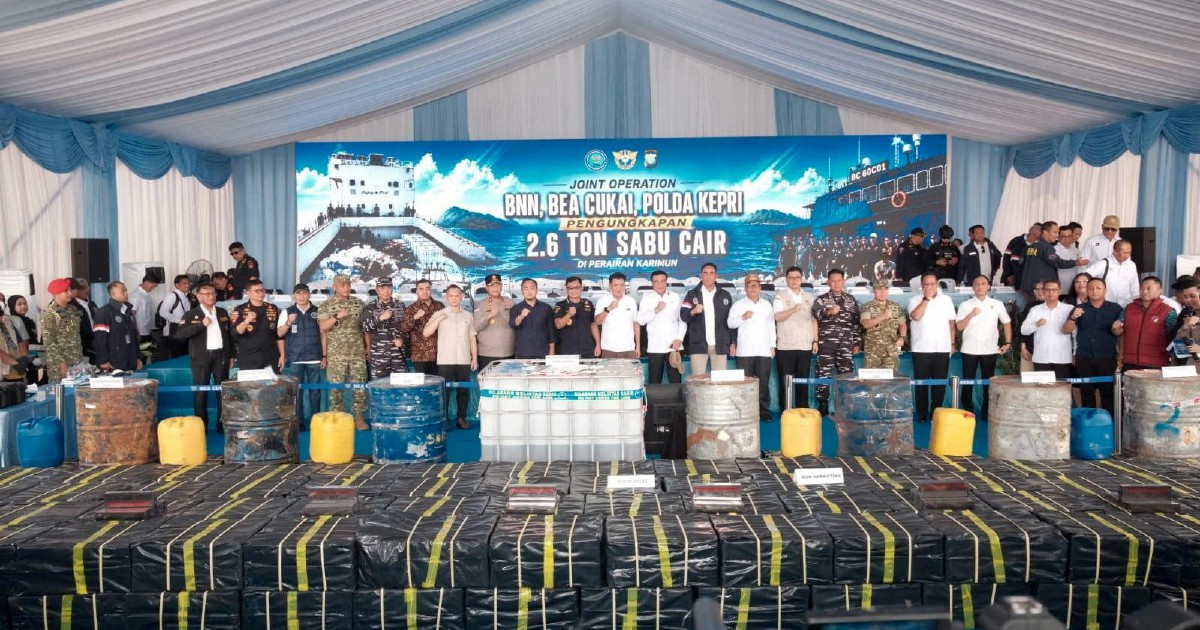
Indonesian law enforcement has apprehended 10 Myanmar nationals as part of a sweeping drug trafficking investigation triggered by the discovery of 2.6 metric tonnes of liquid methamphetamine aboard a vessel registered in Tanzania. The announcement came during an official briefing conducted by authorities in Jakarta on Friday, highlighting escalating efforts to dismantle trafficking operations that exploit Southeast Asia's porous maritime boundaries.
The seizure represents a substantial blow against transnational drug networks that have increasingly relied on flag-of-convenience vessels to mask illicit cargo movements through regional waters. The use of a Tanzanian-flagged ship—a nation geographically distant from the trafficking route—underscores the sophisticated operational methods employed by criminal organisations moving synthetic drugs from production zones in Myanmar through to distribution networks throughout Southeast Asia and beyond. Such vessels operate with minimal oversight from their registered flag states, creating enforcement gaps that traffickers deliberately exploit.
The 10 Myanmar detainees are now facing serious charges related to drug trafficking, though specific details about their alleged roles within the operation remain unclear pending fuller investigation and possible court proceedings. Myanmar has emerged as the epicentre of methamphetamine production in Southeast Asia, with clandestine laboratories concentrated particularly in border regions and areas beyond effective state control. The country's role as a production hub has made its nationals both key operatives and vulnerable workers within these criminal supply chains, often recruited through coercion or economic desperation.
This operation underscores Indonesia's intensified enforcement posture against synthetic drug trafficking, particularly targeting the maritime corridors through which organised crime networks funnel narcotics. Indonesian waters and ports have become critical chokepoints in regional drug distribution networks, as traffickers route products toward markets in Australia, New Zealand, and throughout Asia-Pacific. The country's geographic position astride major shipping routes makes it simultaneously vulnerable to transit trafficking and strategically positioned for interdiction efforts.
The scale of this seizure—2.6 metric tonnes of liquid methamphetamine—exceeds many comparable busts recorded across the region in recent years. Liquid methamphetamine represents a particularly concentrated form of the drug, allowing traffickers to transport massive quantities in relatively compact containers, thereby reducing detection risk compared to crystalline variants. The liquid form can be diluted and reprocessed at clandestine facilities closer to end-user markets, adding another layer to the trafficking operation's complexity.
Regional cooperation has increasingly become essential for combating these networks. While Indonesia conducted this bust independently, intelligence sharing with neighbouring countries and international partners helps authorities identify suspect vessels before they enter territorial waters. Thailand, Malaysia, and other regional nations maintain similar interdiction programmes, though coordination gaps persist. The involvement of Myanmar nationals aligns with established patterns whereby production centres rely on nationals for roles spanning manufacturing, warehousing, and maritime transport operations.
The detection of this consignment reflects both improved maritime surveillance capabilities and occasional intelligence breakthroughs that tip authorities toward specific vessels or shipments. Indonesian naval and customs authorities maintain screening operations across busy shipping lanes, though the volume of legitimate maritime traffic means that only a fraction of contraband movements can theoretically be intercepted. This successful bust may result from specific intelligence or routine inspection procedures that happened to yield results—details that authorities typically withhold to protect investigative methods.
For Malaysia and other Southeast Asian nations, this operation carries significant implications. Liquid methamphetamine destined for regional markets often transits through Malaysian waters and ports before reaching street-level distribution networks. The methamphetamine epidemic affecting Malaysia's communities—particularly concentrated among young adults in urban centres—is substantially fed by these transnational trafficking operations. Each successful interdiction reduces available supply, though the enormous profit margins in drug trafficking ensure that criminal organisations continuously attempt replacement shipments.
The detention of these 10 Myanmar nationals will likely lead to extended investigations examining broader network connections, including Indonesian-based distributors, logistics facilitators, and end-market operatives. Indonesian prosecutors may also pursue financial investigations targeting bank transfers and money laundering associated with the operation. These secondary investigations often prove as important as the initial seizure, as dismantling the financial and organisational infrastructure surrounding trafficking requires sustained prosecutorial effort.
Larger structural factors continue favouring drug traffickers across the region. Myanmar's ongoing internal conflict has fractured state control over border areas, enabling militia groups and criminal syndicates to operate with virtual impunity in production zones. Weak maritime governance in some regional nations creates enforcement challenges. Corruption among officials facilitates movement of contraband through checkpoints. These systemic vulnerabilities mean that while seizures like this represent genuine law enforcement achievements, they remain symptomatic responses to underlying conditions driving the persistent, voluminous flow of narcotics through Southeast Asia.

