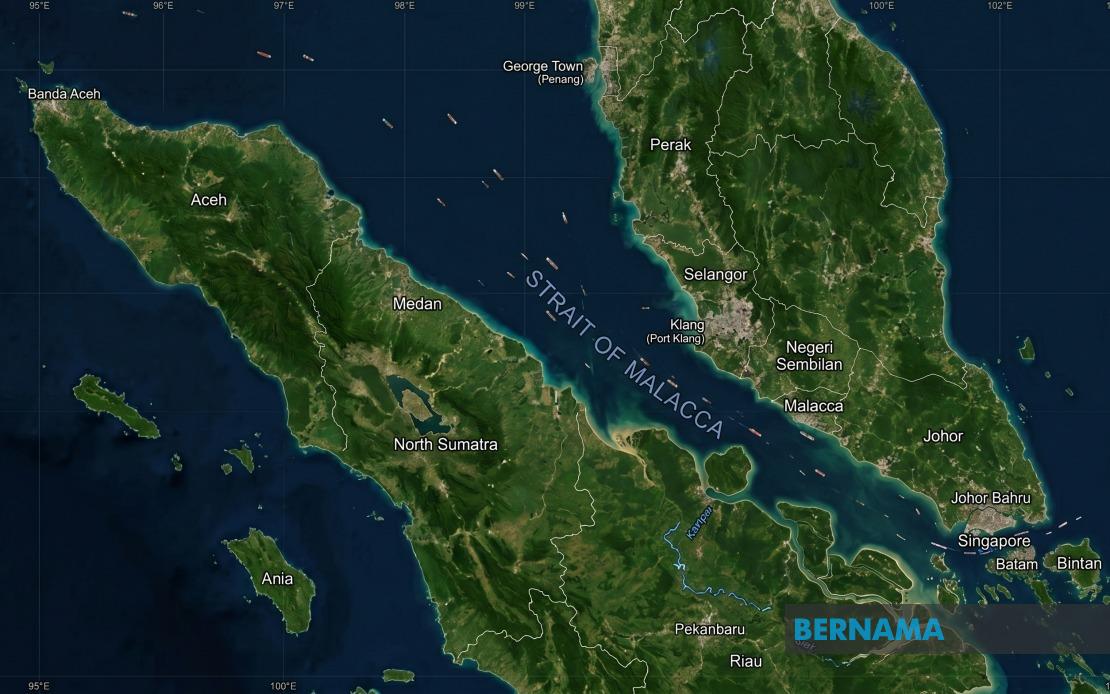
Indonesia and Singapore have jointly committed to protecting the Strait of Malacca, one of the world's most critical maritime routes, signalling renewed focus on preserving the waterway's security and accessibility. The commitment emerged during the annual Indonesia-Singapore Leaders' Retreat in Jakarta on Monday, where President Prabowo Subianto and Singapore Prime Minister Lawrence Wong reaffirmed their nations' shared interest in maintaining the strait as an open passage for international commerce and navigation.
The strategic waterway, which connects the Indian and Pacific Oceans and handles roughly one-third of global maritime trade, remains vital to the economic interests of nations across Southeast Asia and beyond. Both countries acknowledged that their geographic positions directly flanking the strait place them at the frontline of regional maritime governance, creating both opportunities and responsibilities to maintain stability in waters that facilitate trillions of dollars in annual trade flows.
Prabowo emphasised that Indonesia and Singapore's commitment aligns with international maritime law, specifically the 1982 United Nations Convention on the Law of the Sea, which establishes the legal framework governing navigation and resource management in international waters. This adherence to UNCLOS underscores the leaders' conviction that maritime disputes and governance matters must be resolved within established legal frameworks rather than through unilateral action or coercion.
Beyond the bilateral dimension, the two leaders stressed the importance of coordinated engagement with Malaysia and Thailand, the other two nations with direct interests in the Strait of Malacca. This multilateral approach recognises that effective maritime security requires consensus among all stakeholders and transparent communication mechanisms. The emphasis on coordination with neighbouring countries reflects growing regional awareness that no single nation can address the complex challenges facing the waterway unilaterally.
The commitment extends beyond traditional security concerns to encompass environmental protection and maritime safety. Prabowo specifically highlighted piracy, maritime pollution, and shipping accidents as critical issues demanding sustained attention from coastal states. These challenges underscore how the strait's strategic importance translates into concrete operational concerns that directly affect shipping companies, maritime workers, and the broader regional economy.
The Leaders' Retreat, described as the second meeting between Prabowo and Wong in this annual format, represents a deepening institutional framework for Indonesia-Singapore dialogue. Such structured engagement mechanisms facilitate regular discussion of complex maritime and security issues, allowing leaders to address emerging challenges before they escalate into disputes. The strategic partnership between Southeast Asia's two most developed economies sets important precedents for regional cooperation.
During their discussions, both leaders reaffirmed ASEAN's position favouring peaceful resolution of disputes through dialogue and diplomacy rather than confrontation. This principle, while sometimes tested in other regional contexts, enjoys broad endorsement among Southeast Asian nations seeking to maintain the region's relative stability despite great power competition. The emphasis on resolving misunderstandings through open communication as friends reflects a mature diplomatic approach that prioritises relationship preservation alongside interests protection.
The upcoming 60th anniversary of Indonesia-Singapore diplomatic relations next year provides additional context for their reaffirmed commitment. Six decades of formal engagement have built institutional capacity and mutual understanding that facilitates cooperation on complex transnational issues. Both nations view their partnership as a foundation for broader regional stability and prosperity, recognising that their bilateral relationship influences Southeast Asia's overall trajectory.
For Malaysia, Singapore's participation in this coordinated approach carries particular significance, as it positions the country within a framework where all Strait of Malacca stakeholders acknowledge shared responsibilities. The explicit pledge to coordinate with Malaysia and Thailand demonstrates that any maritime governance arrangements respect the interests and sovereignty of all coastal nations, rather than reflecting arrangements reached outside the region.
The broader implications of this reaffirmed commitment extend to Southeast Asia's positioning amid global geopolitical competition. As major powers compete for influence in the Indo-Pacific region, maintaining consensus among ASEAN members regarding maritime governance and freedom of navigation becomes increasingly valuable. Indonesia and Singapore's joint stance reinforces ASEAN's collective voice on maritime issues and demonstrates the region's capacity for constructive cooperation.
The focus on preserving the Strait of Malacca as a passage open to all parties addresses concerns that could arise from great power competition or competing territorial claims. By emphasising UNCLOS compliance and collective governance principles, Indonesia and Singapore signal that the waterway should remain a commons for international commerce rather than becoming contested terrain for regional rivalries.
Moving forward, the leaders' commitment suggests that Indonesia and Singapore will intensify existing coordination mechanisms and potentially develop enhanced maritime surveillance and information-sharing capabilities. Such practical cooperation complements the diplomatic commitment, translating high-level pledges into operational improvements that enhance maritime safety and security for all users of the Strait of Malacca.

