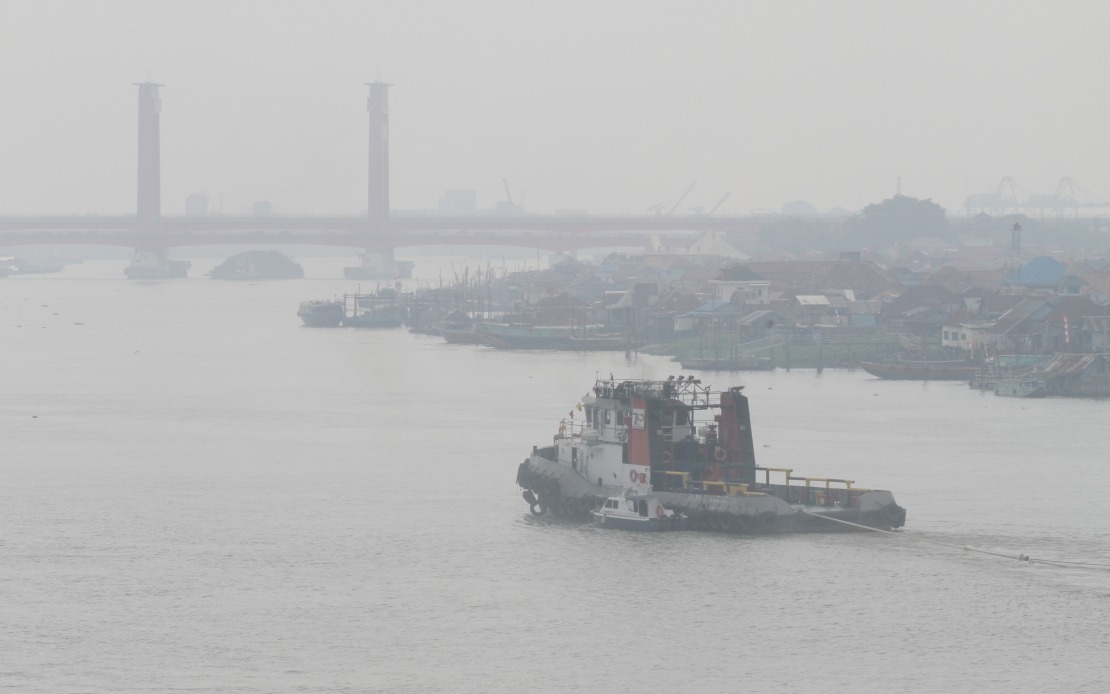
Indonesia has moved to formalize its partnership with Malaysia in addressing the recurring transboundary haze crisis, with weather modification operations emerging as the primary collaborative tool. The National Disaster Mitigation Agency confirmed that discussions between the two nations have progressed beyond routine communication, establishing concrete mechanisms for joint action as smoke from raging forest and land fires in West Kalimantan continues to degrade air quality across a broad swath of Malaysia's western corridor.
The severity of the current situation underscores why such coordination has become urgent. Air Pollutant Index readings in affected areas of Sarawak reached 195 as of Friday morning, approaching the 201-plus threshold that authorities classify as very unhealthy for all population groups. The Malaysian states of Kuala Lumpur, Selangor, Penang, Kedah, and Perak have all reported unhealthy air quality metrics, indicating that the haze problem is no longer confined to border regions but has penetrated deep into the peninsula's population centers.
Berton Panjaitan, Acting Head of the National Disaster Mitigation Agency's Data, Information, and Disaster Communication Centre, articulated the scope of bilateral engagement during recent consultations. Beyond immediate firefighting concerns, the discussions encompass prevention strategies, enhanced monitoring protocols, and technical support for weather modification initiatives. This comprehensive approach reflects a recognition that transboundary haze requires multifaceted solutions rather than episodic responses. Panjaitan emphasized that Malaysia had additionally expressed willingness to contribute firefighting assets should Indonesia formally request direct intervention.
While Indonesia has not yet submitted an official request for Malaysian water-bombing support or other direct firefighting resources, Jakarta has signaled openness to such arrangements operating within established bilateral frameworks and disaster management protocols. This measured stance suggests both nations are attempting to balance sovereignty concerns with pragmatic cooperation during environmental emergencies. The flexibility acknowledged by Indonesian officials provides a pathway for escalated assistance if ground conditions deteriorate further.
The August 24 agreement between Malaysian Natural Resources and Environmental Sustainability Minister Datuk Seri Arthur Joseph Kurup and Indonesian Environment Minister Jumhur Hidayat established the formal foundation for current coordination efforts. A significant breakthrough emerged when Indonesia granted Malaysia explicit permission to conduct cloud-seeding operations within Indonesian airspace, a diplomatic concession that removes a traditional procedural impediment to weather modification campaigns. Such clearance typically requires careful negotiation between sovereign nations sensitive to airspace protocols.
Weather modification technology has become increasingly central to Southeast Asian haze mitigation strategies, though its effectiveness remains subject to scientific debate and varies considerably depending on atmospheric conditions and timing of implementation. Cloud-seeding operations, when conducted under appropriate meteorological circumstances, can theoretically increase precipitation and reduce smoke concentration, though results are neither guaranteed nor immediately visible to the public. The bilateral agreement to pursue this avenue reflects both nations' commitment to deploying available technological tools, even those with uncertain outcomes.
The Malaysian Consulate in Pontianak has reported that the 2024 haze situation represents a marked deterioration compared to previous years, as no severe episodes were recorded throughout 2024 and early 2025. This cyclical pattern, driven by seasonal weather patterns and land management practices across Indonesian territories, has become a predictable challenge for regional policymakers. The consulate's characterization of the current episode as notably worse than recent precedent suggests that meteorological or land-use factors have combined unfavorably this year.
With 577 Malaysians registered in West Kalimantan—predominantly expatriate workers dispersed across the broader Kalimantan region—the consulate has prioritized safeguarding this population. Local authorities have implemented standard haze-response protocols including mask mandates, online school transitions, and restrictions on non-essential outdoor movement. The consulate's coordination with regional authorities demonstrates how transnational populations create complementary interests in environmental crisis management, as host governments recognize obligations toward foreign nationals while Malaysian officials maintain welfare concerns for citizens abroad.
Malaysia's institutional history of supporting Indonesian firefighting efforts provides context for the current diplomatic engagement. In 2023, the Malaysian Consulate contributed six water pumps to the West Kalimantan Governor's Office, establishing a precedent of material assistance that extends beyond verbal commitments. Such concrete contributions generate goodwill and familiarity that can facilitate more robust cooperation when crises emerge. This history suggests that the current coordination framework builds upon established channels rather than representing an entirely novel diplomatic initiative.
The transboundary haze phenomenon illustrates the vulnerability of Southeast Asian nations to environmental challenges that transcend political boundaries and individual governmental capacity. Indonesia's vast territory encompasses some of the world's most extensive fire-prone peatlands and forests, while Malaysia's geographic proximity and prevailing wind patterns during fire season create inevitable exposure to smoke migration. Neither nation can unilaterally resolve the issue; successful mitigation requires complementary policies, technological deployment, and resource-sharing arrangements that respect both parties' sovereignty while acknowledging mutual vulnerability.
Looking forward, the effectiveness of the Indonesia-Malaysia coordination framework will depend on consistent implementation, adequate resourcing, and adaptation as conditions evolve throughout the fire season. Weather modification operations require sustained funding, specialized equipment, and expert personnel—elements that demand ongoing political commitment beyond the initial agreement phase. The framework established in late August provides institutional scaffolding, but translating protocols into tangible improvements in air quality will test both nations' capacity to maintain cooperation under the pressures of an active environmental crisis.

