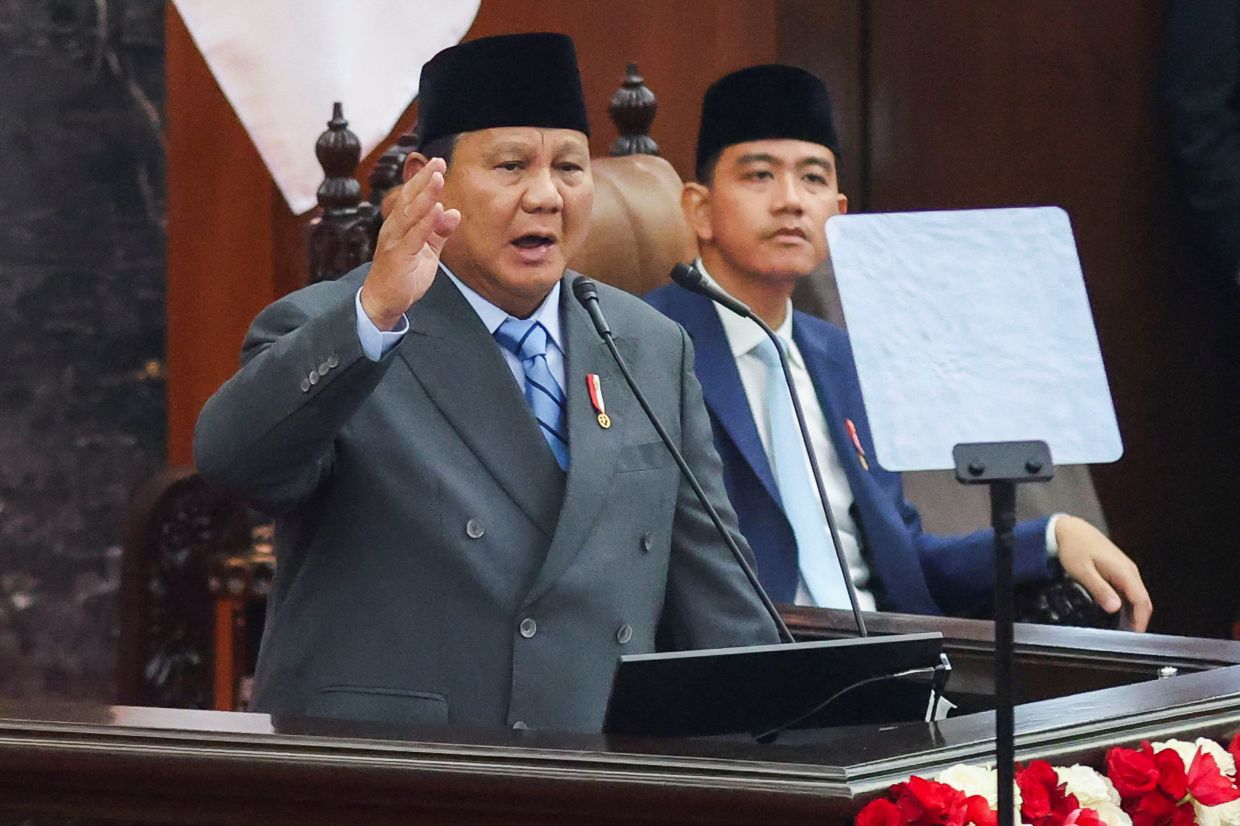
President Prabowo Subianto is pursuing one of Southeast Asia's most ambitious corporate restructuring programmes, announcing Friday that Indonesia will shut down more than 750 state-owned enterprises before year-end as part of a sweeping efficiency drive targeting the nation's sprawling public sector. The move represents a dramatic reversal of Indonesia's historical approach to state ownership and reflects growing recognition that the sector has become bloated, inefficient and riddled with questionable accounting practices. What began as a discovery of rampant mismanagement within state enterprises has evolved into a comprehensive overhaul that Prabowo characterizes as potentially "the largest corporate restructuring in the world."
The scale of Indonesia's state enterprise problem only became apparent after establishment of the Danantara sovereign wealth fund last year, tasked with consolidating oversight of public assets. Officials conducting the initial audit were shocked to discover the existence of 1,074 state-owned enterprises scattered across the economy—far exceeding prior estimates of 300 to 400 firms. This discrepancy itself underscores the lack of institutional control that has defined Indonesia's approach to state ownership, with many enterprises operating with minimal oversight or accountability to central authorities. The revelation prompted Prabowo to take decisive action, setting an aggressive timeline to reduce the sector to no more than 300 productive entities by year-end.
Progress toward this target has been meaningful. The government has already closed 290 enterprises, eliminating vast layers of redundant management structures and unnecessary operational expenses. Initial financial results demonstrate the tangible benefits of consolidation. The closure programme has already generated approximately 50 trillion rupiah—equivalent to more than USD 2.8 billion—in savings from overhead reduction, including elimination of director and commissioner salaries, consolidation of office space, and curtailment of discretionary spending on vehicle fleets and business travel. Prabowo has indicated the government aims to achieve savings exceeding 70 trillion rupiah during the current year, suggesting even more aggressive cost containment as the programme matures.
Beyond immediate budgetary relief, the enterprise consolidation has produced measurable improvements in operational performance. State enterprise profitability increased more than 75 percent from 2024 to reach 326 trillion rupiah last year, indicating that elimination of chronically underperforming units and improved management discipline are translating into stronger financial results. This performance turnaround contradicts the previous pattern where numerous state enterprises consistently reported losses while simultaneously claiming to generate profits—a contradiction Prabowo describes bluntly as fabricated accounting. The combination of elimination of unproductive units and enhanced financial oversight suggests a genuine shift toward treating state enterprises as commercial entities rather than vehicles for patronage and political expenditure.
However, Prabowo's strategy extends beyond simple operational efficiency. Recognizing that state enterprise mismanagement has deep institutional roots, he has proposed establishing a special ad hoc court to investigate the stewardship and board decisions of state enterprises over the past three decades. This investigative mechanism would represent a significant escalation in accountability measures, potentially exposing systemic corruption and misappropriation that has accumulated across multiple administrations. The proposal reflects frustration with Indonesia's ongoing struggle against graft despite establishment of specialized anti-corruption agencies, anti-graft legislation, and high-profile arrests in recent years. Indonesia's persistently low score of 34 out of 100 on Transparency International's Corruption Perceptions Index underscores the depth of governance challenges the country faces.
Yet Prabowo has simultaneously proposed a more conciliatory approach, suggesting lawmakers consider a "special amnesty" for individuals willing to cooperate with investigations and demonstrate genuine reform. This dual-track strategy balances accountability with pragmatism, recognizing that wholesale prosecution might prove politically destabilizing while selective amnesty could facilitate cooperation and information disclosure. The approach reflects sophisticated political calculation—maintaining pressure on corrupt actors while creating exit pathways that might encourage cooperation rather than defensive obstruction. For Malaysian observers, this strategy offers instructive parallels to regional approaches to governance reform that balance institutional integrity with political viability.
The state enterprise consolidation occurs against the backdrop of broader economic and social pressures. Rising inflation and cost-of-living concerns have fueled public discontent across Indonesia, with corruption frequently cited as a grievance among protesters. The government's high-profile initiative addresses this sentiment directly, demonstrating commitment to eliminating wasteful spending and improving resource allocation toward essential public services. Yet implementation challenges remain substantial. Closing hundreds of enterprises will displace considerable numbers of employees, creating social friction even as efficiency improves. Managing these transition costs while maintaining public support will test government capacity.
One particularly contentious element involves Prabowo's signature free school meals programme, which has attracted criticism for cost overruns and implementation inefficiencies. The president acknowledged Friday that improvements and enhanced efficiency are necessary but reaffirmed commitment to the initiative, noting that one in four Indonesian children suffer from stunting—a public health crisis demanding intervention. This balancing act between cost discipline and social investment illustrates the complexity inherent in the broader restructuring agenda. Prabowo must simultaneously demonstrate fiscal responsibility through enterprise closures while defending programmes addressing fundamental development challenges.
Economic growth projections underpin the sustainability of these restructuring initiatives. The government reported second-quarter GDP growth of 5.3 percent, following 5.6 percent in the first quarter, with Prabowo expressing confidence that growth will reach 6.0 percent by end-2026. However, international analysts have expressed recurring skepticism regarding official Indonesian growth statistics, suggesting actual economic performance may diverge from official accounts. This credibility gap makes the state enterprise consolidation programme particularly valuable—it offers tangible, verifiable evidence of structural reform that can bolster investor confidence and demonstrate genuine commitment to institutional improvement.
For the broader Southeast Asian region, Indonesia's enterprise restructuring carries implications extending beyond Jakarta's immediate policy environment. As the bloc's largest economy, Indonesia's governance trajectories influence regional development trajectories and investor confidence. Demonstrating capacity for decisive institutional reform—even when requiring politically costly decisions—strengthens the case for sustained foreign investment and regional economic integration. Conversely, if implementation falters or corruption re-emerges, the consequences would ripple throughout the region.
Prabowo's framing of the restructuring warrants particular attention. He explicitly rejected treating growth and investment as ultimate policy objectives, instead emphasizing "prosperity of our people, especially those at the bottom." This language signals willingness to prioritize distributional outcomes over headline growth figures, reflecting lessons learned from Indonesia's previous growth-focused development models. Every rupiah of investment, he insisted, must generate employment and improve living standards. This rhetorical shift, if matched by substantive policy implementation, could represent meaningful reorientation of Indonesian development strategy toward more inclusive growth frameworks.
The coming months will prove decisive in determining whether this enterprise restructuring represents genuine structural reform or another cyclical governance initiative destined for incomplete implementation. The December deadline creates pressure for visible progress and accountability. Malaysian policymakers and regional analysts should monitor both the quantitative closures and qualitative changes in state sector governance, as outcomes will shape understanding of Indonesia's institutional reform capacity and the broader trajectory of governance across Southeast Asia. The consolidation programme exemplifies the type of structural intervention increasingly recognized as necessary for sustained regional development, even as implementation complexities and political constraints continue to challenge reformers across the region.

