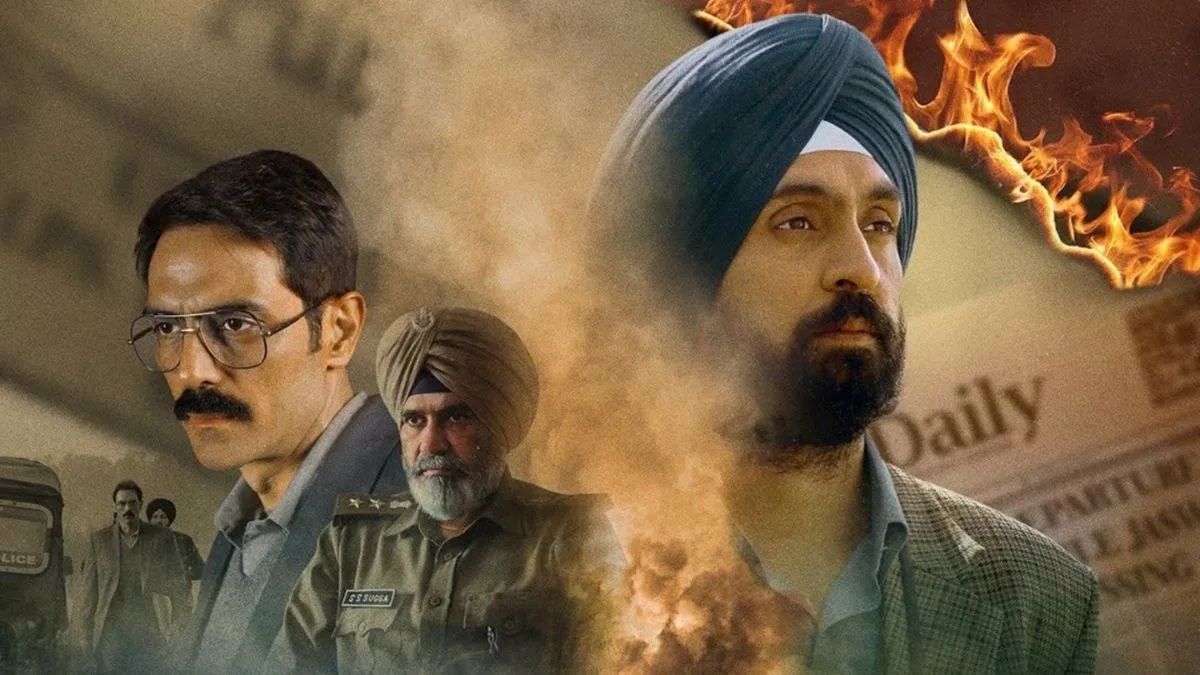
The experience of filmmaker Honey Trehan encapsulates a growing frustration among India's creative community. After spending four years negotiating with Indian film authorities over his biographical film 'Satluj'—centred on Sikh human rights activist Jaswant Singh Khalra—Trehan faced 127 demanded alterations before abandoning theatrical release. When he eventually uploaded the film to streaming platform ZEE5 earlier this month, it vanished within two days. The platform cited "current developments" without clarification, though press reports attributed the removal to government pressure invoking "security concerns."
Trehan's accusation carries weight beyond his single project. He contends that India's Ministry of Information and Broadcasting has weaponised the censorship apparatus for political control, describing the tactic as a "backdoor entry" to dominate industry narratives. His frustration reflects a broader anxiety permeating Bollywood and independent Indian cinema—that creative freedom is contracting under a governing philosophy increasingly intolerant of stories questioning state narratives or touching on sensitive historical episodes.
Parliamentary data underscore this trend's scale. Official figures reveal that in fiscal year 2025, the Central Board of Film Certification demanded cuts or modifications to 3,033 films before approval, more than double the number from four years prior. These statistics, however, lack transparency regarding the nature of demanded changes or their justification. Compounding this opacity, India's primary film certification body has not published a comprehensive annual report detailing its activities since 2017, leaving both industry observers and the public largely in the dark about decision-making rationales.
India's censorship framework differs fundamentally from Western counterparts. While systems in the United States and most European nations employ age-based rating classifications that determine suitability without mandating content alteration, India vests its government-appointed film board with direct power to demand editorial changes as a precondition for public exhibition. This structural difference grants Indian authorities unprecedented control over what narratives reach audiences, effectively transforming the state into an arbiter of acceptable storytelling. Such a model is rare among major democracies, positioning India as an outlier in how it regulates cultural expression.
The current climate represents a qualitative shift from earlier decades when film censorship, though present, operated within narrower constraints. Sadanand Dhume, a senior fellow at the Council on Foreign Relations specialising in South Asian affairs, attributes this transformation to the political trajectory since Narendra Modi's 2014 ascendancy. "The politics of the country has taken a sharp turn since the advent of Modi in 2014, and Bollywood is facing the downstream effects," Dhume observed. This observation gains credence when examining patterns in what content faces obstruction. Films celebrating patriotic themes or portraying India favourably encounter minimal resistance; conversely, projects addressing caste discrimination, communal violence, or challenging state narratives encounter substantial barriers.
The 'Satluj' controversy must be contextualised within Punjab's contemporary political sensitivities. The film dramatises Jaswant Singh Khalra's documentation of extrajudicial killings and police brutality during counterinsurgency operations in the 1980s and 1990s that systematically dismantled a violent Sikh separatist movement. Though decades have passed, the Modi government's Bharatiya Janata Party maintains acute wariness toward separatism. This vigilance intensified following Canada's allegations in 2023 that Indian government agents participated in the assassination of a Sikh activist in Vancouver—allegations India has rejected but which rekindled international focus on Punjab's history and contemporary Sikh diaspora concerns.
Recent censorship incidents reveal patterns extending beyond 'Satluj'. The Malayalam blockbuster 'L2: Empuraan' underwent 24 post-release modifications in 2025 after Hindu nationalist groups objected to depictions of 2002 communal riots. The biographical film 'Phule', addressing 19th-century caste reform, faced demands to excise caste-related language. India's 2026 Academy Awards submission, 'Homebound', secured clearance only after eleven cuts targeting caste and religious allusions. Meanwhile, 'Dhurandhar', a 2025 spy thriller depicting Indian intelligence operations against Pakistan, cleared certification with minimal intervention and became the highest-grossing Hindi-language film ever—a stark contrast illustrating the preferential treatment afforded nationalist narratives.
Filmmakers across generations report escalating demands. Onir, a established director, described the current era as "one of the worst phases of Indian cinema because the variety of cinema, the kind of narratives that one wants to see, all kinds of stories—that is disappearing slowly." His own 2023 film 'Pine Cone' encountered censure for merely including the word "gay" in a scene involving a nine-year-old character. The board only relented after Onir removed the dialogue entirely. Such interventions extend beyond narrative substance into linguistic territory, effectively restricting which words and concepts filmmakers may employ.
Despite official barriers, 'Satluj' demonstrates how determined audiences and creators circumvent restrictions. Trehan arranged a private screening coinciding with the Cannes Film Festival in May, bringing the film to international attention. The project faced withdrawal from Toronto International Film Festival in 2023 following protracted legal confrontations with Indian censors—a decision Trehan described as heartbreaking, as he had arranged five gala premiere events. Within Punjab itself, grassroots distribution networks have emerged, with fans who downloaded the film screening it in Sikh temples, community centres, and village squares, creating what Trehan characterises as celebrations uniting Hindu, Sikh, and members of all castes and socioeconomic backgrounds.
This grassroots phenomenon reveals a paradox in India's censorship strategy. By restricting theatrical and mainstream platform distribution, authorities inadvertently transform banned content into cultural artefacts with enhanced mystique and emotional resonance. The film's removal from ZEE5, rather than suppressing its reach, crystallised community mobilisation and reframed its message around themes of resistance and solidarity. Such unintended consequences suggest that top-down censorship, despite its coercive apparatus, cannot fully contain narratives that resonate with audiences' lived experiences and historical consciousness.
For Southeast Asian and Malaysian observers, India's trajectory warrants close attention. As the region's largest democracy and a major cultural exporter, India's decisions regarding creative expression establish precedents influencing global discourse about media freedom and state power. Malaysia's own experience with film classification and content regulation invites comparative analysis. The question emerging from India's current phase is whether governments justified in invoking security or national integrity concerns can legitimately dictate artistic expression, or whether such justifications risk becoming instruments for suppressing inconvenient histories and marginalised voices. 'Satluj' and films like it suggest that this debate, far from resolved, will intensify as creators and authorities contest the boundaries of permissible storytelling.

