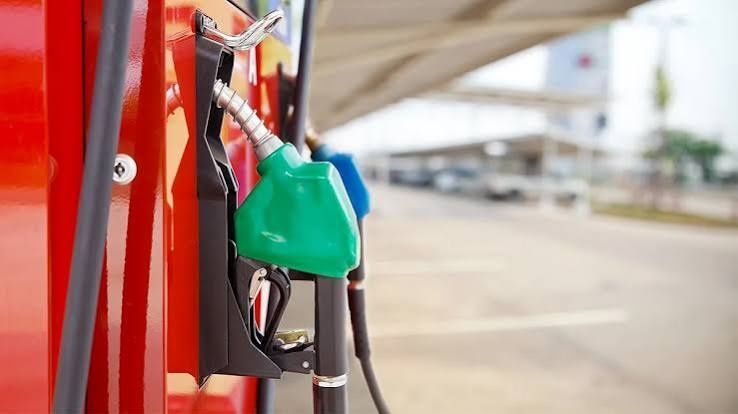
India's ruling coalition faces an escalating political crisis over its push to mandate 20 per cent ethanol-blended petrol, known as E20, as consumers report reduced fuel efficiency and vehicle damage whilst the government struggles to control the narrative. The controversy, which has erupted into a significant flashpoint for Prime Minister Narendra Modi's administration, reflects broader tensions between environmental policy objectives and public acceptance in the world's third-largest automotive market. What began as an environmental initiative has transformed into a damaging PR battle, with the government's clumsy attempts at damage control only amplifying public scepticism and social media fury.
The E20 mandate, formally introduced last year, was designed to serve multiple policy objectives: reducing carbon emissions, decreasing India's dependence on crude oil imports, and supporting rural incomes through increased demand for agricultural ethanol feedstock. However, the rollout has been marked by inadequate consumer communication and, critically, the removal of choice at petrol pumps, forcing motorists to accept the blend regardless of vehicle compatibility or personal preference. This top-down approach, combined with mounting complaints about practical performance issues, has created fertile ground for organised resistance.
The crisis intensified dramatically this week when Attorney General R. Venkataramani described E20 as an "experiment" during court proceedings, a characterisation that immediately went viral and seemed to validate critics' concerns that the government had implemented an untested policy. The remark essentially confirmed what sceptics had been arguing: that India's 1.4 billion citizens and their vehicles were serving as unwitting test subjects for an unproven fuel transition. The government's immediate denial, coupled with Venkataramani's subsequent clarification that he meant only the supply volume was experimental rather than the policy itself, rang hollow to an increasingly frustrated public.
Petroleum Minister Hardeep Singh Puri's attempt to reassure motorists by comparing E20 to racing fuel—arguing that performance vehicles use it and experience improved acceleration—fundamentally misunderstood the legitimate concerns of ordinary car owners. While professional racing teams have access to specialised engine modifications and maintenance protocols, the vast majority of Indian vehicles were never designed for ethanol blends of this concentration. The minister's comments inadvertently highlighted the disconnect between policy architects and ground-level realities, reinforcing perceptions that the government had not adequately consulted stakeholders or considered vehicle compatibility.
Social media has become the primary battleground, with hundreds of motorists documenting what they describe as deteriorating fuel economy, vehicle damage, and unexpected repair costs. One viral video, viewed over 500,000 times, featured a motorist named Manish Kashyap lamenting that his vehicle required major repairs after just two months on E20 fuel, a particularly resonant narrative for middle-class car owners who view their vehicles as significant financial investments. These testimonials, whether individually verified or not, collectively shape public perception and legitimise concerns about the policy's implementation and testing protocols.
Protest organisers have seized momentum quickly. Tehseen Poonawalla, a New Delhi-based socialite and Congress party supporter, announced a protest scheduled for Sunday against the E20 mandate, claiming thousands had already expressed interest in participating. This mobilisation demonstrates how the controversy has transcended individual consumer complaints and evolved into coordinated political opposition, offering the Indian National Congress and other opposition parties a popular cause to challenge the Modi government.
Opposition politicians have exploited the opening effectively. Congress state minister Priyank Kharge characterised the rollout as lacking proper consultation and criticised the government for demanding that citizens prove damage whilst the government's own data on long-term impacts remained incomplete. This framing—that the government is asking citizens to bear the burden of an experimental policy without providing adequate evidence of safety—encapsulates the core legitimacy problem the administration faces. The government's assertion that it possesses data supporting E20's safety appears undermined by its own Attorney General's testimony about ongoing experimentation.
The government's response strategy has been increasingly combative, with its press office dismissing criticism as "wild claims" and "rage bait," a tone that risks further alienating concerned motorists and reinforcing narratives of governmental arrogance. This approach treats legitimate consumer concerns about vehicle compatibility and fuel efficiency as merely social media agitation, rather than engaging substantively with the practical issues driving public resistance. For a government historically sensitive to public opinion, the dismissive posture suggests confidence in its political position—or conversely, recognition that the policy will not be reversed regardless of backlash.
For Malaysian readers and Southeast Asian observers, India's E20 crisis offers cautionary lessons about fuel transition policies. As regional governments pursue renewable energy objectives, including biofuel mandates, the Indian experience underscores the necessity of transparent communication, adequate vehicle compatibility assessment, and maintaining consumer choice during transition periods. The political damage India's government has sustained—amplified by its own Attorney General's "experiment" comment—demonstrates that environmental policy objectives, however sound, cannot override public acceptance without careful stakeholder management and evidence-based implementation.
The broader implications extend beyond India's borders. As Southeast Asian economies contemplate similar ethanol blending mandates to meet climate commitments and reduce import dependence, policymakers should note that rushing implementation without adequate consultation or testing protocols invites the precise backlash India now confronts. Malaysia, Indonesia, and Thailand, all considering biofuel integration, can observe how quickly public trust erodes when government communications appear evasive or contradictory, and how social media amplifies concerns into organised political movements.
The government's central argument—that E20 benefits carbon reduction, foreign exchange savings, and agricultural support—remains economically sound and strategically rational. However, sound policy requires public buy-in, and public support requires transparency, adequate testing, and genuine consideration of practical concerns. India's crisis suggests that even well-intentioned environmental initiatives can generate significant political costs if implementation prioritises speed over stakeholder engagement, and if government communications prioritise reassurance over candour when problems emerge.

