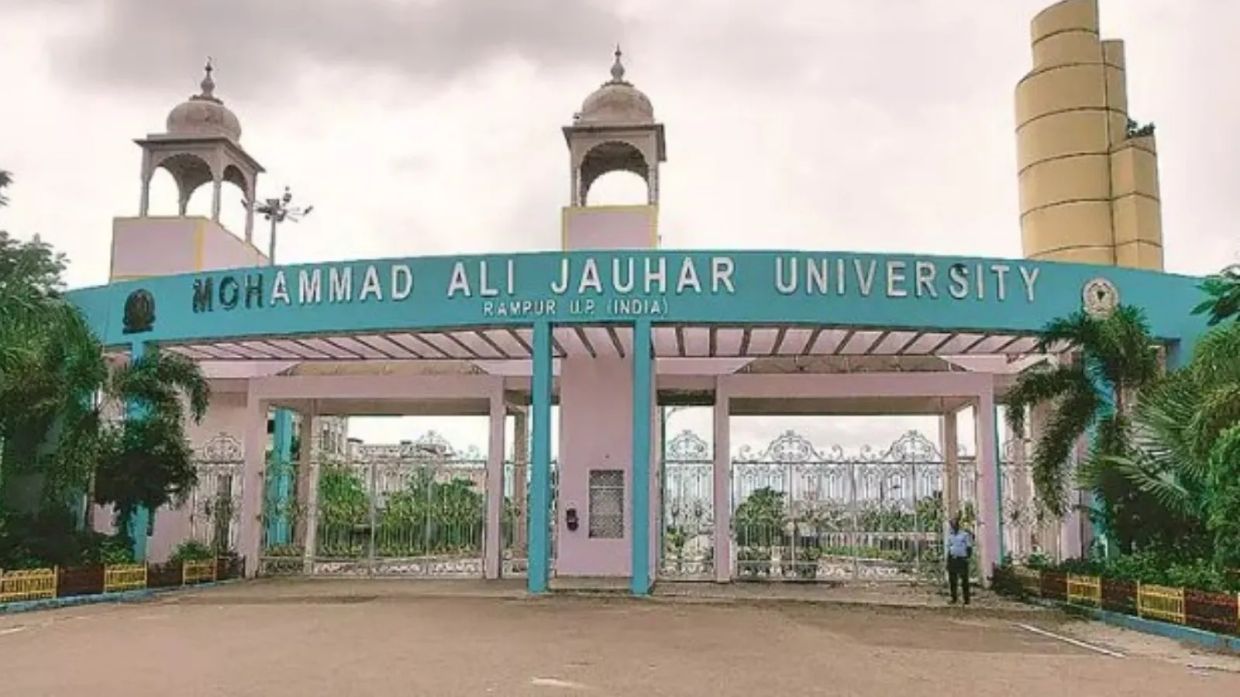
Authorities in Rampur, a city in India's northern Uttar Pradesh state, have initiated proceedings to tear down 38 structures at Mohammad Ali Jauhar University following allegations that they were constructed without proper authorisation. The Rampur Development Authority issued the sweeping demolition directive on Wednesday, July 15, targeting almost the entire complement of permanent buildings across the sprawling 250-acre campus. The scale of the order underscores serious regulatory breaches at the institution, which has faced ongoing scrutiny regarding its physical expansion and compliance with municipal construction codes.
The university takes its name from Mohammad Ali Jauhar, a towering intellectual and independence activist in twentieth-century India whose legacy remains celebrated in the subcontinent's political and cultural narrative. Founded in 2006, the institution emerged as the brainchild of Azam Khan, a seasoned politician who served as a minister in Uttar Pradesh's regional government and has cultivated a reputation as an accomplished orator with substantial grassroots influence. The timing of the demolition order, arriving years after the university's establishment and expansion, raises questions about the consistency of regulatory oversight and the circumstances that permitted such extensive construction without adequate municipal approval.
Azam Khan's political trajectory is inextricably linked to the Samajwadi Party, the regional force that governed Uttar Pradesh between 2012 and 2017 before suffering electoral defeat to the Bharatiya Janata Party. This transition in state leadership introduced significant political upheaval, repositioning the families and affiliates of previous administrations. The subsequent legal troubles engulfing Azam Khan and his family have become a focal point in discussions about accountability and, according to his supporters, selective prosecution along factional lines. The alignment of the demolition order with his incarceration lends itself to interpretations about the relationship between political fortunes and regulatory enforcement in the Indian state system.
Azam Khan's current predicament extends beyond administrative matters into the criminal justice system. He and his son Abdullah remain imprisoned following a court conviction in connection with forged documents, a verdict that fundamentally altered the family's circumstances. Previously, Azam held considerable sway in Uttar Pradesh's political ecosystem, commanding loyalty among supporters and maintaining influence within his party structure. His detention represents a dramatic reversal of political standing, isolating him from the daily management of his interests, including his university venture. The father and son now find themselves unable to directly contest the demolition proceedings or coordinate a defence against the regulatory action.
The legal entanglements affecting the Khan family extend to Azam's wife, Tazeen Fatima, who faced incarceration in a separate birth certificate case. Though she subsequently secured release on bail pending further court proceedings, her brush with the justice system further illustrates the breadth of legal exposure the family has encountered. These overlapping cases—spanning document fraud, vital records falsification, and now construction violations—paint a picture of systematic legal vulnerability. The coincidence of multiple prosecutions affecting different family members has invited accusations of coordinated political vendetta, though official channels characterise each case as addressing distinct substantive violations.
The family's consistent assertion that they face persecution rooted in political antagonism rather than genuine regulatory or criminal breaches presents a sharply contested narrative. In India's polarised political environment, such claims resonate with opposition supporters and civil liberties advocates who view aggressive prosecution of rival leaders' relatives as symptomatic of abuse of state machinery. Conversely, authorities defend their actions as routine enforcement of existing laws and regulations, divorced from political motivation. The demolition order, arriving in this fraught context, can be interpreted through both lenses: as legitimate rectification of unauthorised construction or as opportunistic regulatory aggression against a politically vulnerable family.
For Malaysian observers and regional analysts, the Mohammad Ali Jauhar University situation illustrates broader patterns of institutional vulnerability when political patronage proves ephemeral. Universities established through individual politician's initiative, particularly those lacking diversified governance structures, face heightened risk should their founders encounter legal difficulties or political marginalisation. The case underscores the importance of institutional autonomy and professional management separated from the personal fortunes of founding figures. In Southeast Asian contexts where similar patterns of educational institution establishment through political networks exist, the Uttar Pradesh experience offers cautionary lessons about ensuring regulatory compliance and governance independence from the outset.
The 250-acre campus housing 40 permanent structures represents substantial capital investment, rendering a comprehensive demolition economically ruinous for the university and its stakeholder community. Students, faculty, and administrative staff face disruption to their academic and professional activities. The institution's long-term viability becomes questionable if authorities proceed with the full demolition programme, potentially displacing hundreds of employees and thousands of enrolled scholars. This human dimension extends the controversy beyond questions of regulatory compliance into realms of educational access and social impact, particularly significant in regions where university education remains relatively scarce.
The demolition order's implications transcend Rampur's municipal boundaries, potentially establishing precedent regarding how Indian states treat educational institutions with questionable construction credentials. Should the order proceed, it may prompt other universities and educational bodies across India and the broader South Asian region to conduct comprehensive compliance audits. The resulting uncertainty could chill investment in educational infrastructure expansion, particularly by private operators or politically-connected founders lacking sufficient safeguards against regulatory reversal. Conversely, aggressive enforcement might signal genuine commitment to rule-of-law and regulatory integrity, potentially bolstering investor confidence in the legal system's consistency.
The unfolding situation at Mohammad Ali Jauhar University encapsulates fundamental tensions within India's federal and state governance structures regarding regulatory authority, political accountability, and institutional autonomy. How authorities ultimately resolve the demolition proceedings will carry significance extending far beyond one university's campus. The case demonstrates how regulatory decisions, ostensibly technical matters of construction compliance, intersect with high-stakes political rivalries and questions about the separation between state power and factional interest. For Southeast Asian policymakers and institutional leaders, monitoring the outcome offers valuable insights into the operational risks inherent in allowing educational institutions to remain enmeshed with individual political figures rather than establishing robust governance independence from their inception.

