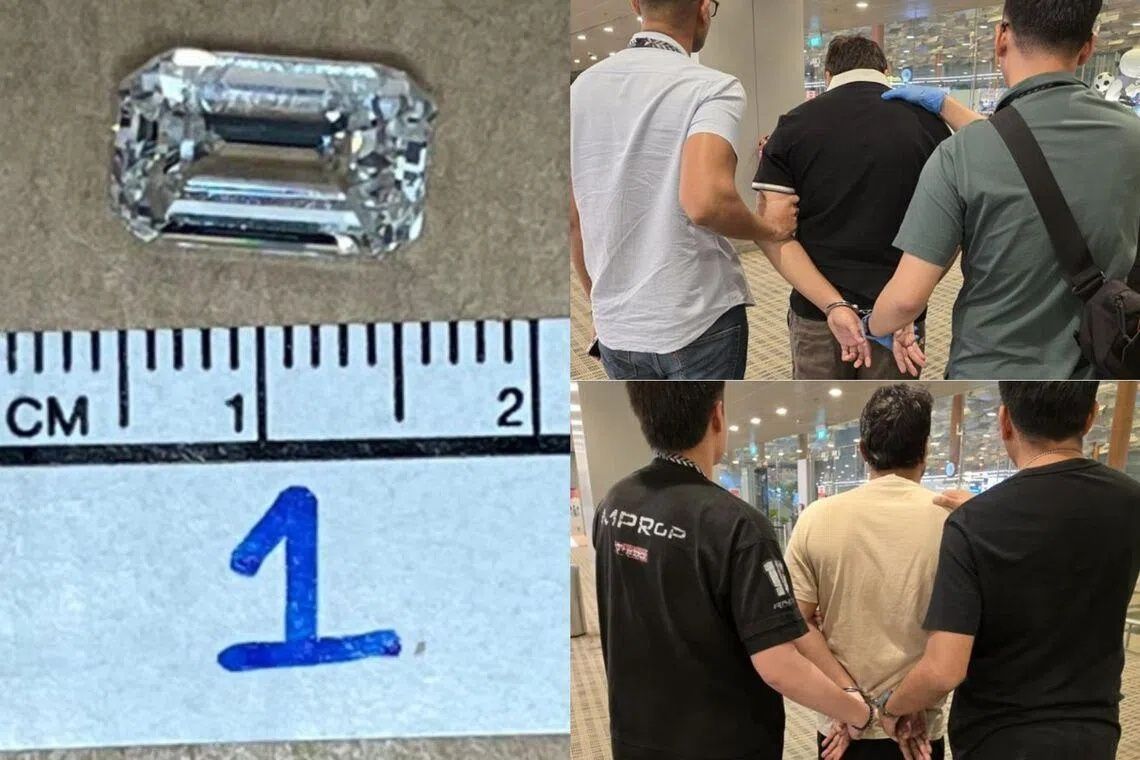
A meticulously planned jewellery heist at a Chinatown store in Singapore has landed one Indian tourist behind bars, with authorities uncovering an international crime that hinged on a sophisticated counterfeit switch. Mangroliya Manojkumar Kurjibhai, 41, received his sentence on Friday, July 17, after admitting to theft charges stemming from the June 19 incident at Dianoche jewellery store on Kreta Ayer Road. The audacious operation, carried out in broad daylight with an accomplice, demonstrates how organised crime networks can target high-value retail locations across Asia's busy shopping districts.
The scheme's sophistication lay in its preparation. Before either man set foot in Singapore, Mangroliya and his travel companion Serasiya Milan Ramnikbhai, 30, had already commissioned a counterfeit diamond in India that perfectly matched the specifications and serial number of the genuine stone they intended to steal. This meticulous attention to detail—ensuring the fake would withstand initial inspection—suggests involvement by experienced criminals rather than opportunistic thieves. The pair's ability to source and produce a convincing replica speaks to the existence of underground networks capable of executing high-stakes jewellery fraud across borders.
Both men arrived in Singapore on June 19, using visitor visas in what appeared to be a standard tourist visit. At approximately 3 p.m., they entered the Chinatown store, with Serasiya concealing the counterfeit diamond inside his mouth. This oral smuggling method, while crude, has proven effective in bypassing security screening and detection equipment. Mangroliya then requested to examine the 4.95-carat diamond, valued at US$154,000 or approximately S$199,000, establishing legitimacy for handling the precious stone. The sales manager, unaware of the imminent deception, obliged the potential customer's interest.
The exchange itself relied on basic psychology and distraction techniques. Mangroliya deliberately asked the sales manager to retrieve multiple additional items, compelling the staff member to leave his position repeatedly. During one of these absences, Serasiya executed the swap, spitting out the fake diamond and replacing it with the genuine article, which he then concealed in his own mouth. This division of labour—one orchestrating the distraction while the other performed the physical exchange—minimised the risk of a single person being caught in a suspicious act. Once the switch was complete, Mangroliya informed the manager they would consider their options and both men departed casually.
Singapore's investment in retail security systems ultimately proved decisive. The store's CCTV cameras captured the entire transaction, providing irrefutable evidence of the theft. When the sales manager later examined the diamond left behind using optical gemstone identification equipment, the counterfeit nature of the remaining stone became immediately apparent. Digital surveillance footage combined with forensic gemstone analysis created an airtight case against the perpetrators, illustrating how modern security infrastructure protects high-value retail operations across developed Asian economies.
The pair's attempt to escape proved remarkably swift but ultimately futile. After leaving the jewellery store, they checked out of their hotel and rushed to Changi Airport Terminal 3, having booked flights back to India for that evening. They clearly hoped to pass through immigration before any alarm was raised. However, authorities apprehended them at approximately 9 p.m., just hours after the theft. Officers discovered the genuine diamond concealed in Serasiya's haversack, conclusively linking both men to the crime. The rapid response by airport security personnel and their coordination with retail authorities prevented the thieves from fleeing jurisdiction.
Mangroliya's guilty plea and subsequent two-year, two-month and two-week sentence underscore Singapore's strict approach to organised retail theft. Under the Penal Code, individuals convicted of theft face potential imprisonment of up to seven years and financial penalties. While Mangroliya's sentence falls below the maximum, it reflects the court's assessment of the crime's premeditation and the high value of the stolen goods. His cooperation through a guilty plea may have contributed to a sentence shorter than what prosecutors might have sought at trial.
Serasiya's case remains pending before the courts, suggesting authorities are pursuing separate charges or awaiting further proceedings. As the accomplice who physically executed the swap and carried the stolen diamond, his legal exposure mirrors that of his co-conspirator. The division of sentencing outcomes between the two may ultimately hinge on their respective roles in planning versus execution, and whether Serasiya cooperates with investigators to reveal the broader network behind the counterfeit diamond's production.
The incident raises concerning questions about jewellery store security across Southeast Asia. While Singapore's retail sector boasts sophisticated CCTV and gemstone verification systems, the heist demonstrates that determined criminals with advance planning and insider knowledge of specific high-value items can still pose significant risks. The thieves' ability to commission a convincing counterfeit suggests access to skilled artisans or criminal networks capable of rapid specialised work. For Malaysian retailers and those across the region, the case serves as a cautionary reminder that even brief distractions can enable theft, and that verification protocols must involve multiple staff members or technological safeguards to prevent single-point failures.
This theft also highlights the vulnerability of the retail sector to cross-border criminal activity. Visitor visas facilitated the perpetrators' entry into Singapore, enabling them to conduct a crime and attempt rapid extraction through an international airport. Enhanced coordination between immigration authorities, airport security, and retail crime units appears essential for identifying suspicious travel patterns connected to high-value theft. For Malaysia, which shares similar tourism infrastructure and retail environments with Singapore, awareness of such tactics could help prevent comparable incidents at shopping districts in Kuala Lumpur, Penang, and other major commercial centres.

