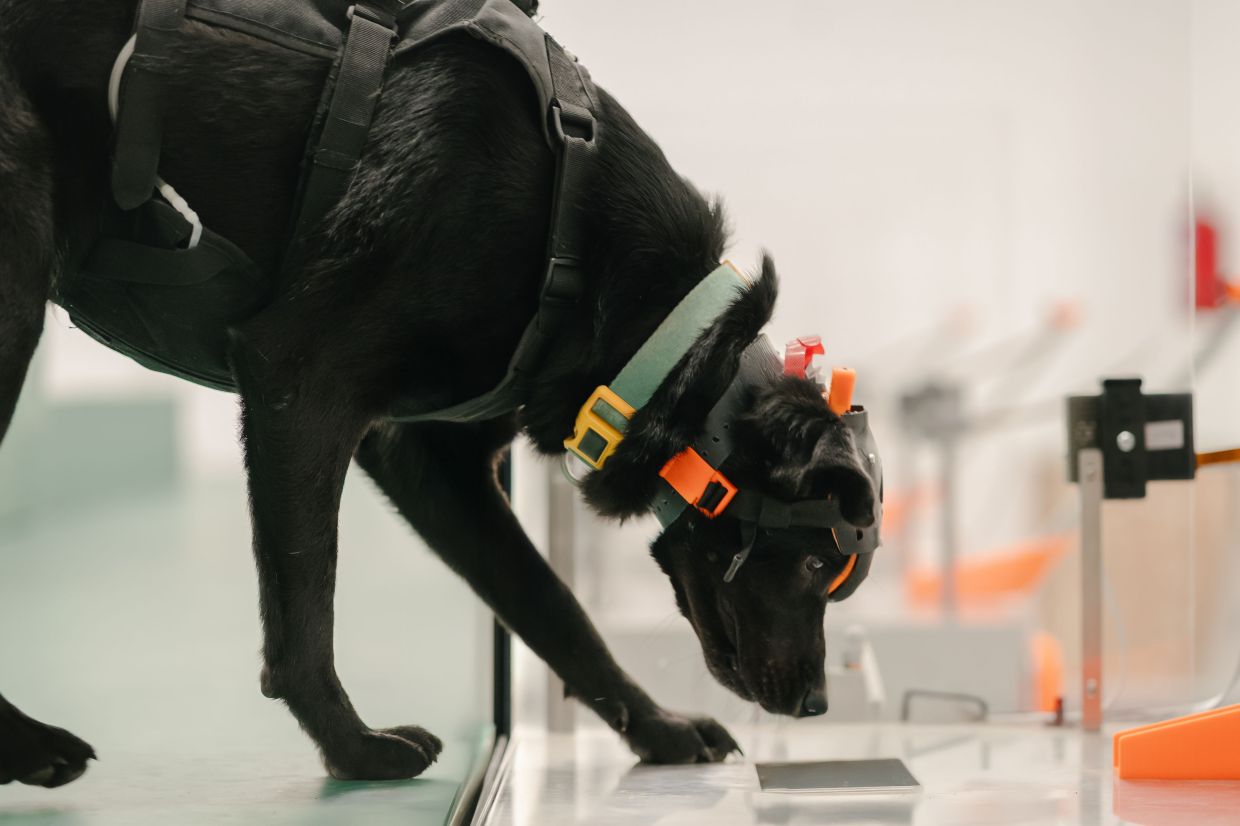
In the fields surrounding Bengaluru, a small team of trained dogs reports to work each day at a laboratory where they perform a task that could transform cancer screening across India and beyond. Billy, Jessie, and Banu – alongside beagles, labradors, and Dutch shepherds – are employed by Dognosis, a two-year-old startup reimagining how early-stage malignancies might be identified in the population. Their primary diagnostic tool is not sophisticated imaging equipment or laboratory analysis, but rather their remarkable olfactory capabilities. By breathing into specially designed masks, patients submit samples that the dogs then investigate, their movements and responses captured by sensors and processed through artificial intelligence algorithms to identify potential cancer signatures without requiring invasive biopsies, blood draws, or expensive scanning procedures.
The innovation represents a deliberate pivot from traditional applications of canine detection, which have long focused on identifying drugs and explosives. Dognosis founders recognised that the dog's nose – capable of detecting scent compounds in concentrations as low as parts per trillion – could be systematised and scaled to address a critical gap in India's healthcare infrastructure. Rather than replacing a dog's intuitive sensitivity with technology, the startup amplifies it through machine learning, which interprets subtle behavioural cues including the animals' movement patterns, respiratory changes, and postural shifts to reach diagnostic conclusions. The approach harnesses what evolution has optimised in canines whilst introducing the consistency and documentation that modern medicine demands. Patients visit or post breath samples; the laboratory conducts testing in controlled conditions; and algorithms render standardised results that integrate seamlessly into existing healthcare workflows.
Financial backing has arrived from prominent early-stage venture investors including Accel India and Caffeinated Capital based in San Francisco. The startup secured US$1.5 million during a pre-seed funding round in 2024, followed by an additional undisclosed investment that co-founder Akash Kulgod indicates provides sufficient runway for two years of planned expansion. This capital injection underscores investor confidence in the model's feasibility and market potential, though the broader question of whether canine-based screening can scale internationally remains partially answered. Kulgod has articulated an ambitious growth strategy, with aspirations to establish operations in the United States by late 2027 or early 2028, suggesting ambitions that extend well beyond the Indian subcontinent.
Clinical validation forms the cornerstone of Dognosis's credibility within the medical establishment. The startup published results from a Phase 2 trial in the Journal of Clinical Oncology demonstrating approximately 90 percent sensitivity for early-stage cancers spanning seven broad classifications encompassing more than 20 cancer varieties, including breast malignancies. Perhaps most intriguingly, preliminary evidence suggests the dogs possess an capacity to generalise beyond their training parameters – when trained on ten cancer types, they successfully identified an eleventh variant they had never previously encountered. This finding hints at a deeper olfactory principle at work, something more fundamental than simple pattern memorisation. Nevertheless, the company now faces the more stringent challenge of validating performance across uncontrolled real-world settings and demonstrating that accuracy persists when applied to diverse, heterogeneous populations beyond carefully selected trial cohorts.
India's cancer burden contextualises the urgency of Dognosis's mission. According to the International Agency for Research on Cancer, India ranks third globally in new cancer incidence, with an estimated 1.5 million newly diagnosed cases and over 900,000 deaths recorded during 2024 alone. Roughly one in ten Indians face meaningful lifetime risk of developing a malignancy before reaching age 75. Breast cancer constitutes the most frequently diagnosed category, followed by tumours affecting the lips, oral cavity, lungs, and cervix. Yet the paradox of India's cancer landscape is that despite this substantial disease burden, population-wide screening programmes remain virtually non-existent. Data from 2019-2021 surveys reveals that merely 1.9 percent of Indian women reported ever undergoing cervical cancer screening, whilst only 0.9 percent had received breast or oral cancer examinations. Male screening rates proved even lower, with just 1.2 percent of men reporting oral cancer screening history. This screening deficit perpetuates late-stage diagnoses and diminished survival outcomes across the population.
The economic barriers underpinning this screening gap are substantial and multifaceted. Conventional diagnostic pathways demand expensive imaging equipment, trained radiologists, pathology laboratories, and coordinated healthcare infrastructure – amenities concentrated in urban centres and accessible primarily to India's more affluent citizens. Rural populations and lower-income groups consequently remain largely disconnected from early detection systems. Dognosis's proposed solution addresses this constraint through radical cost reduction. The startup plans to launch an at-home multi-cancer prescreening test during 2025 at a price point measured in thousands of rupees – a fraction of conventional screening expenses. This affordability architecture could theoretically democratise access, extending early detection capabilities to populations currently excluded from existing systems. The logical consequence would be earlier diagnosis, improved treatment outcomes, and potentially lives saved at scale.
The operational model reflects pragmatic design choices. Dogs reside on the two-acre Bengaluru farm and laboratory facility, where they receive walks, playtime, and veterinary care as part of a humane working environment. Daily detection work occupies approximately 30 minutes to one hour, structured as game-like engagement where positive identifications yield food rewards rather than abstract compensation. This approach maintains the dogs' psychological wellbeing whilst preserving the work's effectiveness. During recent operational sessions, a two-year-old beagle named Whiskey demonstrated the screening process, methodically evaluating ten samples. Upon reaching the sixth specimen, she exhibited the characteristic pause-sniff-withdraw-return sequence that sensors recorded as a positive signal – indicative of cancer markers detected in that breath sample. This observable consistency provides reassurance that canine responses follow learnable patterns amenable to technological interpretation.
Dognosis's expansion trajectory appears ambitious yet deliberately structured. The company recently initiated a Phase 3 trial involving ten hospitals across India, targeting recruitment of approximately 10,000 participants over twelve months. This study specifically examines asymptomatic higher-risk populations and survivors at elevated recurrence risk. Individuals flagged as positive through the dog-AI screening will undergo conventional follow-up including imaging and biopsy confirmation, thereby addressing legitimate concerns about false positives and ensuring participants receive appropriate medical attention. Launch planning targets Bengaluru during 2025, with subsequent geographic expansion anticipated through partnerships with diagnostic chains and broader healthcare providers. Kulgod argues that prescreening tools avoid regulatory classification as diagnostic devices, circumventing the approval requirements that govern medical diagnostic equipment in India – a positioning that accelerates market entry but may also invite future regulatory scrutiny.
The broader acceptability question remains genuinely uncertain. Medical professionals like Pankaj Chaturvedi, deputy director of the Centre for Cancer Epidemiology at Tata Memorial Centre in Mumbai, acknowledge the potential of emerging technologies whilst cautioning that innovation should enhance rather than supplant existing screening infrastructure. Public perception of canine-based diagnostics spans a spectrum from fascination to scepticism. Kulgod counters such reservations by noting that dogs already perform critical life-and-death functions in society – drug detection, explosive identification, search and rescue operations. The technological bottleneck has consistently revolved around standardisation and scalability: translating the dog's exquisite sensory capability into reproducible, quantifiable, globally deployable systems. Artificial intelligence and sensor technology now plausibly enable this translation.
SpotitEarly, a New Jersey-based competitor, has similarly reported promising results from canine cancer-detection trials, yet commercialisation has remained elusive. The gap between laboratory validation and commercial-scale deployment exposes genuine challenges: maintaining accuracy across diverse genetic backgrounds, dietary habits, and environmental exposures; logistics of processing millions of breath samples whilst maintaining sample integrity; training and sustaining large canine workforces; and ultimately persuading healthcare systems and individual patients to trust algorithmic interpretation of animal behaviour as a legitimate diagnostic pathway. Dognosis faces identical obstacles, multiplied by India's geographic scale and healthcare heterogeneity.
Yet the potential public health impact justifies the developmental investment. If Dognosis achieves its stated targets – processing one million tests annually whilst doubling the canine workforce to 30 dogs and reducing turnaround to one week – the model could genuinely alter cancer detection patterns across India. Early identification of malignancies fundamentally changes treatment trajectories and survival probabilities. For populations currently excluded from screening, even modest improvements in detection timing translate into quantifiable lives preserved. The company's willingness to tackle India first, rather than prioritising wealthier Western markets, reflects either strategic vision or pragmatic acknowledgement that nascent technology requires large, underserved populations where regulatory frameworks remain less restrictive. Whichever impulse dominates, the experiment proceeding in Bengaluru's laboratories and fields may ultimately demonstrate whether dogs and algorithms together can solve one of modern medicine's most persistent equity challenges.

