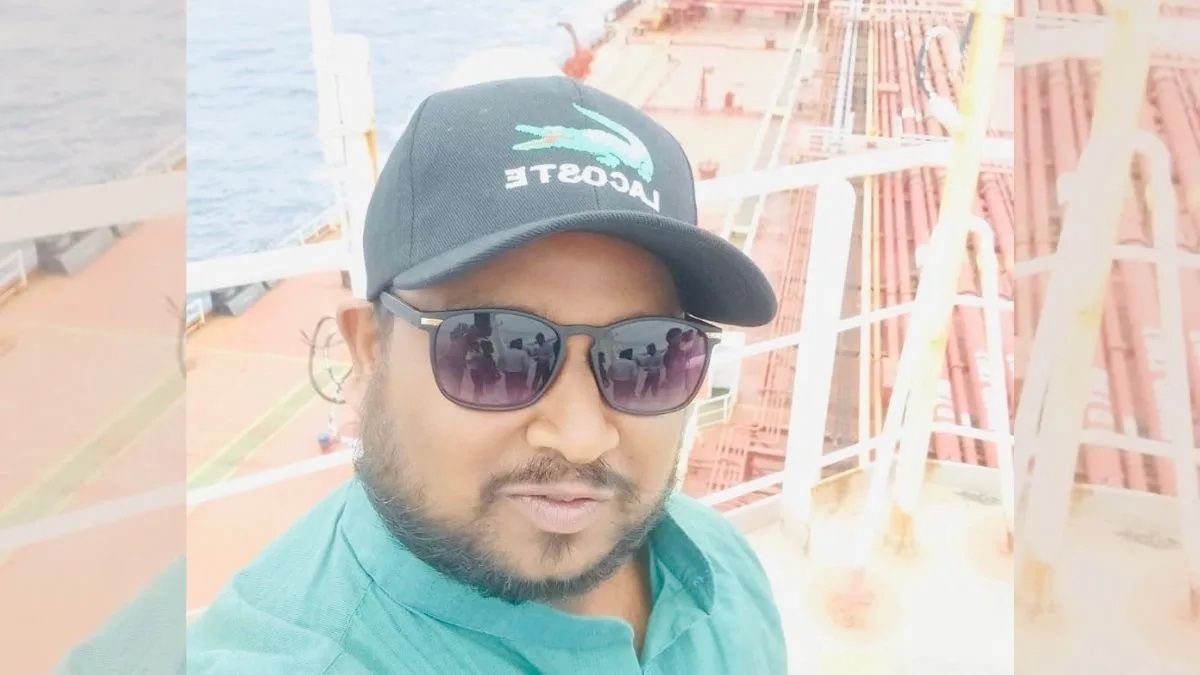
A 33-year-old Indian maritime worker's unexplained death in Venezuela has ignited a major controversy, with his family and maritime unions now demanding urgent government intervention and a full investigation. Rakesh Chauhan from Deoria district in Uttar Pradesh travelled to Venezuela in November 2025 as a crew member aboard a merchant vessel, but his body was repatriated to India nearly a month after his death without any accompanying autopsy report or explanation from Venezuelan authorities. A subsequent post-mortem examination conducted in Uttar Pradesh has uncovered deeply disturbing findings that have intensified scrutiny over the circumstances surrounding his demise and raised alarming questions about potential foul play.
According to the sequence of events provided by his family, Chauhan initially suffered what officials described as injuries from a fall onboard the vessel. The shipping company conveyed conflicting and concerning messages to his relatives—first suggesting he was undergoing treatment, then claiming there was merely a five per cent survival rate, and finally announcing his death on the same day. The family was given a straightforward explanation that Chauhan had succumbed to injuries sustained in the onboard accident, and they were assured his body would arrive within a week. However, this timeline proved misleading when Chauhan's remains did not reach India until June 4, creating a month-long delay that left the family increasingly anxious and suspicious.
The Indian post-mortem examination, conducted after district magistrate intervention when initial doctors noted the body had clearly undergone prior autopsy work, yielded shocking results that have become the centrepiece of the family's complaints. Medical documentation recorded extensive surgical incisions—one running from the neck down to the pubic symphysis and another extending ear to ear across the back of the skull—yet virtually every vital organ was found to be missing from the body cavity. The post-mortem report explicitly listed the absence of the brain, heart, both lungs, liver, kidneys, spleen, pancreas, stomach, intestines, thyroid gland, hyoid bone, larynx, and trachea, among numerous other internal structures. Medical examiners concluded that establishing the cause of death was impossible given this comprehensive absence of organs, effectively rendering the investigation of the initial circumstances completely futile.
The Federation of Seafarers' Unions of India has responded with unusual alarm to the findings, characterising the case as emblematic of broader vulnerabilities facing Indian maritime workers abroad. The union has publicly expressed horror at what it describes as a complete hollowing-out of the deceased's body, noting in statements posted on social media that not a single organ remained for medical examination. The federation pointed to the extensive stitching patterns and the nearly month-long period during which the body remained in deep freeze as compounding factors that complicated any subsequent investigation. The organisation has framed this incident not merely as a medical anomaly but as a potential systemic failure in protecting Indian seafarers employed on international vessels, describing workers as becoming scapegoats in maritime operations.
Beyond the primary concern about missing organs, additional irregularities have surfaced that have deepened the family's and union's suspicions about what occurred in Venezuela. The receipt accompanying Chauhan's mortal remains allegedly bears a name—Anjana Chauraisya—that differs from the person identified as signing on behalf of his wife, Ranjana Chaurasiya, raising questions about document authenticity and chain of custody. More troublingly, the federation has alleged that the vessel specified in Chauhan's employment agreement does not correspond to the actual vessel on which he was deployed, suggesting potential discrepancies in basic employment documentation. These multiple inconsistencies have prompted the union to raise the possibility of deliberate cover-up and to question what information might be deliberately concealed from his family.
Most alarmingly, the federation has openly raised concerns about organ trafficking in connection with this case, pointing to the complete extraction of vital organs as potentially indicative of sinister activity rather than standard medical procedure. The organisation has questioned why organs would be removed without informed family consent and why the Venezuelan autopsy report was never provided to the family before the body's repatriation. These concerns resonate within broader international discourse about organ trafficking networks that occasionally intersect with maritime operations and vulnerable worker populations. The union's public articulation of these suspicions has elevated this from a singular family tragedy to a matter of systemic concern within India's seafaring community.
The absence of transparent communication from Venezuelan authorities has become a critical flashpoint in this dispute. The family received no official autopsy report, no detailed explanation of the circumstances preceding Chauhan's death, and no documentation regarding the procedures performed on his body while it remained in Venezuelan custody. This opacity stands in sharp contrast to standard international maritime protocols, which typically mandate comprehensive documentation of worker incidents and transparent communication with employing nations. The Indian Embassy's apparent limited engagement in securing these documents or clarifications has become another point of criticism, with the federation explicitly demanding immediate embassy intervention to obtain the Venezuelan autopsy report and full circumstances surrounding the death.
The case highlights a persistent vulnerability within global maritime employment, where Indian workers operating aboard international vessels often lack robust protective frameworks when accidents or deaths occur. Seafarers employed on foreign merchant ships operating in international waters frequently find themselves navigating complex jurisdictional questions and operating in environments where local investigations may not prioritise the interests of foreign workers or their families. The combination of geographic distance, language barriers, and unequal power dynamics between individual workers and shipping corporations creates conditions where inadequate investigations or procedural irregularities can proceed with minimal accountability. Chauhan's case exemplifies how these structural vulnerabilities can transform a tragedy into a nightmare of unanswered questions and apparent institutional indifference.
The family's demands have crystallised around several concrete requirements: a full investigation into the circumstances of Chauhan's death, the complete Venezuelan autopsy report and all related documentation, clear disclosure of what procedures were performed and why organs were extracted, official accountability from Venezuelan authorities for their handling of the case, and ultimately financial compensation reflecting the apparent negligence or misconduct involved. The federation has similarly insisted on comprehensive inquiry, embassy-level intervention, and systemic changes that might better protect Indian seafarers in future maritime incidents. These demands reflect not merely a desire for answers but an expectation that the Indian government should use diplomatic channels to ensure that its citizens working abroad receive basic standards of investigative transparency and procedural integrity, particularly in circumstances involving unexplained death.
The case has profound implications for Southeast Asian maritime workers more broadly, as the region produces substantial numbers of seafarers employed on international vessels. If substantive investigations fail to clarify the circumstances in Chauhan's death or if concerns about organ trafficking prove founded, the incident would underscore serious gaps in international maritime worker protection and dispute resolution mechanisms. For Malaysian seafarers and other regional maritime workers, the case serves as a cautionary example of how vulnerable workers remain despite operating within ostensibly regulated international shipping industries. The incident has prompted reflection within maritime unions across South Asia regarding whether current protections adequately safeguard workers from both workplace hazards and potential exploitation by employers or local authorities in foreign jurisdictions.
Moving forward, the case's resolution will likely depend on whether Indian diplomatic pressure can compel Venezuelan cooperation and whether local investigations can overcome the investigative obstacles created by the absent organs and delayed procedures. The incident has generated sufficient public attention within India's maritime sector that political pressure for government intervention appears likely. The case ultimately represents a critical test of whether seafarers' unions can effectively advocate for vulnerable workers against powerful shipping interests and whether home governments will prioritise comprehensive investigations over institutional convenience when their citizens die under suspicious circumstances abroad.

