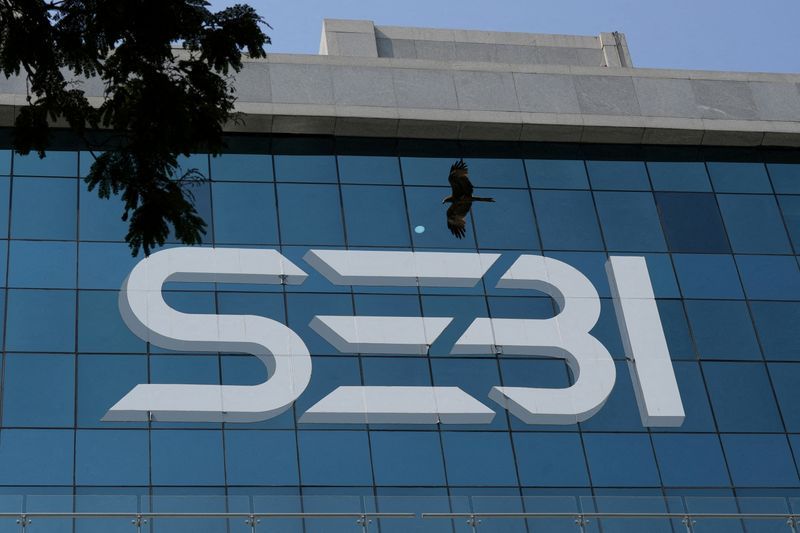
India's chief securities watchdog has raised urgent alarms over a fast-spreading confidence scheme that exploits corporate hierarchies and employee trust, targeting finance teams with fraudulent instructions to move company money. The Securities and Exchange Board of India (SEBI) issued its warning following intelligence from the Indian Cyber Crime Coordination Centre indicating a sharp uptick in reported incidents of what is locally termed the 'boss scam'—a cyber attack vector that weaponises social engineering alongside digital impersonation.
The mechanics of the scheme are deceptively straightforward yet remarkably effective. Fraudsters identify and target finance executives and support staff within organisations, initiating contact through widely-used professional and personal communication channels including email, WhatsApp, Microsoft Teams, and various social media platforms. By carefully crafting their approach, the scammers assume the digital identity of company chief executives or other high-ranking officials whose names carry sufficient organisational weight to bypass normal scrutiny. Once contact is established under false pretences, perpetrators issue direct instructions commanding targeted employees to execute immediate fund transfers to bank accounts under their control, exploiting the inherent chain-of-command dynamics that typically govern corporate compliance culture.
The sophistication of these operations extends beyond mere impersonation and social manipulation. A secondary variant of the attack employs malicious software distributed through seemingly innocent file attachments or links. When employees open these compromised files, malware programmes become embedded within their devices or messaging applications. The malicious code grants criminals backdoor access to WhatsApp Web sessions, allowing them to monitor private conversations and potentially hijack the accounts of finance officers entirely. From this compromised vantage point, attackers can then contact other finance and accounts personnel directly, using the stolen identity and access credentials of the legitimate officer to request payments to fraudulent recipient accounts without raising immediate suspicion.
The targeting strategy reveals the scammers' understanding of corporate vulnerabilities and workflow psychology. Finance divisions represent the most valuable targets because these teams possess both the authority to execute transactions and, critically, the expectation that they will process instructions from senior leadership with minimal delay. The use of multiple communication platforms—mixing formal email with informal messaging apps like WhatsApp—creates confusion about what constitutes secure versus risky channels, undermining the institutional safeguards that many organisations rely upon. The pressure created by requests framed as urgent matters further compromises the deliberation that might otherwise occur.
SEBI's regulatory response has focused on establishing clear procedural boundaries for its licensed entities and their employees. The regulator has issued explicit directives instructing all regulated financial institutions and other supervised organisations to ensure their staff members do not execute fund transfers based solely on instructions received through social media platforms, instant messaging services, or other informal digital channels. This guidance attempts to force a hard separation between authorisation and execution, requiring verification procedures that cannot be bypassed by mere impersonation on messaging apps.
For Malaysian and Southeast Asian businesses, this Indian experience offers instructive lessons about emerging fraud trends increasingly visible across the region. Corporate structures in this part of Asia typically mirror the hierarchical models prevalent in India, where deference to senior authority remains culturally ingrained and embedded in organisational practice. Finance teams across Malaysian multinational corporations, regional offices of global firms, and local conglomerates face comparable vulnerabilities. The scam exploits not technological weakness but rather the psychological architecture of workplace relationships—a vulnerability that transcends national boundaries and business cultures.
The prevalence of WhatsApp, Microsoft Teams, and email across Southeast Asian corporate environments means that attackers can replicate this methodology with minimal adaptation. Recent years have seen increasing reports of similar impersonation schemes across Malaysia, Singapore, and Thailand, though they have not always been formally categorised or tracked as comprehensively as SEBI's alert suggests. The relative informality of many business communications in this region, where verbal instructions and message-based approvals often carry significant weight, may actually render organisations here more susceptible than their Indian counterparts.
Institutional responses must address the psychological dimensions of these attacks, not merely technical safeguards. Employee training programmes need to move beyond checkbox compliance exercises to genuinely inculcate healthy scepticism regarding unexpected transaction requests, regardless of apparent sender identity. The critical vulnerability lies in the assumption that communication channel informality necessarily correlates with lower security standards. Many organisations treat WhatsApp approvals as essentially equivalent to formal email authorisation, a dangerous misalignment that fraudsters deliberately exploit.
The malware distribution element adds another layer of concern, particularly given the prevalence of mobile-first working arrangements across Southeast Asia. Device compromises can persist undetected for extended periods, providing criminals ongoing access to organisational communications and potentially multiple transaction cycles before discovery. Endpoint security solutions require continuous updating and monitoring, yet many regional firms struggle with adequate resourcing for cybersecurity infrastructure.
Regulators across Southeast Asia may consider similar formal guidance to financial institutions and regulated entities operating within their jurisdictions. Establishing clear thresholds for transaction authorisation that cannot be met through informal channels creates an additional friction layer that slows fraud cycles while remaining compatible with operational efficiency. Coordinated regional awareness campaigns could alert corporate finance teams to this specific threat vector before incidents proliferate.

