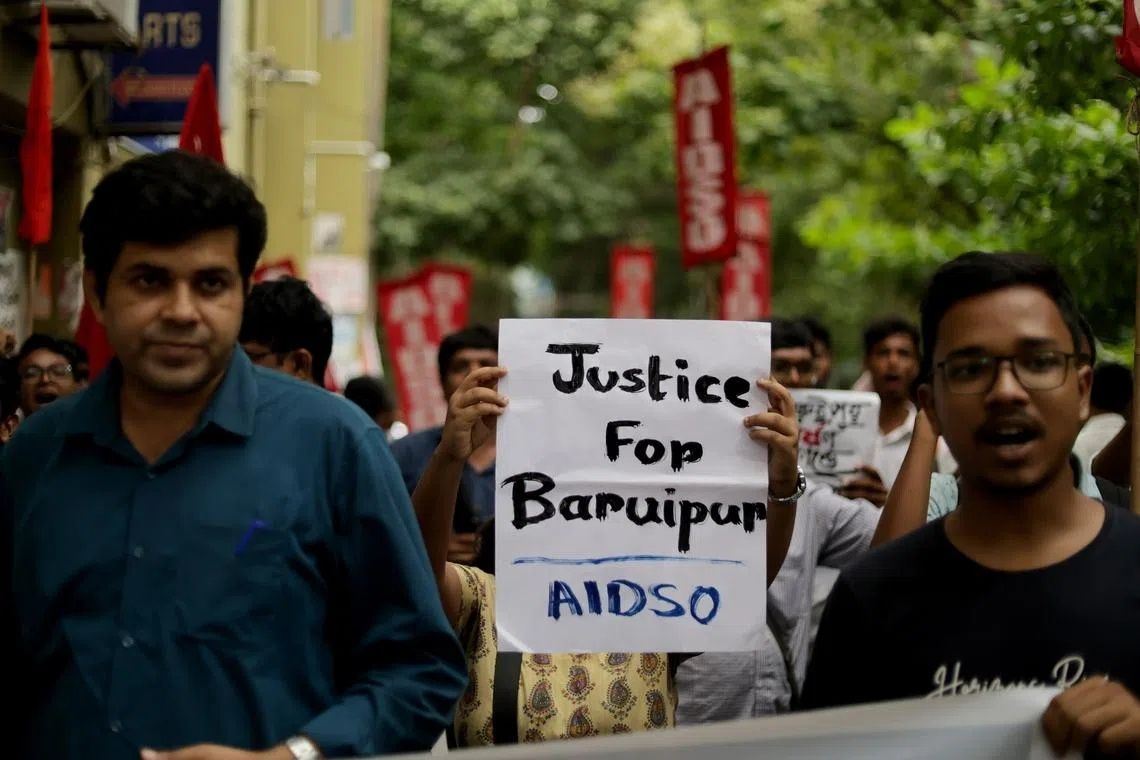
Authorities in India have intensified a crackdown on protest-related violence following the discovery of a murdered child in West Bengal, detaining dozens of individuals accused of vandalism and disorder. The arrests come as public outrage continues to mount over the death of an 11-year-old girl whose body was found in a pond in Baruipur city on July 5, just a day after she disappeared from her home approximately 30 kilometres from Kolkata. Police officials confirmed that 35 people have been taken into custody for their involvement in destructive acts, with investigators examining video evidence to identify additional perpetrators who participated in the unrest that gripped the eastern state throughout the week.
The discovery of the child's body triggered an immediate wave of community mobilisation as residents blocked major thoroughfares and set vehicles ablaze in scenes reflecting deep societal anger over the crime. One individual fell victim to mob justice during the disturbances, becoming an unintended casualty of the heated atmosphere that engulfed the region. Senior state police officer Arvind Kumar Anand acknowledged to international media that authorities are systematically working through multiple social media recordings to apprehend those who have evaded immediate capture, suggesting the scale of participation in the protests extended far beyond those formally charged.
In a controversial development that has drawn scrutiny from civil rights observers, police disclosed that one of four men arrested in connection with the crime had been fatally shot. Prabhas Mondal died in the early hours of July 8 during what authorities characterised as an escape attempt whilst being transported to the scene for investigative purposes—a practice commonly referred to as a "encounter killing" in Indian law enforcement contexts. The circumstances surrounding his death have not been independently verified, and such incidents remain contentious within India's justice system due to longstanding concerns about extrajudicial killings and accountability mechanisms.
Mondal's mother delivered a stark statement that underscored the family's sense of shame and rejection, refusing to accept her son's remains and declining to conduct a funeral at her residence. In a televised interview, she expressed her view that he had received deserved punishment for his actions, effectively disowning him in death and signalling broader societal condemnation of sexual violence. Her declaration reflected the profound moral rupture such crimes create within families and communities, with relatives of accused perpetrators often facing intense social ostracism regardless of judicial outcomes.
Questions regarding the integrity of the investigation surfaced when media outlets reported that relatives of one of the other three detained suspects claimed he had been wrongfully arrested through a case of mistaken identity. This assertion introduces troubling complexity into an already fraught situation, as it suggests that in the rush to satisfy public demands for justice, law enforcement may have inadvertently ensnared innocent parties. The families of the remaining two suspects have not publicly commented on the charges, leaving significant ambiguity about the strength of evidence against each individual defendant.
West Bengal's newly appointed chief minister Suvendu Adhikari, whose Bharatiya Janata Party secured state control following elections in May, seized on the tragedy to project a law-and-order stance with zero tolerance for sexual predation. His statement issued through social media platform X on July 9 promised that perpetrators of rape and violence would face uncompromising legal consequences, whilst simultaneously condemning vigilante killings of individuals—whether guilty or innocent—at the hands of angry mobs. The dual messaging reflects an attempt to simultaneously appease public fury over the crime whilst discouraging summary executions that undermine rule of law.
This incident adds to a growing catalogue of high-profile cases that have illuminated persistent vulnerabilities in protecting India's female population, particularly children and young women who lack social power to resist exploitation. Despite legislative reforms implemented following the 2012 Delhi gang rape and subsequent murder of a 22-year-old woman, which prompted nationwide street demonstrations and resulted in the eventual execution of four convicted offenders, systemic protections remain inadequate across many regions. The gap between legal frameworks and on-the-ground safety for women suggests that legislative intervention alone has proven insufficient to alter patterns of violence and impunity.
West Bengal specifically endured international scrutiny during 2024 following the rape and murder of a medical trainee at Kolkata's RG Kar Medical College and Hospital, an institution of considerable prestige within India's healthcare establishment. That case similarly provoked nationwide demonstrations centring on women's safety and institutional accountability, indicating that systemic failures transcend individual perpetrators or isolated incidents. The recurrence of such high-profile crimes within a single state within months suggests either genuine epidemiological increases in violence or, conversely, enhanced visibility and reporting of longstanding problems previously obscured from public consciousness.
For Malaysian observers and policymakers, the unfolding situation in West Bengal offers instructive parallels regarding the challenges inherent in balancing community demands for justice with maintenance of procedural fairness and democratic norms. The capacity of public anger to overwhelm investigative rigour—evidenced by potential misidentification of suspects and vigilante violence—represents a pattern familiar across South Asian democracies struggling with how to address crimes that provoke intense emotional responses. The willingness of state authorities to tolerate or facilitate extrajudicial killings, whether explicitly or through calculated inaction, signals a troubling erosion of accountability mechanisms that can establish precedents threatening broader civil liberties and rule of law foundations.

