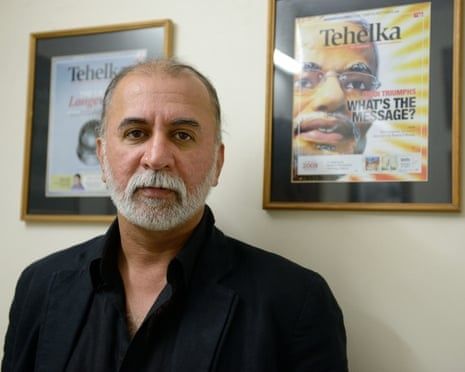
The Bombay High Court on Thursday delivered a landmark reversal in a high-profile Indian sexual assault case, convicting Tarun Tejpal, 63, founder and former editor of the investigative news magazine Tehelka, of raping a junior colleague. The conviction overturned a 2021 acquittal by a lower court in Goa, marking a significant moment in what has become one of India's most closely watched media industry misconduct cases. Tejpal, who has consistently denied all allegations, now faces sentencing, with the possibility of appealing to a higher court against the conviction.
The incident at the heart of the case occurred in November 2013 when Tejpal allegedly assaulted the young journalist in the lift of a five-star hotel in Goa during a magazine event. The alleged assault drew immediate attention because of Tejpal's prominent position in Indian journalism and the irony that Tehelka had built its reputation on investigative reporting that frequently championed women's rights and exposed social injustices. The accusation shattered the magazine's carefully cultivated image as a champion of progressive causes, creating a profound credibility crisis from which the publication has never fully recovered.
Following his arrest, Tejpal spent seven months in custody before India's Supreme Court granted him bail. The case then proceeded through the judiciary at a measured pace, finally reaching trial in Goa, where a lower court acquitted him in 2021 of charges including rape, sexual harassment, and wrongful restraint. This acquittal appeared to close the chapter on the matter, but the Goa government challenged the verdict before the Bombay High Court, arguing that the trial court had erred in its assessment of evidence and witness credibility. The appellate court's decision on Thursday to overturn the acquittal vindicated that challenge.
Sunita Sawant, the lead investigator from Goa Police who spearheaded the original probe, welcomed the conviction outside court, emphasizing its significance as a statement about women's rights and workplace accountability. She underscored that the verdict represented more than a legal outcome—it was a validation of the complainant's courage in pursuing justice through India's formal legal system, a system that has historically been slow and often dismissive of sexual assault allegations. For Sawant, the conviction represented an affirmation that women working across all sectors can and should be protected from workplace sexual violence.
The timing and context of the Tejpal case connects it inextricably to a broader reckoning with sexual violence in India. The conviction comes more than a decade after the December 2012 fatal gang rape of a 23-year-old medical student on a New Delhi bus, an attack that galvanized India like few other recent events. That horrific crime unleashed nationwide protests and international condemnation, placing intense pressure on the government to strengthen the country's rape laws and improve the institutional response to sexual assault. The resulting legal reforms represented a rare moment of decisive legislative action on a deeply entrenched social problem.
Tehelka magazine itself emerged as a casualty of the Tejpal scandal. Founded with ambitions to undertake fearless investigative journalism, the publication had built considerable influence and prestige within Indian media circles during the 1990s and 2000s. The revelation that its own founder and driving force stood accused of sexual violence against a staff member created an institutional trauma from which recovery proved impossible. The magazine continues to operate under new leadership, but it has lost the platform power and moral authority it once commanded, unable to regain the cultural influence that defined its earlier years.
The conviction also highlights ongoing tensions within India's justice system regarding sexual assault cases. The decade-long journey from alleged incident to conviction through acquittal and appeal demonstrates how protracted and uncertain such cases remain, even when involving prominent public figures. This extended timeline reflects broader systemic challenges in how Indian courts approach sexual assault allegations, including questions about evidentiary standards, witness examination, and the burden of proof. The fact that an appellate court found reason to overturn a lower court acquittal suggests persistent disagreements about how to properly evaluate such sensitive matters.
Tejpal's case carries particular resonance for media professionals and journalists across South Asia, as it raises uncomfortable questions about power dynamics within news organizations. The hierarchical nature of journalism, with editors wielding significant power over junior reporters' careers and reputations, creates conditions where abuse can occur with relative impunity. The Tejpal conviction signals that institutional position and professional standing will not shield perpetrators from accountability, though critics note that this message arrives only after years of litigation and considerable suffering for the complainant.
Looking forward, the conviction's implications extend beyond the individual case or even Tehelka magazine itself. It contributes to an evolving Indian jurisprudence on sexual assault that, while still imperfect and slow, shows signs of taking such allegations with greater seriousness than in previous decades. For Malaysian and broader Southeast Asian observers, the case demonstrates how high-profile sexual assault allegations involving media figures can reshape institutional credibility and how legal systems grapple with such matters across different jurisdictions.

