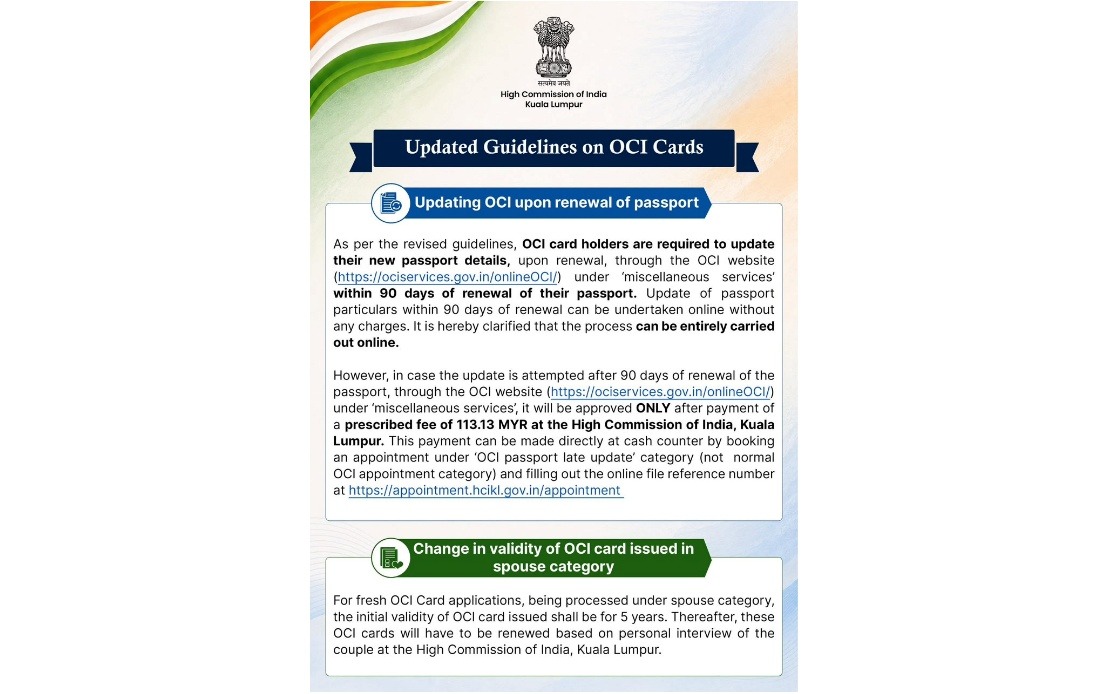
The Indian High Commission in Kuala Lumpur has tightened administrative procedures for Overseas Citizen of India (OCI) cardholders, introducing a 90-day deadline for updating passport information following renewal. The directive, communicated through official channels, marks a shift toward more stringent compliance requirements that will affect thousands of OCI holders across Malaysia and the broader Southeast Asian region where Indian expatriates represent a significant demographic.
Under the revised framework, cardholders who renew their passports must file updated passport particulars through the dedicated OCI website portal within a three-month window. This process, categorised under "miscellaneous services" on the online platform, can be completed entirely remotely without requiring physical visits to the High Commission office or incurring any charges during the grace period. The commission has emphasised that this streamlined digital approach is designed to reduce bureaucratic friction and expedite processing for compliant applicants.
The financial incentive structure underlying these guidelines is significant. Those who complete their updates within the prescribed 90-day period enjoy cost-free processing, making timely compliance economically attractive. However, any updates filed after this deadline triggers a mandatory service fee of RM113.13, payable at the High Commission's cash counter in Kuala Lumpur. This penalty structure effectively encourages rapid compliance while generating revenue for administrative operations, a common mechanism employed by diplomatic missions worldwide.
Applicants seeking to make delayed updates must navigate a slightly more cumbersome process. They are required to book appointments specifically under the "OCI passport late update" category rather than using the standard OCI appointment booking system. Crucially, applicants must provide their online file reference number when making these appointments, creating a traceable digital record that links late submissions to their original applications. This administrative requirement ensures proper documentation and accountability throughout the update process.
Beyond passport update procedures, the High Commission has implemented substantial changes to OCI cards issued under the spouse category, reflecting evolving security and verification protocols. New OCI applications filed by applicants claiming eligibility through marriage will now receive an initial validity period of five years, a reduction from what may have been longer tenures previously. This shorter initial validity creates regular touchpoints between cardholders and the mission for renewal purposes.
The renewal process itself incorporates personal verification requirements that underscore heightened scrutiny of spouse-category applications. When five-year validity periods expire, couples must present themselves for in-person interviews at the High Commission in Kuala Lumpur to process renewals. This mandatory face-to-face requirement suggests concerns about documentation authenticity or the ongoing legitimacy of marriage-based claims, necessitating direct human assessment rather than purely documentary evaluation. The interviews serve as checkpoints to verify that circumstances have not changed in ways that would affect OCI eligibility.
These procedural modifications carry implications for Malaysia's Indian diaspora, particularly those who have recently renewed their passports or who plan to do so. The tight 90-day window requires proactive calendar management and timely online engagement with Indian government platforms. For technologically less-inclined older applicants or those unfamiliar with Indian government portals, the digital-first approach may necessitate assistance from family members or professional immigration consultants.
The broader regional context matters too. Malaysia hosts one of Southeast Asia's largest Indian communities, with significant populations in Kuala Lumpur, Selangor, and Penang. OCI status carries particular importance for Indian nationals seeking long-term residence or business opportunities in Malaysia without requiring employment passes or dependent visas. The regulatory tightening therefore affects not merely administrative convenience but substantive questions of residency stability and business continuity for India-origin entrepreneurs and professionals throughout the region.
The High Commission's decision to publicise these changes through social media demonstrates recognition that modern diaspora populations access information through digital channels. By posting guidelines on official platforms, the mission acknowledges that traditional notification methods alone may not reach all eligible applicants. This communication strategy reflects broader diplomatic service modernisation efforts across South Asian missions in Southeast Asia.
Compliance with these new requirements also matters for Indian citizens' broader relationships with their home government. Maintaining current OCI documentation ensures smooth travel, banking interactions, and property transactions in India. Allowing OCI cards to expire or permit passport information to become outdated can trigger complications when visiting India for family matters, business, or investment purposes, making these administrative updates substantively consequential despite their technical nature.
Applicants facing confusion about procedures or eligibility for different OCI categories can access comprehensive information through the official OCI portal and the High Commission's dedicated appointment booking website. These platforms contain detailed guidance documents and FAQ sections designed to address common queries, reducing the need for direct inquiries that might overwhelm the mission's limited consular staff.
The revised guidelines reflect broader patterns of administrative modernisation within India's consular operations globally. By automating routine updates and introducing tiered processing fees, the High Commission optimises resource allocation while maintaining service quality. For Malaysia-based OCI holders, these changes underscore the importance of staying informed about diplomatic procedures affecting their legal status and travel documentation.

