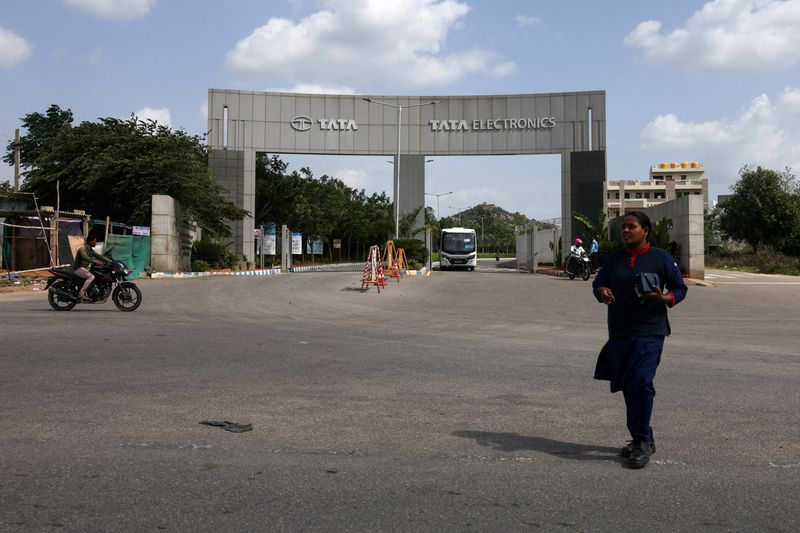
India has opened an official investigation into a significant data breach affecting Tata Electronics, a major supplier to Apple, that resulted in the exposure of closely guarded secrets surrounding the tech giant's forthcoming iPhone 18 Pro models. The Ministry of Electronics and Information Technology confirmed the probe on Thursday, marking the first public acknowledgement by Indian authorities of the incident, which has raised serious concerns about the security of sensitive industrial data within the country's growing tech manufacturing sector.
The ransomware attack on Tata Electronics resulted in the theft and subsequent publication of multiple classified documents on the dark web. Among the compromised materials are detailed component lists, supplier directories, and photographic evidence of iPhone 18 Pro units—information that Apple normally guards with extreme secrecy as part of its carefully orchestrated product development and manufacturing strategy. The exposure of these specifics is particularly damaging because it reveals which companies are manufacturing particular components for the device, details that Apple deliberately keeps private and does not include in its publicly released supplier databases.
S. Krishnan, the secretary overseeing India's Ministry of Electronics and Information Technology, confirmed during a media briefing that the government is actively investigating the breach. He revealed that the incident has been formally escalated to India's Computer Emergency Response Team, the nation's principal authority responsible for addressing cybersecurity threats and computer-related emergencies. This administrative escalation underscores the seriousness with which Indian officials view the breach and its implications for the country's reputation as a manufacturing hub for global technology companies.
The timing of this security lapse carries particular significance given Apple's manufacturing expansion in India. The company has been progressively shifting portions of its iPhone production away from traditional bases in other regions, making India an increasingly vital component of its global supply chain. A breach of this magnitude threatens to undermine the confidence that multinational corporations place in India's ability to protect their intellectual property and manufacturing confidentiality, potentially influencing future investment decisions by tech companies considering expansion in the country.
Apple's upcoming product launches, scheduled for September, are expected to include the new iPhone 18 Pro and Pro Max models. The leaked files contain at least six separate documents that detail the specific manufacturers producing individual components for these devices. This granular information is extraordinarily valuable to competitors and malicious actors, as it provides a complete roadmap of Apple's supply chain architecture for its flagship products. The exposure represents a breach not only of Apple's intellectual property but also of the proprietary business arrangements between Apple and its numerous global suppliers.
The incident is symptomatic of broader vulnerabilities within multinational supply chains that rely on subcontractors and manufacturing partners in different jurisdictions. Tata Electronics, as an Indian manufacturer handling sensitive work for global technology leaders, occupies a critical position in this complex ecosystem. The breach highlights the challenge of maintaining uniform cybersecurity standards across a geographically dispersed network of suppliers, each operating under different regulatory regimes and technological environments.
In response to the attack, Tata Electronics has enlisted international forensic specialists to conduct a comprehensive audit of its systems and identify the scope of the breach. This defensive measure became necessary after the same ransomware group responsible for compromising Tata also posted stolen data from other technology sector heavyweights, including Tesla, Qualcomm, and TSMC. The fact that multiple high-profile companies fell victim to the same threat actor suggests a sophisticated, coordinated attack campaign rather than an isolated incident, indicating that the cybercriminal group possesses advanced capabilities and maintains persistent access to critical infrastructure.
The manufacturing of iPhones involves an intricate choreography of global suppliers, with different companies producing components ranging from processors to display panels to camera modules. Apple's competitive advantage depends significantly on keeping this supplier network and the allocation of work secret. Revealing which manufacturers handle which components undermines Apple's negotiating position with suppliers, potentially exposing proprietary manufacturing techniques and cost structures to competitors seeking to replicate or reverse-engineer Apple's supply chain efficiency.
For Malaysia and Southeast Asia more broadly, this incident carries important implications. The region has emerged as an increasingly attractive manufacturing destination for global technology companies seeking to diversify their supply chains away from traditional centres. The Tata breach demonstrates that companies operating manufacturing facilities in developing economies face sophisticated cyber threats that can rapidly compromise competitiveness and confidentiality. Malaysian manufacturers and authorities must view this as a cautionary case study regarding the necessity of implementing world-class cybersecurity infrastructure to protect both their own operations and the sensitive data of multinational clients.
The investigation by Indian authorities also signals a tougher stance on cybersecurity incidents affecting foreign technology companies investing in the country. By treating the Tata breach seriously at the ministerial level, India aims to reassure multinational corporations that the government takes the protection of their intellectual property seriously. However, the breach itself may prompt some companies to reconsider or hedge their manufacturing commitments in the region, particularly if they perceive inadequate protective measures or regulatory oversight.
The darker implications of this breach extend beyond immediate commercial concerns. Ransomware groups that successfully penetrate technology supply chains can leverage stolen data for multiple purposes beyond demanding financial settlements. Detailed information about component suppliers and manufacturing processes can be sold to state-sponsored actors or competitors, used to identify other vulnerable links in global supply chains, or exploited to develop more targeted attacks on other companies within the technology ecosystem. The criminal groups conducting these attacks have evolved from simple extortionists into sophisticated operators conducting intelligence-gathering missions on behalf of various interested parties.

