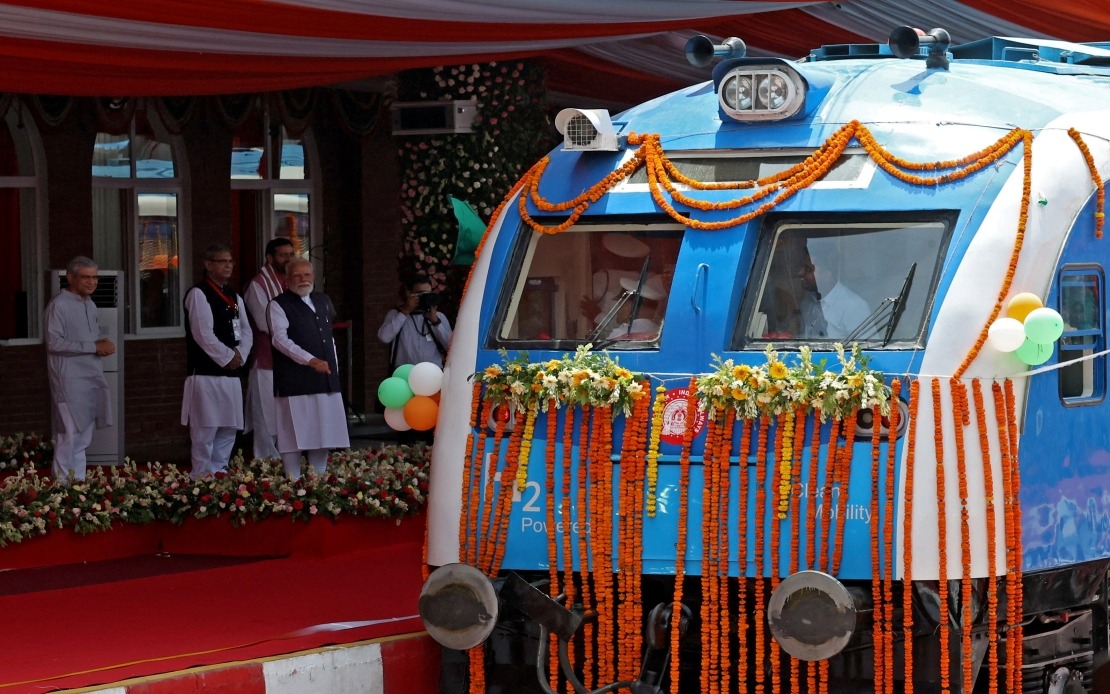
India has crossed a significant milestone in its journey towards sustainable transportation infrastructure by unveiling its first hydrogen-powered train. Prime Minister Narendra Modi officially inaugurated the vehicle on Friday, marking the nation's entry into a select cohort of countries pioneering hydrogen-based rail propulsion. The 10-coach train will traverse the 89-kilometre stretch between Jind and Sonipat in the northern state of Haryana, representing a tangible step forward in decarbonising one of Asia's largest railway networks.
This achievement is particularly noteworthy because the hydrogen fuel cell technology has been developed indigenously, rather than imported from established players. The system employs a 1,200-kilowatt Proton Exchange Membrane Fuel Cell (PEMFC) that generates electricity through a chemical reaction between hydrogen and oxygen. This represents a deliberate effort to build domestic technical capabilities in clean energy transport, an area where India has historically relied on foreign expertise and components. The indigenous development approach carries implications for India's broader ambition to reduce dependence on imported technologies whilst simultaneously addressing climate commitments.
The operational specifications of this train demonstrate practical viability within existing railway infrastructure constraints. Approved for maximum speeds of 75 kilometres per hour with a design capacity of 110 km/h, the train operates within parameters suitable for Indian rail networks that are transitioning existing routes from diesel to hydrogen power. This measured approach allows for gradual scaling without requiring comprehensive overhauls of track systems, signalling, or maintenance facilities. The Haryana deployment serves as a controlled testing ground where performance data can be gathered before nationwide expansion.
The environmental advantages of hydrogen propulsion offer compelling reasons for India's railways to pursue this technology. Unlike diesel locomotives that emit carbon dioxide, nitrogen oxides, and particulate matter, hydrogen fuel cells produce only water vapour and heat as byproducts. For India, where railway operations account for approximately 2 per cent of national carbon emissions and diesel costs represent a substantial operational expense, the shift towards hydrogen could yield dual benefits of environmental improvement and economic savings over time. The Jind-Sonipat corridor, connecting two important industrial towns in Haryana's manufacturing heartland, positions this demonstration project within a commercially significant region.
India now joins an exclusive group of nations operating hydrogen trains, including China, Germany, Japan, and the United States. Each of these countries has taken different approaches to hydrogen infrastructure development, reflecting varying energy landscapes and policy priorities. Germany's extensive hydrogen train networks in Lower Saxony, for instance, developed from existing renewable energy surpluses, while Japan's initiatives align with its hydrogen society vision. India's entry into this space, combined with its massive railway network serving over 1.3 billion people, positions the country as a potential scale leader should hydrogen propulsion become viable across broader sections of rail operations.
The successful implementation of this technology carries implications extending beyond railways. India's hydrogen ecosystem remains nascent, with limited production capacity, limited refuelling infrastructure, and nascent supply chains. The railway trial will test not merely the train's performance but the viability of establishing hydrogen production and distribution networks. Unlike electric trains that rely on existing electricity grids, hydrogen trains require development of entirely new fuel supply infrastructure. This challenge, whilst significant, presents opportunities for industries ranging from green hydrogen production through electrolysis to compression and storage technologies.
For Southeast Asia more broadly, India's hydrogen train development signals regional momentum towards diversified clean transportation solutions. As countries across ASEAN examine pathways to decarbonise transport sectors, India's experience with hydrogen-powered rail offers a template worth studying. Thailand, Vietnam, and Indonesia all operate substantial railway networks and face similar pressure to reduce transport emissions. The performance data from the Haryana corridor will inform regional discussions about technology adoption strategies, infrastructure investment priorities, and the comparative advantages of hydrogen versus battery-electric solutions for different rail applications.
The timing of this initiative reflects India's broader climate commitments under the Paris Agreement and its net-zero aspirations. The railway sector, whilst more efficient than road transport, remains heavily dependent on fossil fuels given the scale of India's rail network and the capital requirements for electrification. Hydrogen offers an alternative pathway that does not require universal electrification whilst still achieving substantial emissions reductions. However, successful scaling depends on parallel developments in green hydrogen production capacity, which currently remains limited and expensive in India.
Operationally, the Jind-Sonipat route provides an ideal testing environment for gathering reliability data. The corridor handles substantial freight and passenger traffic, exposing the hydrogen train to realistic operating conditions whilst maintaining manageable risk parameters. Performance metrics regarding fuel consumption efficiency, maintenance requirements, passenger comfort, and operational reliability will directly inform decisions about whether to expand hydrogen deployment to other routes. Indian Railways would need compelling evidence of cost-competitiveness and operational reliability before committing to large-scale conversion programmes.
The project also carries symbolic significance in India's energy transition narrative. Hydrogen technology represents cutting-edge clean energy infrastructure that aligns with the government's vision of positioning India as a technology innovator rather than merely an adopter of foreign solutions. This distinction matters for India's broader industrial policy and its positioning within global clean energy markets. Successfully demonstrating hydrogen train capability could strengthen India's credentials when negotiating international climate agreements or seeking technology partnerships in emerging sustainable transport sectors.
Looking forward, the critical challenge extends beyond the train itself to systemic integration. Scaling hydrogen rail requires coordinated development of hydrogen production facilities, compression plants, storage infrastructure, and distribution networks across regions targeted for expansion. These investments demand sustained policy support, regulatory clarity, and public-private partnerships. The current pilot programme, whilst encouraging, represents only the initial phase of what would be a lengthy transition requiring decade-long commitment and substantial capital deployment across India's sprawling railway system.

