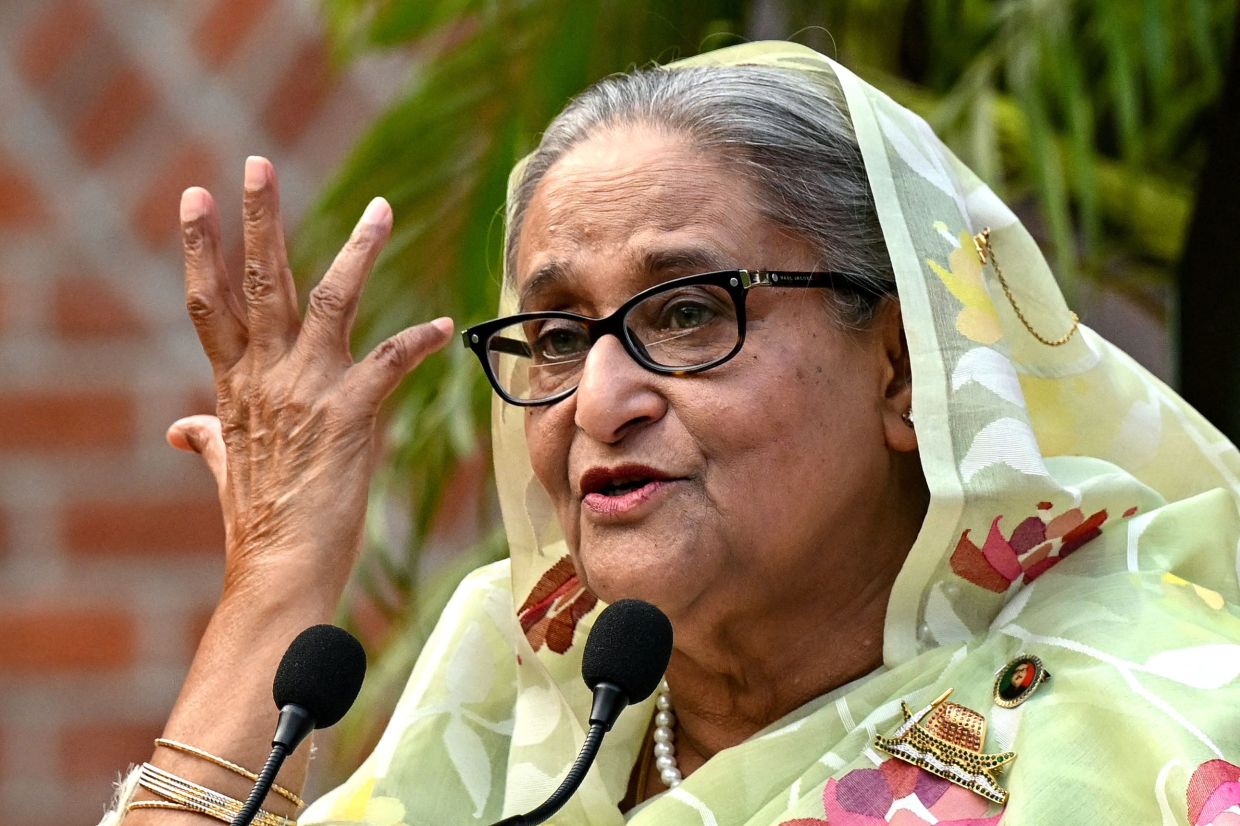
The escalating diplomatic tension between India and Bangladesh over exiled former Prime Minister Sheikh Hasina's planned public remarks illustrates the delicate balancing act New Delhi must perform as it seeks to maintain improving relations with Dhaka while respecting the principles of free speech and political asylum. India's foreign ministry spokesman Randhir Jaiswal clarified on Wednesday that the August 5 event hosted by the Foreign Correspondents' Club of South Asia in New Delhi, where Hasina is scheduled to deliver a virtual address marking the second anniversary of the student-led uprising that toppled her government, is entirely a private media initiative with no government involvement or endorsement.
The timing of Hasina's reemergence onto the public stage carries profound significance for the region's political landscape. The 78-year-old former premier has remained in India since fleeing Dhaka in August 2024 following massive anti-government protests orchestrated largely by students demanding economic reform and accountability. Since then, she has maintained a largely low profile, making this planned speech her first public statement via any medium since her departure. Her absence from public discourse has created a leadership vacuum within the Awami League, the party she led for decades, while simultaneously allowing Bangladesh's new government under Prime Minister Tarique Rahman to consolidate power without the distraction of a visible political opponent.
Bangladesh's attempt to suppress coverage of Hasina's remarks through media restrictions reveals the heightened sensitivities surrounding her continued presence in India. The Information Adviser Zahed Ur Rahman issued a stark warning to Bangladeshi broadcasters and online platforms, invoking a December 2024 order from the country's International Crimes Tribunal that explicitly prohibits the publication, broadcast, or sharing of any statements, speeches, interviews, or multimedia content originating from Hasina. This blanket prohibition extends across traditional media channels and social media platforms, representing an attempt to prevent her message from reaching Bangladeshi audiences. The tribunal's authority in this matter stems from charges filed against Hasina for crimes against humanity, specifically relating to her government's violent response to the 2024 student protests, for which she was sentenced to death in absentia—a verdict she categorically rejects as legally invalid.
The crackdown on media coverage reflects broader concerns within Dhaka about the narrative surrounding her ousting and the ongoing political transition. Bangladesh's new government faces the challenge of consolidating legitimacy while managing a population still processing the traumatic events of 2024, during which security forces killed hundreds of demonstrators. Allowing Hasina an unfiltered platform to present her perspective on those events could complicate the national healing process and potentially reignite tensions between competing political factions. By preventing local media from amplifying her voice, Bangladeshi authorities are attempting to maintain a monopoly on the official narrative while the country navigates its democratic restructuring following the elections held in February 2025.
Hasina's aides have signalled determination to proceed with the address despite official pressure from Dhaka. Abu Obaidha Arin, a spokesperson for the former premier, declared that Bangladesh's suppression efforts "cannot extinguish voices" operating beyond its territorial jurisdiction, invoking principles of political freedom and the right to expression for exiles. This stance reflects a fundamental disagreement about the legitimate scope of state authority over political actors and communications occurring outside its borders. The Awami League and its supporters view the restrictions as illegitimate censorship aimed at silencing political opposition, while Bangladesh's government considers them necessary measures to prevent interference in its domestic transition process.
India's careful neutrality in this affair underscores the delicate bilateral relationship between the two nations. Dhaka had specifically requested clarification from New Delhi regarding its position on allowing Hasina to conduct political activities from Indian soil, implicitly warning that such tolerance could jeopardize the improving relations both governments have recently pledged to foster. The Bangladeshi State Minister for Foreign Affairs Shama Obaed Islam noted that his government has repeatedly raised concerns about Hasina and other Awami League members issuing political statements from India, framing this as a matter affecting bilateral trust. Indian officials have walked a careful line by accepting the private nature of the event while simultaneously maintaining official distance and neutrality.
For Malaysia and other Southeast Asian nations, this situation carries important implications regarding political asylum, extradition obligations, and the management of regional conflicts involving exiled leaders. The case demonstrates how countries can balance humanitarian principles supporting political asylum with diplomatic considerations favouring bilateral relations. India's approach—hosting an exiled former leader while declining to officially sponsor or endorse her activities—represents one model that regional governments might reference when faced with similar scenarios. As ASEAN member nations grapple with transnational political tensions and exiled opposition figures, the India-Bangladesh precedent offers insights into how host countries can accommodate asylum while minimising diplomatic friction.
Hasina's reported plan to return to Bangladesh around December and voluntarily face court proceedings adds another layer of complexity to the situation. Her aides have indicated that the former premier and Awami League colleagues intend to end their exile and present themselves before the justice system to challenge the charges against them. Should this materialisation occur, it would represent an extraordinary test of Bangladesh's judicial independence and political maturity, forcing the new government to demonstrate whether its legal system can fairly adjudicate cases involving its most prominent political opponent. The international community, including India, will likely observe how Dhaka handles this scenario as a measure of the country's commitment to rule of law and democratic governance.
The restrictions on media coverage also raise questions about the effectiveness of information suppression in an increasingly interconnected digital environment. While Bangladesh can theoretically prevent domestic broadcasters from airing Hasina's remarks, controlling the flow of information across international borders has become exponentially more difficult. Global media outlets, international social media platforms, and diaspora networks will likely ensure that her message reaches interested audiences regardless of Dhaka's prohibitions. This reality may explain why some observers view the tribunal's order as more symbolic than practical—a statement of intent rather than an achievable outcome in the age of digital communication.
The underlying friction between India and Bangladesh, while diplomatically muted, reflects substantive disagreements about state sovereignty, refugee rights, and the treatment of political opponents. Bangladesh's government sees Hasina's exile as a temporary situation pending her return and prosecution, while her supporters view it as necessary protection from what they characterise as selective and politically motivated justice. These competing narratives will likely persist for months or years, shaping how both nations approach similar situations in the future. The August 5 address, regardless of its content, will serve as a barometer of international attention to Bangladesh's political transformation and the fate of deposed leaders in the region.
Looking forward, the resolution of this episode will depend partly on how the Bangladeshi public responds to the media blackout and whether Hasina's message reaches domestic audiences through unofficial channels. If her remarks gain significant traction despite official suppression efforts, it could strengthen her political positioning ahead of any potential return, while conversely, successful information control might reinforce the new government's narrative dominance. The coming months will reveal whether Bangladesh's new political settlement can consolidate without major disruption from exiled opposition figures, and whether India can maintain its diplomatic equilibrium amid continued pressure from Dhaka to restrict asylum-related political activities on its soil.

