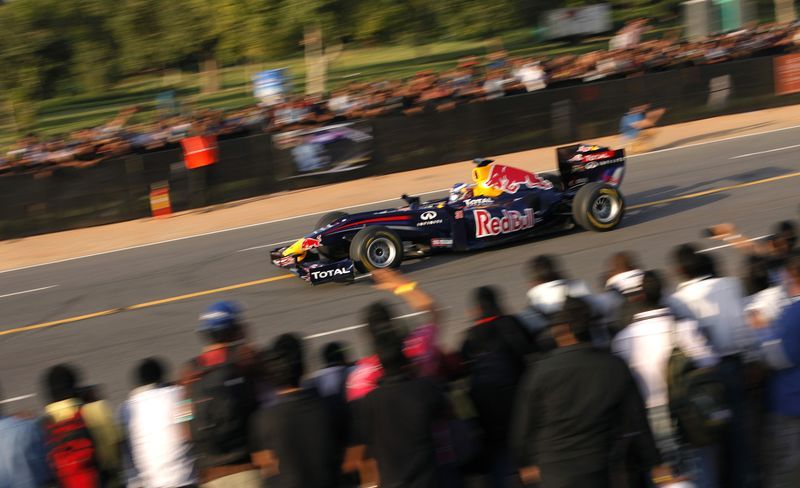
India's government has begun deliberate efforts to overcome longstanding tax and regulatory obstacles that could restore Formula One racing to the country within the next four years. The Buddh International Circuit on New Delhi's outskirts is being positioned as the potential venue for the Grand Prix's comeback in 2028, marking a significant interval of more than a decade since the motorsport's last appearance on Indian soil.
The Indian Grand Prix initially launched in 2011 with considerable fanfare and national pride, but the domestic race proved unsustainable. Internal disputes related to taxation frameworks and regulatory compliance led to the event's cancellation following its third edition in 2013, leaving India as a notable absence from the Formula One calendar despite its status as a major economy and growing automotive hub.
Sports Minister Mansukh Mandaviya has taken the lead in pursuing the revival by convening critical stakeholders, including the Adani Group, which is acquiring ownership of the circuit facility, alongside officials from India's motorsports federation. The minister's recent meetings resulted in a concrete commitment to establish a dedicated task force empowered to systematically address the barriers that previously derailed the event.
The task force's mandate extends across multiple domains that proved problematic during the sport's previous tenure in India. Taxation issues will receive particular scrutiny, as these remain central to the promoter's viability and the international racing body's participation calculations. Beyond financial considerations, the panel will examine regulatory alignment, infrastructure adequacy, and broader policy frameworks that affect motorsport operations and investment. Tax authorities have been incorporated directly into the task force structure, signalling government determination to resolve fiscal ambiguities that previously clouded promoter confidence.
Coordination across India's bureaucratic landscape represents another critical dimension of the revival strategy. The government's apex policy think tank has been assigned responsibility for inter-ministerial cooperation aimed at streamlining administrative procedures and eliminating duplicative requirements that historically complicated event operations. This coordination mechanism suggests acknowledgement that Formula One's return requires synchronised action across multiple government bodies rather than isolated ministerial efforts.
The Adani Group's involvement adds significant financial credibility to the initiative. Karan Adani, managing director of Adani Ports & Special Economic Zone Ltd, has publicly expressed personal commitment to repatriating Formula One to India, lending corporate momentum to government objectives. The conglomerate's acquisition of the circuit ownership positions it as the primary private partner capable of mustering the substantial capital investment required for circuit upgrades and event hosting.
Formula One's international leadership has reciprocated India's overtures with measured interest. Chief executive Stefano Domenicali confirmed the sport's genuine enthusiasm for returning to the Indian market, recognising the country's potential as a major motorsport venue. However, Domenicali's recent comments to F1 India broadcaster FanCode tempered expectations by emphasising that substantial preparatory work remains outstanding before any commitment could materialise. His reference to identifying appropriate promoters, securing collaborative partnerships, and establishing suitable timing suggests that while enthusiasm exists, Formula One will not rush into arrangements that replicate the previous experience's complications.
The timeframe targeted for 2028 reflects pragmatic acknowledgement that institutional hurdles require extended resolution periods. Unlike shorter-term revival scenarios, this four-year window allows government bodies adequate opportunity to harmonise tax treatment, clarify regulatory requirements, and construct durable frameworks that protect both the sport's operational interests and India's fiscal objectives. Such deliberation contrasts sharply with the rushed circumstances that arguably contributed to the original race's swift abandonment.
India's repositioning as a Formula One destination carries implications extending beyond motorsport. The sport's international profile attracts global media attention, technology transfer, infrastructure development, and high-value tourism. Successful race hosting could position India as a premier destination within Formula One's expanding global footprint, potentially enhancing the country's broader sporting profile alongside cricket and field hockey. The automotive industry gains visibility and prestige through association with the world's premier motorsport competition.
Regional context adds further significance to India's initiative. Southeast Asian nations, including Malaysia and Singapore, have experienced Formula One's commercial and sporting benefits through established races. Singapore's nighttime Grand Prix has become an iconic event, while Malaysia previously hosted racing at Sepang International Circuit. India's potential re-entry into the Formula One calendar would represent competitive positioning within Asia's motorsport landscape, acknowledging the continent's growing economic importance to international racing bodies.
The task force's success will depend fundamentally on resolving the taxation disputes that initially prompted the 2013 cancellation. Foreign promoters and the Formula One organisation require certainty regarding tax obligations, repatriation of revenues, and exemptions applicable to international sporting events. Similarly, regulatory clarity regarding safety standards, environmental compliance, and labour requirements must align with international practice whilst accommodating India's domestic requirements.
Stakeholder coordination between government, the Adani Group, the motorsports federation, and Formula One's representatives will prove decisive in determining whether 2028 represents a realistic target or another postponement. The presence of tax authorities within the task force structure and apex coordination mechanisms suggests institutional seriousness that appeared absent during the earlier episode. Whether this structural commitment translates into substantive policy resolutions that satisfy all parties remains the central question as India pursues restoration of this prestigious international sporting event.

