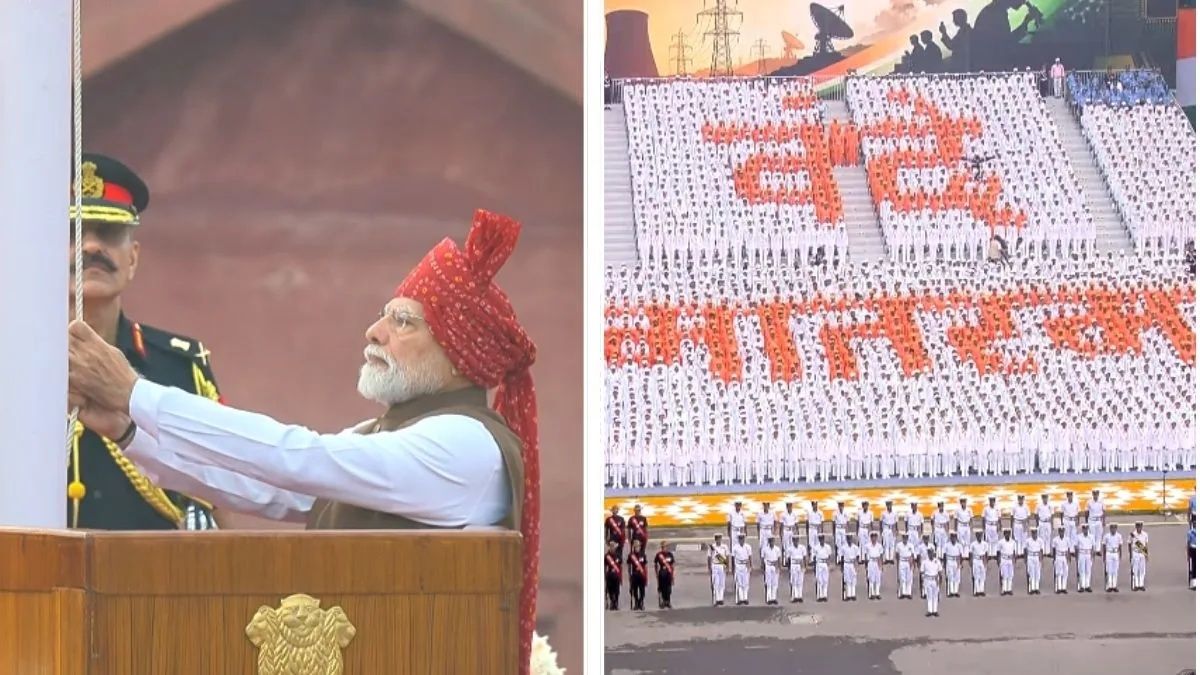
Prime Minister Narendra Modi has articulated an expansive development roadmap for India, setting 2047 as the target year for the nation to achieve developed-country status. Speaking from the Red Fort during Saturday's 80th Independence Day observance, Modi framed the objective—termed 'Viksit Bharat'—as a transformative national aspiration that demands citizens to broaden their thinking, strengthen their commitment, and unite behind a shared purpose. The declaration comes at a moment when India's global standing has shifted markedly, positioning the country differently in international economic hierarchies than it occupied merely a decade earlier.
The Prime Minister positioned this development agenda as fundamentally reshaping how the world perceives India and its capabilities. He emphasised that when a nation containing the world's largest population collectively pledges to transition into the developed-economy category, it sends a powerful signal about the confidence and determination embedded within its society. Modi articulated this vision as representing not merely economic targets but a reflection of national character and resolve. The framing suggests that India's ambition transcends conventional GDP measurements, encompassing broader transformations across institutions, infrastructure, and citizen wellbeing.
Central to Modi's message was a deliberate call for citizens to abandon incremental thinking in favour of transformative ambitions. He argued forcefully that constrained aspirations would prove inadequate for the scale of change required. By advocating for what he termed "big dreams," Modi suggested that expanded thinking naturally produces broader visions for societal advancement. This rhetorical approach reflects a particular philosophy of national development where psychological mindset shifts precede and enable material economic transformation. The emphasis on collective dreaming rather than technocratic planning appeals to India's participatory democratic traditions while mobilising citizens as stakeholders in long-term national objectives.
Modi's assessment of India's economic trajectory over the preceding twelve years highlights significant sectoral advances that undergird confidence in the 2047 ambition. He noted that India had previously occupied a position within the "Fragile Five"—an informal designation referring to emerging economies perceived as vulnerable to capital flight and currency instability during periods of monetary tightening. The transition away from this characterisation toward recognition as a substantial fast-growing economy represents material improvement in India's macroeconomic position. However, Modi's acknowledgment that "we were stuck" suggests the earlier period involved stagnation beyond what headline growth figures alone might convey, implying structural constraints that required deliberate policy intervention to overcome.
The quantification of sectoral performance demonstrates how Modi administration policies have targeted specific industries for expansion. Defence production quadrupling over twelve years reflects conscious efforts to build domestic military-industrial capabilities and reduce import dependence, a longstanding strategic objective. Khadi and Gramodyog production increasing five-fold connects to rural development and traditional artisan support initiatives. Electronic manufacturing rising seven-fold indicates successful efforts to diversify industrial bases beyond traditional sectors. Mobile phone production growth of thirty-three percent reflects India's position within global electronics supply chains, whilst hundred-percent expansion in digital transactions underscores the rapid adoption of digital payment infrastructure—a transformation particularly relevant across South Asia as neighbouring economies similarly pursue financial digitalisation.
For Malaysian and Southeast Asian observers, India's development aspirations carry regional implications. India's technological advancement, manufacturing capacity expansion, and digital infrastructure development create both competitive and collaborative opportunities within the region. As India pursues developed-economy status, its resource requirements, technology partnerships, and investment patterns will influence regional trade dynamics. Southeast Asian nations, already deeply integrated with Indian supply chains and investment flows, will experience ripple effects from India's structural transformation. Understanding India's articulated priorities—defence production autonomy, rural development, manufacturing diversification—provides context for anticipating bilateral and multilateral economic relationships across the next two decades.
The ceremonial aspects of Modi's Independence Day address held symbolic weight beyond rhetorical flourish. The full rendition of 'Vande Mataram' at the Red Fort marked the first such occurrence since independence in 1947. Modi's characterisation of this moment as historically significant suggests deliberate efforts to reconnect contemporary nationalist sentiment with the independence struggle's cultural iconography. The national flag being present simultaneously in homes and public consciousness, as Modi described, represents an attempt to consolidate civic nationalism around shared symbols and aspirations. These ceremonial elements frame the development agenda within deeper historical narratives about Indian national identity and self-determination.
The 21-gun salute conducted by the 1721 Field Battery using indigenously manufactured 105mm Light Field Guns further reinforced themes of national self-reliance and military modernisation. The battery's composition—commanded by Major Pawan Singh Shekhawat with Naib Subedar Anuthosh Sarkar serving as Gun Position Officer—highlighted institutional continuity within India's security establishment. The emphasis on indigenous weaponry production reflects the broader development vision of reducing foreign dependency across critical sectors whilst building domestic capabilities. This military modernisation strand, whilst not central to Modi's address, forms integral component of the Viksit Bharat vision, particularly relevant given India's regional security challenges and great-power competition dynamics.
Modi's acknowledgment of recent flooding across multiple Indian states demonstrated attention to immediate humanitarian concerns alongside long-term development objectives. The assurance that the nation stood collectively with affected families balanced aspirational messaging with recognition of present hardships. This dual focus—simultaneously articulating transformative 2047 goals whilst addressing contemporary crises—reflects the political reality that national development visions must accommodate current citizen welfare. The flooding situation underscores how climate vulnerability remains pertinent even within prosperous economies, a consideration potentially relevant for Southeast Asian policymakers observing Indian climate resilience investments.
The broader political context of articulating a 2047 development vision during Independence Day celebrations serves multiple domestic functions simultaneously. It provides long-term governmental continuity beyond electoral cycles, mobilising citizens around multi-decade objectives transcending partisan politics. It creates narrative coherence linking historical independence struggles with contemporary development aspirations. International audiences receive signalling about India's ambitions and strategic confidence. For Modi specifically, the vision establishes legacy beyond immediate governance performance, positioning his administration as architects of fundamental national transformation. Whether subsequent governments sustain this articulated commitment or pivot toward alternative priorities remains uncertain, yet the public commitment itself carries political weight in democratic contexts where citizens increasingly evaluate performance against explicitly stated long-term goals.

