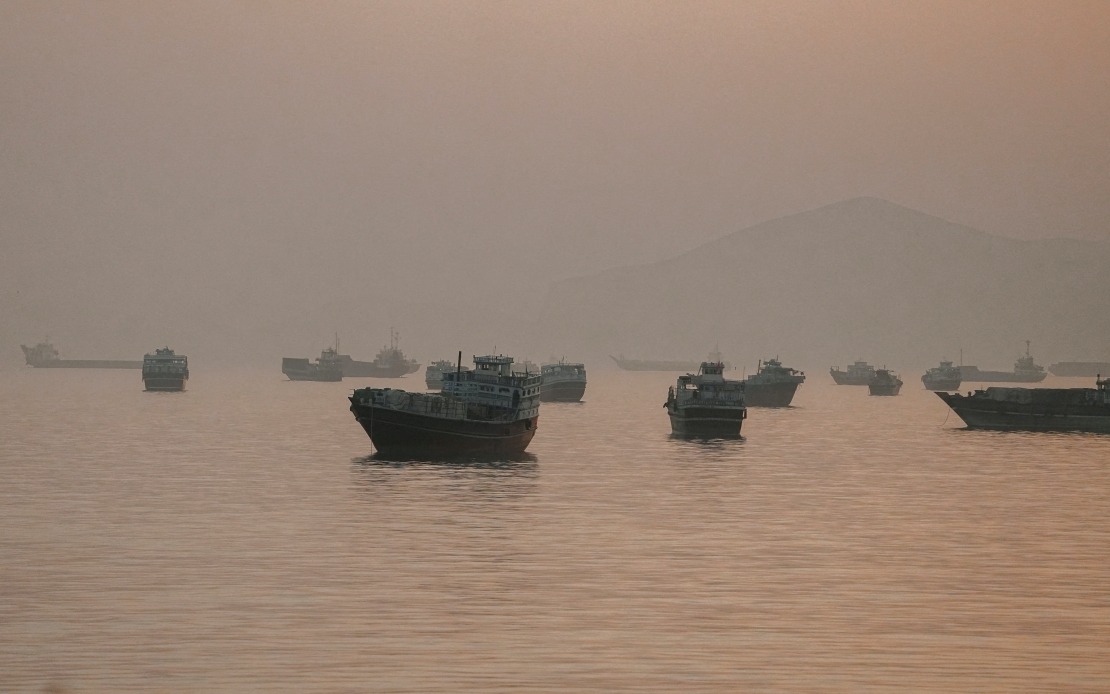
India's maritime regulator has imposed a sweeping restriction on the deployment of the nation's seafarers aboard commercial vessels traversing the Strait of Hormuz, a decision that underscores mounting safety concerns in one of the world's most strategically important waterways. The Directorate General of Shipping, the Indian government's principal maritime authority, formally issued the directive on Wednesday evening, instructing shipowners, vessel managers, and seafarer recruitment agencies to cease placing Indian mariners on ships scheduled to transit this contested passageway.
The prohibition reflects an abrupt deterioration in security conditions within the Persian Gulf region, where merchant shipping has become increasingly vulnerable to military incidents and deliberate attacks. Over the preceding seventy-two hours alone, two Indian seafarers lost their lives and several others sustained injuries when armed assaults targeted commercial vessels operating in these waters. The accumulation of such incidents within a compressed timeframe prompted the Indian maritime authorities to conclude that existing danger thresholds had been exceeded, necessitating immediate protective action for its vulnerable workforce.
The Strait of Hormuz, a narrow waterway connecting the Persian Gulf to the Gulf of Oman, remains the planetary chokepoint for petroleum commerce, with roughly one-quarter of all seaborne oil passing through its confined channels annually. The shipping lane's strategic and economic significance makes disruptions particularly consequential for global energy markets and supply chains. Yet this same geographic importance has rendered the passage a flashpoint for regional military competition and proxy conflicts.
Indo-Iranian tensions have become particularly acute recently, intensified by renewed confrontation between Washington and Tehran. The escalating strategic rivalry between these powers has manifested in a pattern of vessel interceptions, explosions of contested origin, and armed encounters that have created an environment of profound unpredictability for merchant shipping. Commercial operators and their crews face the compounded risk of becoming inadvertent casualties in a geopolitical struggle in which they possess no direct stake.
India's action reflects broader regional anxieties that extend well beyond New Delhi's immediate concerns. Southeast Asian maritime nations, including Malaysia, face similar dilemmas regarding crew safety and shipping route security. The Strait of Hormuz's turbulence carries implications for regional economies dependent on Gulf petroleum imports and for shipping lines operating across the Indian Ocean and beyond. Malaysia's substantial merchant marine workforce and the strategic importance of regional sea lanes mean that developments affecting Gulf shipping security warrant close attention from Malaysian policymakers and maritime industry stakeholders.
The restriction imposed by India's shipping directorate necessarily complicates operational planning for global shipping companies and vessel operators who depend upon recruiting talent from a diverse international labour pool. Indian seafarers constitute a significant component of the global maritime workforce, with many employed aboard container vessels, tankers, and bulk carriers serving international commerce. Constraining their availability in specific geographic zones creates logistical challenges for the shipping industry and potentially increases labour costs by forcing reliance upon alternative recruitment sources.
For Indian seafaring communities, the directive simultaneously offers protection from extraordinary physical peril while imposing economic consequences. Mariners unable to access lucrative positions aboard vessels transiting premium trade routes may experience reduced earnings and diminished employment prospects. The restriction thus represents a difficult trade-off between safety and economic livelihood that characterises much maritime labour in zones of geopolitical tension.
The underlying drivers of the Strait of Hormuz's instability show little evidence of near-term resolution. Structural tensions between Iran and the United States persist despite diplomatic fluctuations, whilst regional proxy conflicts continue generating periodic security incidents. This suggests that India's seafaring restriction may represent not a temporary expedient but rather a sustained policy adjustment reflecting a prolonged period of elevated risk.
Maritime authorities across the region may face mounting pressure to implement comparable protective measures, potentially reshaping global crew deployment patterns and increasing operational complexity for international shipping enterprises. The cascading effects of such restrictions could gradually reconfigure maritime commerce and labour markets in ways that extend far beyond the immediate conflict zone, imposing costs upon developing economies that depend heavily upon seafaring employment.
Malaysia and other Southeast Asian nations with significant maritime sectors must monitor these developments closely whilst preparing contingency frameworks for their own seafaring populations. The Strait of Hormuz crisis demonstrates how regional geopolitical instability in distant locations can generate immediate practical consequences for maritime labour markets and shipping economics across Asia, underscoring the interconnectedness of global maritime commerce and the vulnerability of seafarers caught between great power competition.

