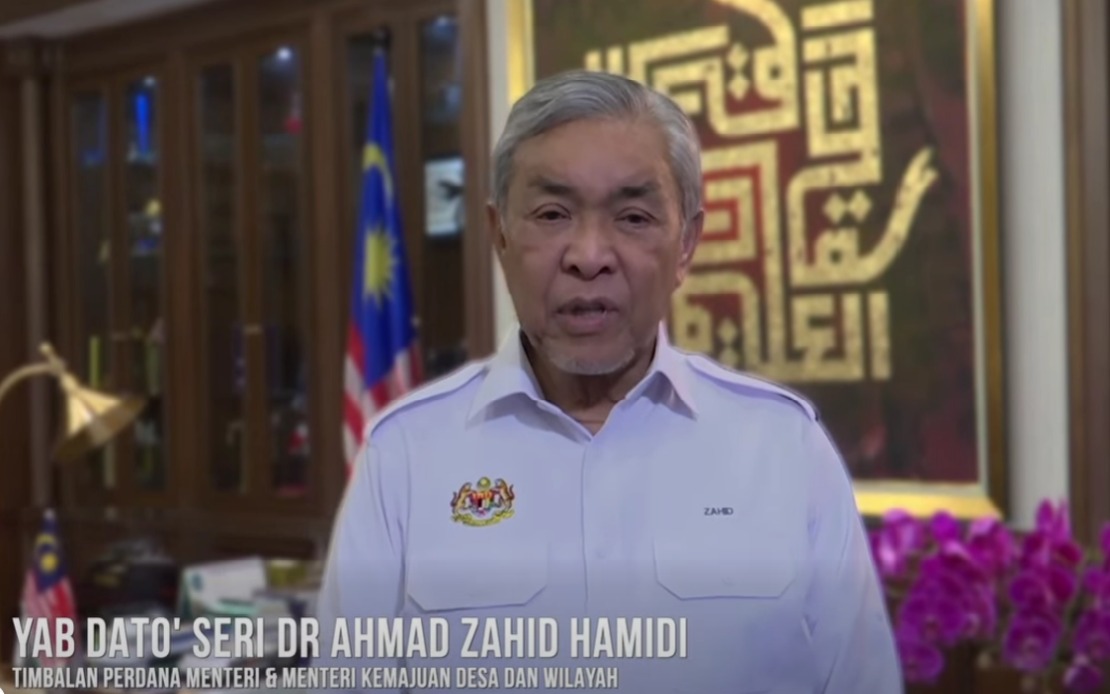
As Malaysia marked its 69th National Day on August 31, Deputy Prime Minister Datuk Seri Dr Ahmad Zahid Hamidi repositioned the nation's understanding of independence away from its historical roots towards a contemporary measure centred on material and social progress. In a video message released on Facebook, Ahmad Zahid articulated a vision where independence's true worth lies not in the date inscribed in history books but in the concrete improvements visible in Malaysians' daily circumstances—access to employment, skill development, and participation in national advancement.
Ahmad Zahid's framing reflects a subtle yet significant shift in how government leadership now discusses the nation's founding moment. Rather than dwelling on the achievement of breaking free from colonial administration, he redirected attention to what independence should accomplish today: equipping younger generations with technical and vocational expertise that commands competitive wages in an increasingly complex global economy. This emphasis on Technical and Vocational Education Training, or TVET skills, acknowledges Malaysia's ongoing struggle to build a workforce capable of competing beyond low-value manufacturing and service sectors. The Deputy Prime Minister's assertion that "independence today means equipping young people with skills" suggests recognition that historical independence remains hollow unless it translates into economic security for citizens.
The Rural and Regional Development Minister extended this logic to Malaysia's spatial inequalities, articulating a vision where national development's benefits extend beyond urban commercial corridors into villages and remote territories often neglected in earlier decades of modernisation. Ahmad Zahid's assertion that "a nation does not become great merely because of what it builds, but because of who it brings along in its development" directly challenges the extractive development model that has historically concentrated wealth and services in major cities. This framing carries particular resonance across Southeast Asia, where similar patterns of rural-urban divides have generated political grievances and social fragmentation. His invocation of transformative rural infrastructure—single roads connecting communities, electricity reaching modest homes, classrooms nurturing aspirations—grounds abstract independence rhetoric in tangible development outcomes that Malaysian voters can evaluate.
Ahmad Zahid also identified entrepreneurship and small business expansion as dimensions of meaningful independence, arguing that independence must create pathways for ordinary Malaysians to build wealth and improve family circumstances through commerce. This emphasis acknowledges that formal employment alone cannot absorb Malaysia's growing workforce, particularly as automation reshapes labour markets. By connecting independence to entrepreneurial opportunity, he implicitly acknowledged that government's historical development model—dominated by large-scale infrastructure projects and multinational investment—has failed to create sufficient wealth-generation pathways for ordinary citizens.
Disaster resilience emerged as an unexpected but significant component of Ahmad Zahid's independence framework. His contention that government must protect people during catastrophes and facilitate recovery reflects Malaysia's increasing vulnerability to climate-related emergencies, including devastating floods in recent years. This framing positions independence not merely as political sovereignty but as a social contract wherein the state provides security during crises—a connection particularly relevant for Southeast Asian nations confronting unprecedented climate impacts.
The halal industry featured prominently in Ahmad Zahid's economic vision for independence, presenting this sector as simultaneously a source of national pride and global market opportunity. Malaysia's established position as a halal certification hub and producer creates export-oriented employment and branding advantages, particularly across Muslim-majority Asian markets. By linking halal development to independence's meaning, Ahmad Zahid connected economic nationalism to religious identity in ways that resonate with Malaysia's political culture while positioning the nation as a gateway supplier to growing Islamic consumer markets.
Deputy Prime Minister Datuk Seri Fadillah Yusof articulated a complementary yet distinct emphasis on independence as psychological and social emancipation rather than purely economic advancement. In his Facebook statement, Fadillah framed independence as liberation from divisive impulses—sectarian animosity, ethno-religious prejudice, and extremist ideologies—that corrode national cohesion. His assertion that independence requires Malaysians to "free themselves from division, hatred, prejudice and extremism" suggests concern that formal political independence remains compromised by social fragmentation threatening the federation's stability.
Fadillah's acknowledgment of Malaysia's religious, cultural, and linguistic diversity while emphasising shared citizenship and destiny operates as a direct counter-narrative to separatist or majoritarian political movements. His invocation of the Federal Constitution and Rukun Negara principles grounds multicultural coexistence in institutional and philosophical foundations, suggesting that independence's preservation depends on renewed commitment to constitutional pluralism. For Malaysian and regional readers, this messaging carries significance amid broader Southeast Asian concerns about religious nationalism, communal polarisation, and democratic backsliding affecting neighbours like Myanmar and Thailand.
The Malaysia MADANI framework that both senior ministers referenced positions this year's National Day around inclusive prosperity and collective well-being rather than merely celebrating political achievement or national greatness. Fadillah's emphasis that advancement must "ensure that prosperity and well-being were enjoyed by all sections of society" echoes distributional justice concerns increasingly animating political discourse across Southeast Asia, where unequal growth has generated social resentment. By centring "well-being for all," the government potentially acknowledges that conventional GDP-focused development metrics have failed to address citizen grievances regarding livelihood security, cost of living, and social mobility.
Both ministers emphasised that independence represents an ongoing responsibility rather than a completed historical event, requiring present generations to act with integrity as custodians of the nation. Fadillah's formulation—"Independence is not only about what we have inherited, but also about what we will leave behind"—reframes the Malaysian project as intergenerational stewardship, obligating current leaders and citizens to preserve and enhance the federation for successors. This philosophical repositioning carries practical implications: it permits government to defend policy choices as faithful to independence's deeper purposes and obligates citizens to embrace sacrifice for collective advancement.
The messaging from both Ahmad Zahid and Fadillah reflects an apparent effort to restore legitimacy to independence celebration after years when National Day observances seemed increasingly formulaic and disconnected from ordinary Malaysians' economic struggles. By tethering independence to contemporary challenges—employment precarity, regional inequality, social division, and environmental vulnerability—government leadership attempted to render historical independence relevant to present circumstances. Whether such rhetorical reconnection translates into policy adjustments or renewed citizen investment in national project remains an open question, particularly as Malaysian voters navigate economic anxieties and demographic changes reshaping the nation's social fabric.

