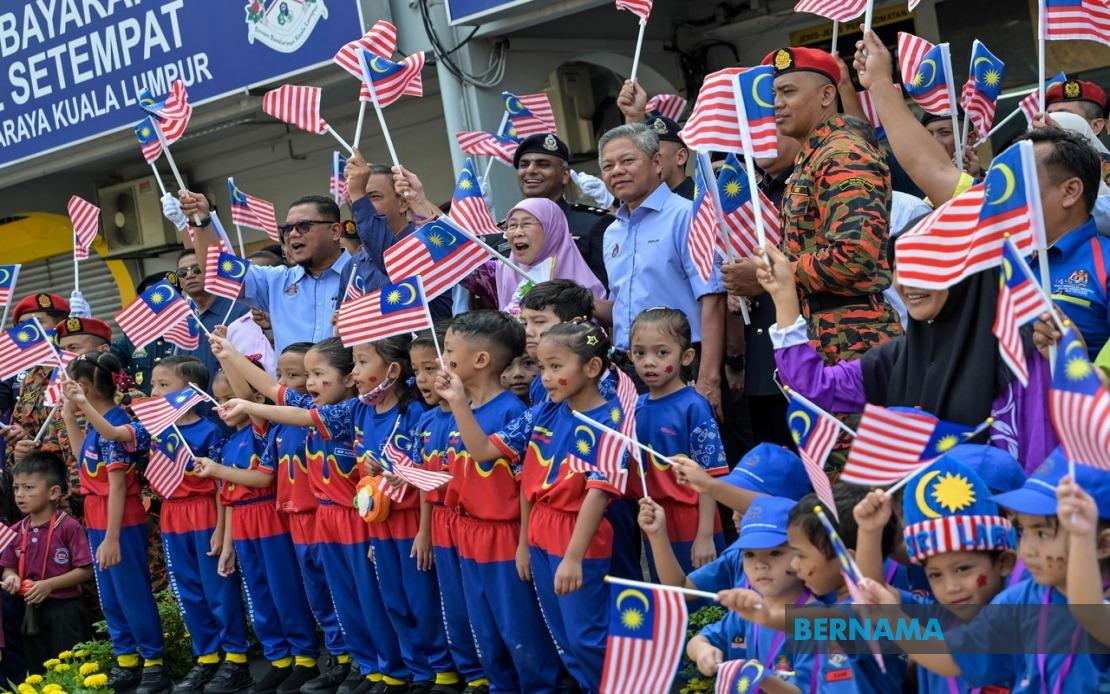
The meaning of Malaysian independence extends far beyond ceremonial observances, according to Prime Minister's wife Datuk Seri Dr Wan Azizah Wan Ismail, who has urged citizens to recognise their collective role in safeguarding the nation's stability. Speaking at the Semarak Merdeka Programme in Kuala Lumpur on August 12, she stressed that Merdeka carries profound significance rooted in the struggles and sacrifices of previous generations who fought for sovereignty, a message that resonates particularly as the country navigates complex social and economic challenges.
Dr Wan Azizah's remarks underscore a critical perspective often overlooked in National Day festivities: independence is not simply a historical achievement to commemorate, but an ongoing responsibility requiring active participation from all Malaysians. She cautioned against reducing Merdeka celebrations to superficial displays of patriotic symbols, arguing instead that citizens must engage in meaningful reflection on what freedom truly demands. This emphasis on substance over symbolism reflects broader concerns about maintaining national cohesion in an increasingly polarised society where unity cannot be taken for granted.
The Bandar Tun Razak Member of Parliament framed this year's National Day theme, "Malaysia Madani: Jiwa Merdeka," as an opportunity to refocus national efforts on tangible improvements to citizens' lives. The theme explicitly connects independence with the aspirational concept of Madani governance—a vision emphasising inclusive development, equal opportunity distribution, and strengthened social bonds. By linking historical independence to contemporary policy objectives, Dr Wan Azizah positioned Merdeka not merely as a fixed historical moment but as an evolving commitment to building a nation that genuinely delivers prosperity across all communities.
Her constituency of Bandar Tun Razak exemplifies Malaysia's multicultural reality, with approximately 191,000 residents comprising 60 per cent Malays, 24 per cent Chinese, and eight per cent Indians, according to Malaysian Population and Housing Census data. This demographic composition serves as Dr Wan Azizah's foundation for arguing that harmony among diverse communities represents Malaysia's greatest strength and most fragile achievement. The specific enumeration of ethnic proportions underscores how carefully Malaysia's social fabric must be maintained, particularly given regional tensions and internal fault lines that periodically surface around identity and resource allocation issues.
Beyond rhetorical emphasis on unity, Dr Wan Azizah translated her message into direct community assistance by visiting three families at the Seri Pulau Pinang and Desa Tun Razak People's Housing Projects to distribute support from the Social Security Organisation (PERKESO) and the Federal Territories Islamic Religious Council (MAIWP). This practical engagement demonstrates how independence-related discussions connect to real-world vulnerabilities facing lower-income households struggling to maintain dignity and stability in an increasingly expensive urban environment.
Among the beneficiaries was K. Moganavalli, a 39-year-old widow whose husband Edwin Anthony Dass died unexpectedly on August 2, leaving her responsible for three young children with minimal financial resources. The widow received RM3,000 in funeral benefits and a monthly pension of RM1,118.33 from PERKESO, supplemented by additional assistance. Her case illustrates how swiftly economic catastrophe can strike Malaysian families dependent on informal sector earnings, with lorry and ride-hailing work offering no institutional safety nets despite being crucial to urban economies.
Another recipient, Khalijah Binti Nazir, aged 64, represents a different demographic vulnerability: elderly single mothers forced to abandon employment to provide full-time care for adult children with special needs. Her monthly income, comprising RM800 from Baitulmal assistance, RM300 via the Boost eWallet digital transfer system, and RM150 under the Sumbangan Asas Rahmah scheme, totals approximately RM1,250 monthly. With her son receiving an additional RM100 monthly under the same programme, the family's total support falls considerably short of Kuala Lumpur's rising cost of living, revealing structural gaps in social protection systems despite multiple assistance channels operating simultaneously.
These individual narratives embed themselves within Dr Wan Azizah's broader argument about independence obligations. The concept of "Jiwa Merdeka"—the spirit of independence—acquires concrete meaning through programmes ensuring vulnerable families can access basic necessities without complete destitution. When independence is understood as guaranteeing dignified living standards and responsive social support, it transforms from an abstract nationalist concept into a practical commitment affecting millions of Malaysians daily.
The distribution of PERKESO benefits and MAIWP aid, occurring during National Day observances, deliberately connects commemoration with contemporary social responsibility. This integration suggests that true independence celebration requires demonstrating how the nation protects its most vulnerable citizens. The presence of Prime Minister's political secretary Datuk Azman Abidin at the programme signalled official endorsement of this integrated approach, positioning social welfare delivery as intrinsic to national purpose rather than peripheral charity.
For Malaysian and regional observers, Dr Wan Azizah's emphasis on independence as shared responsibility carries particular relevance given Southeast Asia's broader struggles with maintaining inclusive governance while managing ethnic diversity, rapid urbanisation, and widening inequality. Her message implicitly critiques purely nationalist rhetoric that celebrates sovereignty without addressing citizens' material welfare. This perspective aligns with growing regional acknowledgement that stability requires equitable development and functioning social safety nets rather than ceremonial patriotism alone.
The Madani framework invoked through this year's theme suggests government commitment to evolving beyond purely securitised or ethnically-defined nationalism toward governance emphasising substantive quality-of-life improvements. By connecting independence remembrance with concrete assistance programmes and explicit recognition of multicultural composition, Dr Wan Azizah articulated a vision of Merdeka rooted in practical benefit-sharing rather than symbolic display, a distinction increasingly vital as Malaysia navigates demands for greater accountability in social spending and equitable resource distribution.
Looking forward, the framing of independence as requiring ongoing shared responsibility establishes foundation for discussing how Malaysia's development trajectory serves all communities meaningfully. Whether government and society can sustain this integrative approach while managing competing interests around resource allocation and identity representation will substantially determine whether independence's promise of prosperity and harmony translates into lived reality for citizens like Moganavalli and Khalijah facing economic precarity despite decades of development.

