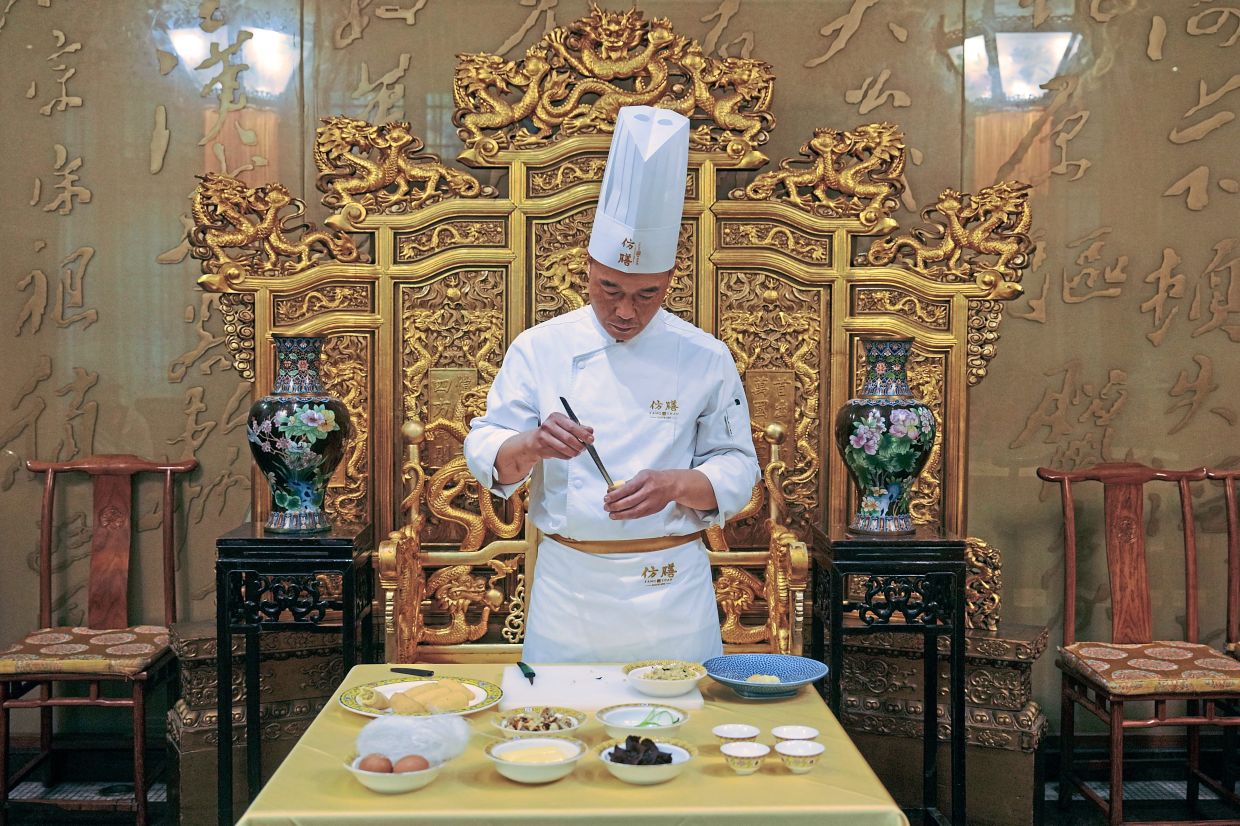
China's imperial kitchens have vanished, but their memory persists in the form of restaurants that carefully maintain recipes and techniques once reserved exclusively for emperors and their courts. Fangshan Restaurant in Beijing, established in 1925 by former chefs who served the Qing Dynasty, represents perhaps the most prominent custodian of this rarefied culinary heritage. Housed at Beihai Park—a garden where multiple dynasties' rulers once conducted affairs of state and performed sacred ceremonies—the restaurant's very name translates as "imitating the imperial cuisine," a modest acknowledgment of its mission to resurrect and honour the dining practices of China's royal past.
The allure of imperial cuisine rests partly on the romantic stories woven into individual dishes. Legend holds that Empress Dowager Cixi once dreamed of a particular pastry during China's final imperial years. When her chef miraculously presented an identical creation at her breakfast table the following morning, she rewarded him generously with a silver ingot. That dish, originally known by the mundane name "minced pork pancake," was thereafter renamed "dream pastry" in honour of its serendipitous genesis. Such narratives transform food from mere sustenance into cultural artifacts laden with historical significance, a transformation that Fangshan's staff deliberately emphasise when serving guests. Zhou Tong, a pastry chef at the restaurant, notes that diners savour these dishes far more deeply when they understand the stories attached to them.
Understanding imperial cuisine requires grasping how thoroughly ritual permeated the dining experience at the Qing court. Meals were not simply occasions for consumption; they were elaborately choreographed ceremonies that reinforced hierarchical relationships and demonstrated political allegiance. Teng Deyong, a researcher at China's Palace Museum, explains that banquets began with the symbolic drinking of milk tea, an act that set the formal tone for what followed. During the proceedings, the emperor would bestow wine or food upon princes and officials, who were obligated to perform prescribed rites and show deference before partaking of the imperial offerings. This practice of honouring through food distribution served as a tangible manifestation of the emperor's power and the recipients' subordination.
Beyond the secular pomp of state banquets lay a parallel system of sacrificial rituals that governed how certain foods were prepared and consumed. At the Palace of Earthly Tranquillity, one of the most significant ceremonies involved the ritual consumption of sacrificial pork. The meat was deliberately boiled without salt—a preparation that would seem crude by the standards of imperial haute cuisine, yet held profound symbolic weight. After the ceremony concluded, portions of the fatty, unseasoned pork were distributed among attendees, and receiving such meat was regarded as an exceptional honour. This apparent culinary paradox—the imperial court deliberately preparing food in a plain, even austere manner for sacred purposes—reveals how far the concept of imperial cuisine extended beyond mere gastronomy.
The philosophical underpinnings of this unseasoned ritual food reach back centuries into classical Chinese thought. Wandi Wang, a professor of Chinese studies at Lehigh University, points to the "Book of Rites," an ancient canonical text on ceremonial practices, which describes a meat broth called "grand stew" that was served without added flavouring during sacrificial ceremonies. The deliberate absence of seasoning was not a limitation but a statement, evoking an imagined simpler past and expressing reverence for cultural origins. In this way, what might appear to modern diners as inferior cooking was in fact a sophisticated rhetorical act, using culinary austerity to communicate respect for antiquity and the continuity of tradition. Chinese cuisine, Wang argues, has always carried meanings that transcend the plate, functioning as a medium through which broader ideas about politics, culture and aesthetics find expression.
If sacrificial rituals represented one pole of imperial dining practice, elaborately crafted pastries occupied another. The imperial court maintained a dedicated institution for pastry production, reflecting how central these confections were to the prestige and pleasure of court life. Contemporary chefs at Fangshan, such as Zhou, have inherited recipes and techniques directly from this legacy, continuing a chain of knowledge transmission that stretches back through multiple generations. Zhou himself learned his craft from a master who in turn had learned from a predecessor, a lineage of culinary apprenticeship that remains largely intact despite the turbulent history separating the Qing court from modern Beijing.
What distinguishes imperial pastry-making from contemporary commercial baking is the absolute prohibition on mechanization. Blenders and food processors have no place in the Fangshan kitchen; all work must be executed by hand. Ingredients like beans are pulverised using sieves, and certain flours are processed in custom-made copper pots designed according to centuries-old specifications. This commitment to manual labour is not nostalgic affectation but rather a technical necessity. As Zhou explains, machinery produces fundamentally different results, compromising the delicate graininess and sandy mouthfeel that distinguish imperial pastries. The texture is the message; departing from traditional methods would erase the very sensory qualities that connect modern diners to historical practice.
The practical demands of preserving these techniques have produced unexpected challenges for young chefs entering the profession. Fan Liangliang, now Fangshan's executive chef, underwent a humbling reorientation when he arrived as an apprentice. Culinary school had trained him in efficient, speed-optimised methods; Fangshan required him to unlearn almost everything and embrace radically slower processes entirely foreign to his prior education. One such technique is "Nizihuo," which involves manually mincing fish, shrimp or chicken into an impeccably smooth paste before reshaping it into decorative forms—frogs, birds, flowers—that transform protein into edible sculpture. Fan understands that this labour-intensive approach embodies the philosophical essence of imperial cuisine: every dish had to be simultaneously innovative, visually stunning, nutritionally balanced and worthy of the imperial table. The aesthetic and technical demands were inseparable.
Modern preservation of imperial cuisine inevitably requires adaptation and negotiation with contemporary ethical and practical realities. Certain ingredients once central to imperial banquets—bear paws foremost among them—can no longer be procured or served. Rather than abandoning recipes that called for such ingredients, Fangshan's chefs have developed thoughtful substitutions that preserve the intended character and culinary significance of each dish. This pragmatic approach acknowledges that culinary heritage is not a museum piece to be frozen in amber but rather a living tradition that must evolve to remain relevant and ethical. The "spirit" of a dish, Fan argues, can be maintained even when the literal ingredients change.
The intersection of imperial cuisine with broader Chinese cultural expression extends far beyond the kitchen. Wandi Wang draws attention to a celebrated poem by Du Fu, one of China's greatest poets, which describes cold noodles made with pagoda-tree leaves. The poem transcends mere culinary description, transforming a modest, verdant dish into a metaphor for political loyalty and thwarted ambitions to serve the emperor. This poetic investment in food reflects how thoroughly integrated cuisine has always been with Chinese literature, philosophy and statecraft. Food becomes a language through which larger truths about power, culture and aesthetics can be articulated and transmitted across generations.
At its deepest level, Fangshan's mission represents an act of cultural memory and meaning-making. To preserve a culinary tradition, Wang insists, requires taking its history seriously rather than treating it as mere antiquarian curiosity. Culinary heritage illuminates not only how people ate in the distant past but also how contemporary societies choose to remember and reinterpret that past. Fan Liangliang describes Fangshan's imperial cuisine as fundamentally rooted in a synthesis of Manchu and Han culinary traditions, merging the court culture of the Qing rulers with the culinary practices of China's majority population. This fusion itself represents a historical narrative—a gastronomic expression of how different peoples came to share and shape a common culture under imperial rule.
For diners visiting Fangshan today, the experience extends beyond consumption into a form of temporal travel. The restaurant's bestselling dishes—pea flour cakes and red bean rolls—sell by the hundreds during busy periods, evidence that interest in imperial cuisine remains robust among both domestic and international visitors. Yet each pastry carries within it not merely the taste of a historical moment but also the accumulated knowledge of artisans who rejected mechanization and speed in favour of methods that demanded patience, skill and reverence for tradition. In preserving these dishes and their preparation methods, Fangshan and similar institutions throughout Beijing ensure that the sensory, intellectual and emotional dimensions of imperial China remain accessible to those willing to engage seriously with the past through the medium of food.

