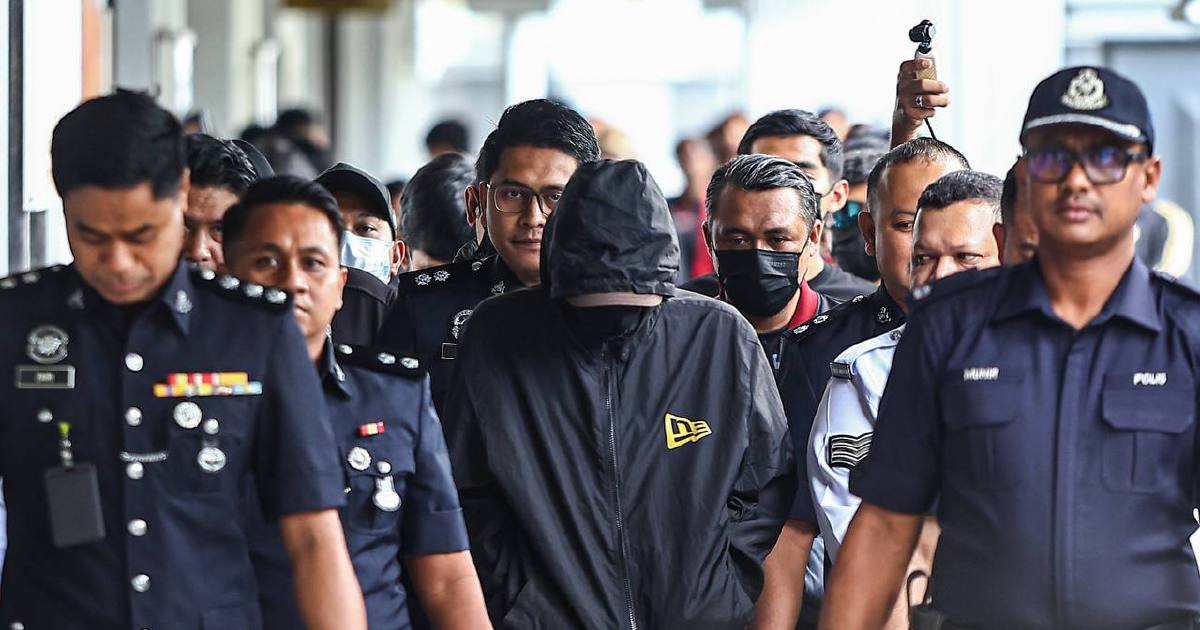
The driver of an Immigration Department lorry appeared before magistrates in Kuala Lumpur to face multiple charges stemming from a high-impact collision that occurred at the Maju Junction intersection on Jalan Sultan Ismail. The accused, whose vehicle was involved in the crash that claimed the lives of three family members, opted to proceed to trial after denying all allegations brought against him. The proceedings mark a significant development in what has become a major traffic fatality case in the capital's busy commercial district.
Facing the court were five separate charges, three of which relate directly to causing death through reckless or dangerous driving. This classification carries substantial legal implications under Malaysian traffic laws, as such charges typically result from conduct falling well below acceptable standards of road safety. The specific application of three separate counts reflects the number of fatalities resulting from the single incident, a procedural approach that emphasises the gravity of the collision and its devastating human cost.
The incident unfolded at what is typically a congested and high-traffic area where Jalan Sultan Ismail intersects with routes leading to the Maju Junction complex. This intersection has historically been subject to significant vehicular congestion during peak hours, and traffic management concerns in the area have long warranted attention from municipal authorities. The circumstances surrounding why such a serious collision occurred at this particular location may form crucial elements of the trial proceedings.
The involvement of an Immigration Department vehicle raises broader questions about institutional responsibility and vehicle safety protocols within government departments. Government-operated vehicles are subject to specific maintenance and operational requirements, and questions inevitably arise regarding whether standard safety procedures were adhered to prior to the incident. The use of a departmental lorry also means that institutional liability considerations may extend beyond the individual driver to encompass organisational oversight.
The three deceased individuals belonged to a single family unit, amplifying the human tragedy of the incident and its ripple effects through extended family networks and the broader community. Fatal traffic incidents involving multiple members of a household occur with tragic regularity across Malaysia, yet each instance represents an irreversible loss with profound personal and social consequences. The loss of three family members in a single moment represents an exceptional level of devastation that typically generates significant public concern about road safety standards.
The decision to proceed to trial indicates that the driver's legal representatives have determined that pursuing a contested case serves the interests of justice and due process, rather than accepting responsibility through guilty pleas. This approach ensures that evidence will be thoroughly examined, witness testimonies will be heard under oath, and the precise circumstances surrounding the collision will be rigorously investigated through the court system. The trial process will therefore provide detailed public scrutiny of the incident.
Traffic fatality prosecutions in Malaysia have become increasingly high-profile as authorities attempt to address rising road death statistics through more stringent enforcement and prosecution. Cases involving death by dangerous driving represent some of the most serious traffic-related charges in the Malaysian legal framework. Successful prosecutions in such cases typically result in substantial custodial sentences, reflecting legislative intent to deter reckless driving behaviour and impose meaningful consequences for conduct that results in loss of life.
The Maju Junction area, located in a central business and commercial precinct, experiences continuous heavy traffic flows from multiple directions. Drivers navigating this intersection must contend with complex traffic patterns, multiple entry and exit points, and the challenge of maintaining safe speeds while managing interactions with numerous other vehicles. Understanding whether driver error, mechanical failure, or environmental factors contributed to the collision will be essential to determining culpability and establishing whether the standard of driving fell sufficiently below acceptable norms to constitute dangerous or reckless conduct.
The court's decision to permit the accused to proceed to trial rather than committal to a higher court suggests that magistrates retain jurisdiction over these charges under current Malaysian procedural rules. The trial will require comprehensive examination of evidence including accident reconstruction analysis, vehicle condition reports, witness statements, and any available traffic camera footage. The prosecution will bear responsibility for establishing beyond reasonable doubt that the driver's conduct represented a serious departure from safe driving standards and directly caused the fatalities.
This case underscores the ongoing challenge of road safety in Malaysia's urban centres, where dense traffic, varying driver competence levels, and occasional lapses in vehicle maintenance converge to create dangerous conditions. Incidents of this severity frequently prompt renewed calls for enhanced driver training, stricter vehicle inspection protocols, and more robust enforcement of traffic regulations. The trial proceedings may generate valuable evidence regarding specific factors that contributed to this particular collision, potentially informing broader policy discussions about accident prevention strategies.
As the case progresses through the judicial system, the court will ultimately determine whether the evidence substantiates the charges beyond reasonable doubt. For the families affected by this tragedy, the trial process represents an opportunity to understand precisely how and why their loved ones lost their lives, and to ensure that accountability is established through proper legal channels. The outcome will also carry implications for road safety discourse and institutional practices across Malaysian government departments.

