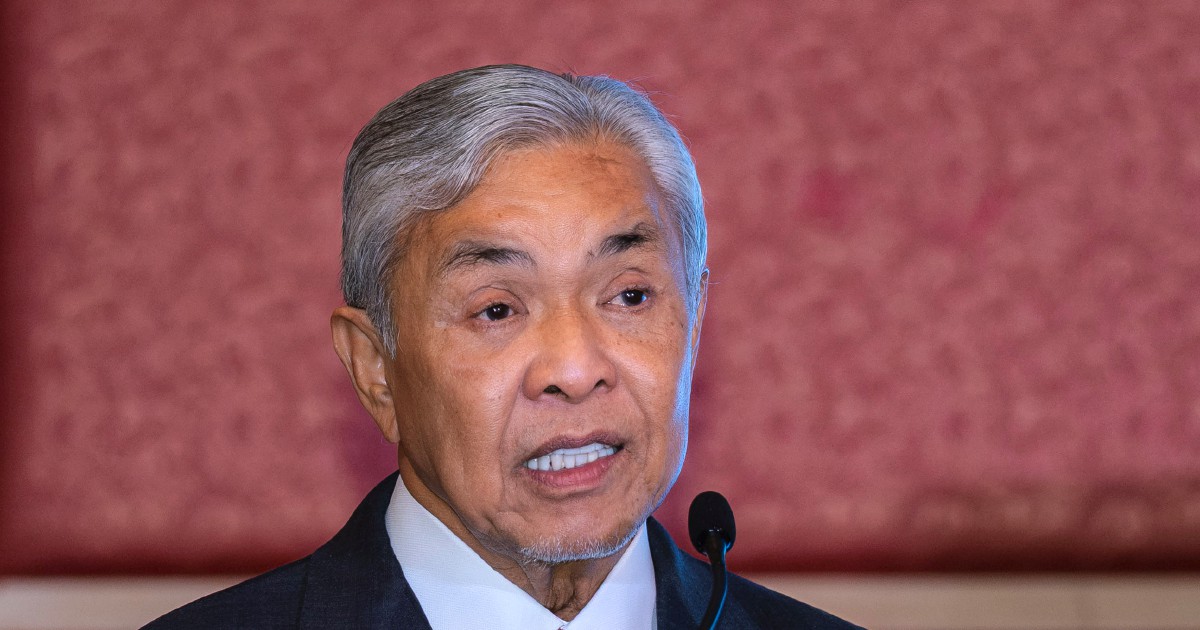
Deputy Prime Minister Datuk Seri Dr Ahmad Zahid Hamidi has articulated an ambitious vision for Malaysia's Immigration Department that extends far beyond its traditional border-control responsibilities. Speaking in Cyberjaya, Zahid emphasized the need for the institution to reinvent itself as a forward-looking strategic entity capable of contributing meaningfully to national economic objectives while simultaneously strengthening security protocols and spearheading technological advancement across government agencies.
The mandate represents a significant conceptual shift in how Malaysia approaches immigration administration. Rather than treating the department as merely a custodian of national boundaries, the Deputy Prime Minister envisions it as an active participant in attracting talent, facilitating legitimate business movement, and creating value for the broader economy. This reframing acknowledges that immigration policy, when properly designed and executed, can become a competitive advantage in an increasingly interconnected global marketplace where countries compete intensely for skilled workers, investment capital, and innovation ecosystems.
Zahid's emphasis on economic growth through immigration suggests recognition of demographic and labour market realities facing Malaysia. The nation's ageing workforce and skills gaps in critical sectors necessitate selective immigration policies that bring in qualified professionals and entrepreneurs. Countries that have successfully integrated immigration into economic strategy—such as Singapore, Canada, and Australia—have seen measurable productivity gains and innovation acceleration. Malaysia's approach could benefit from studying these models while adapting them to local conditions and labour priorities.
The national security dimension of Zahid's proposal acknowledges the complex balance required in modern immigration management. Effective border security no longer means simply restricting movement; it demands sophisticated intelligence gathering, biometric technology deployment, and real-time threat assessment capabilities. The Deputy Prime Minister's framework suggests the Immigration Department should leverage its unique position at entry and exit points to gather intelligence supporting broader security objectives. This approach transforms immigration officers from compliance checkers into frontline security personnel with strategic value.
Digital transformation emerges as perhaps the most immediately implementable element of the agenda. Malaysia's immigration infrastructure has long struggled with outdated systems causing bottlenecks at airports, land borders, and maritime entries. Modernizing these systems through cloud-based platforms, artificial intelligence, and integrated databases would reduce processing times, improve data accuracy, and create a foundation for seamless integration with other government services. Travellers and legitimate businesses would experience faster clearance, while security agencies gain enhanced capability to identify risks.
The positioning of the Immigration Department as a leader in government digitalisation indicates ambitions beyond its internal operations. As an agency processing millions of transactions annually, it could become a testing ground for innovative technologies and processes that other ministries could subsequently adopt. This role would establish the department as a centre of excellence in digital government services, leveraging its operational scale and cross-cutting mandate.
Implementing these four mandates simultaneously presents substantial institutional challenges. Immigration agencies typically operate with resource constraints and face pressure to process growing passenger volumes efficiently. Balancing speed with security, while simultaneously pursuing economic objectives and digital innovation, requires additional investment, skilled personnel, and inter-agency coordination. The Deputy Prime Minister's articulation of clear mandates must be accompanied by corresponding budget allocations and staffing augmentation to avoid overburdening existing capacity.
For Malaysian businesses and professionals, clearer immigration frameworks aligned with economic objectives could reduce uncertainty and administrative friction. Visa categories designed specifically to attract remote workers, digital entrepreneurs, and senior talent, combined with streamlined processing, would position Malaysia more competitively against regional rivals like Singapore and Thailand that have aggressively pursued similar strategies. Enhanced digital systems would particularly benefit the technology and creative industries concentrated in Klang Valley and other urban centres.
International implications should not be overlooked. Nations with whom Malaysia conducts substantial trade and people movement—including China, India, Indonesia, Japan, and Australia—increasingly scrutinize other countries' immigration systems for efficiency and transparency. Demonstrating commitment to modern, technology-enabled immigration administration signals professionalism and reliability, potentially facilitating smoother diplomatic relationships and deeper economic engagement.
Regional context matters as well. Southeast Asia's growing middle class and rising income levels are driving unprecedented cross-border mobility. Countries managing this movement effectively will capture economic benefits through tourism, skilled migration, and business investment. Malaysia's traditional role as a transit hub and destination for regional migration could be transformed into competitive advantage through the strategic orientation Zahid has outlined.
The success of this transformation agenda will ultimately depend on execution capabilities within the Immigration Department and sustained political commitment to providing necessary resources. Clear mandates without operational support represent mere aspiration. However, Zahid's public articulation of these four objectives establishes accountability and creates framework against which future performance can be measured.

