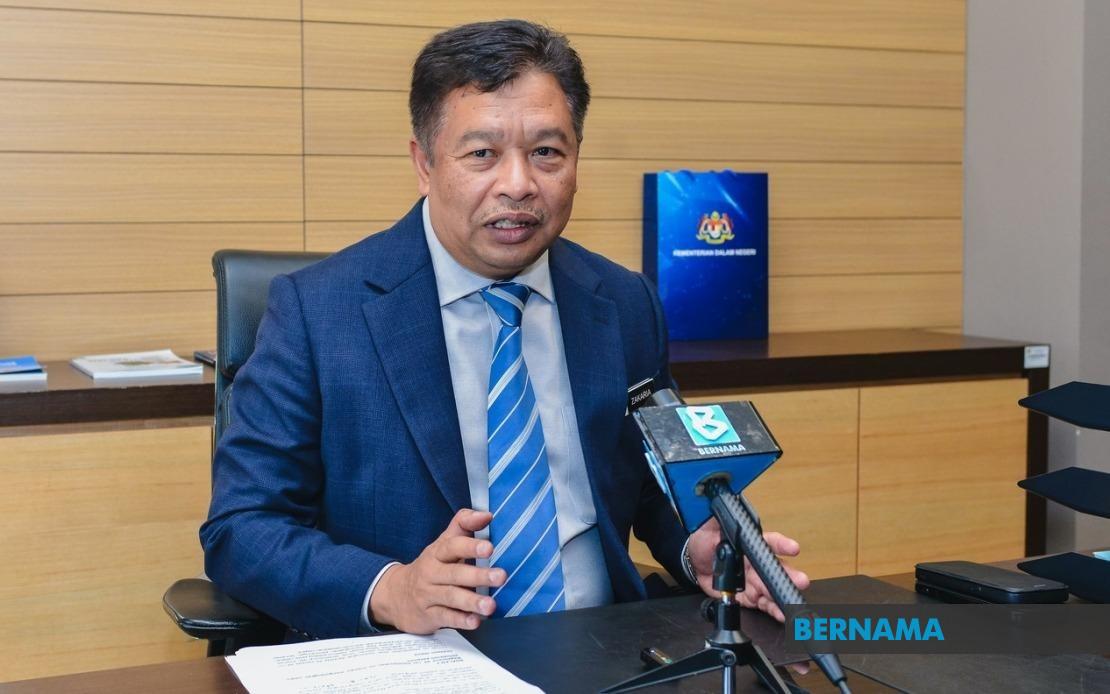
As Johor prepares for its state election this weekend, the Immigration Department has mobilised its resources to the maximum to guarantee that cross-border movements remain unhindered, particularly for citizens employed in Singapore who wish to cast their votes. Datuk Zakaria Shaaban, the department's director-general, confirmed that comprehensive monitoring systems are in place at the nation's busiest international gateways, with round-the-clock surveillance to detect and resolve any technical disruptions before they can affect voter turnout.
The two principal entry points bearing the heaviest voter traffic are the Sultan Abu Bakar Complex in Tanjung Kupang, which serves the Malaysia-Singapore Second Link, and the Sultan Iskandar Building adjacent to JB Sentral, which connects directly to Woodlands. Both installations form part of the Integrated Immigration, Customs and Quarantine complexes that rank amongst the world's most heavily trafficked border crossings. On ordinary days, these checkpoints process approximately 300,000 travellers, a figure that could swell considerably during an election period when cross-border workers and residents return home to exercise their voting rights.
Zakaria explained that the Immigration Department is currently operating its existing inspection infrastructure rather than deploying newly implemented systems, a deliberate choice designed to minimise operational risk during this critical period. The technology underpinning the inspection processes at both complexes continues to function normally, he indicated, though this stability is not being left to chance. A dedicated technical response team maintains continuous surveillance of system performance, with instructions to intervene immediately should any anomalies emerge. This proactive posture reflects the department's understanding that any breakdown in processing capacity could precipitate bottlenecks capable of discouraging voters or preventing them from returning in time to fulfill their electoral obligations.
The contingency planning extends beyond technological safeguards. Should the computerised inspection systems experience significant failure, the Immigration Department stands prepared to revert to manual processing procedures at the integrated complexes. This fallback mechanism ensures that border clearance operations would continue uninterrupted, albeit at potentially reduced throughput. The commitment to maintaining operational continuity demonstrates recognition that voting participation in elections remains dependent upon practical accessibility; any obstruction at border facilities would effectively disenfranchise citizens who have relocated across the causeway for economic opportunity.
Home Minister Datuk Seri Saifuddin Nasution Ismail has provided ministerial-level reassurance that his portfolio will coordinate a comprehensive mitigation strategy should technical disruptions materialise despite preventive measures. This assurance extends beyond the Immigration Department's purview to encompass the broader institutional machinery responsible for border administration and management. The reference to activation of contingency protocols indicates that government agencies have conducted scenario planning for various failure modes and stand ready with predetermined response procedures. Such preparation reflects lessons learned from previous major cross-border events or election cycles where inadequate contingency planning created logistical complications.
The election itself carries substantial political weight for Johor, with 172 candidates competing across 56 state assembly seats. Preliminary voting occurs on July 7, allowing early participation for those unable to vote on the principal polling day of Saturday, July 11. This phased approach to voting serves to distribute voter traffic across multiple days, thereby reducing peak-hour congestion at border checkpoints. Nevertheless, many voters will inevitably attempt to return on the eve of or morning of the principal polling date, potentially creating sustained heavy traffic volumes that will test the readiness of border infrastructure.
The concentration of electoral activity in Johor carries particular relevance for Malaysian-Singaporean cross-border dynamics. Tens of thousands of Johor residents maintain employment in Singapore, commuting daily or residing there for extended periods, and the election represents a moment when many will prioritise returning to their home state. From Singapore's perspective, the temporary outflow of workers and the reciprocal return of non-residents to Malaysia represents a predictable international movement pattern that both governments have incentive to facilitate smoothly. Disruptions at border checkpoints would create inconvenience for both jurisdictions and could generate diplomatic friction should either government perceive the other of inadequate preparations.
The Immigration Department's emphasis on technical preparedness and continuous monitoring reflects modern governance approaches to managing high-volume infrastructure during anticipated stress events. Rather than accepting the inevitability of delays, the department has positioned itself in an active management posture, treating potential system failures as problems to be prevented rather than circumstances to be managed after they occur. The round-the-clock monitoring protocols mean that technical degradation can theoretically be detected and addressed within minutes rather than hours, substantially reducing the probability of significant operational disruption reaching voters at the border.
For Malaysian citizens working or studying in Singapore, the assurances from both the Immigration Department and the Home Ministry carry immediate practical importance. The certainty that border crossings will remain functional removes a potential impediment to voting participation and signals governmental commitment to facilitating electoral engagement regardless of geographical residence. This stands as particularly important for diaspora communities who might otherwise face structural barriers to political participation. The election represents an occasion when the machinery of state—normally concentrated on security and regulation—deliberately orients itself toward citizen enablement, treating voter facilitation as an operational priority equivalent to security and border integrity.

