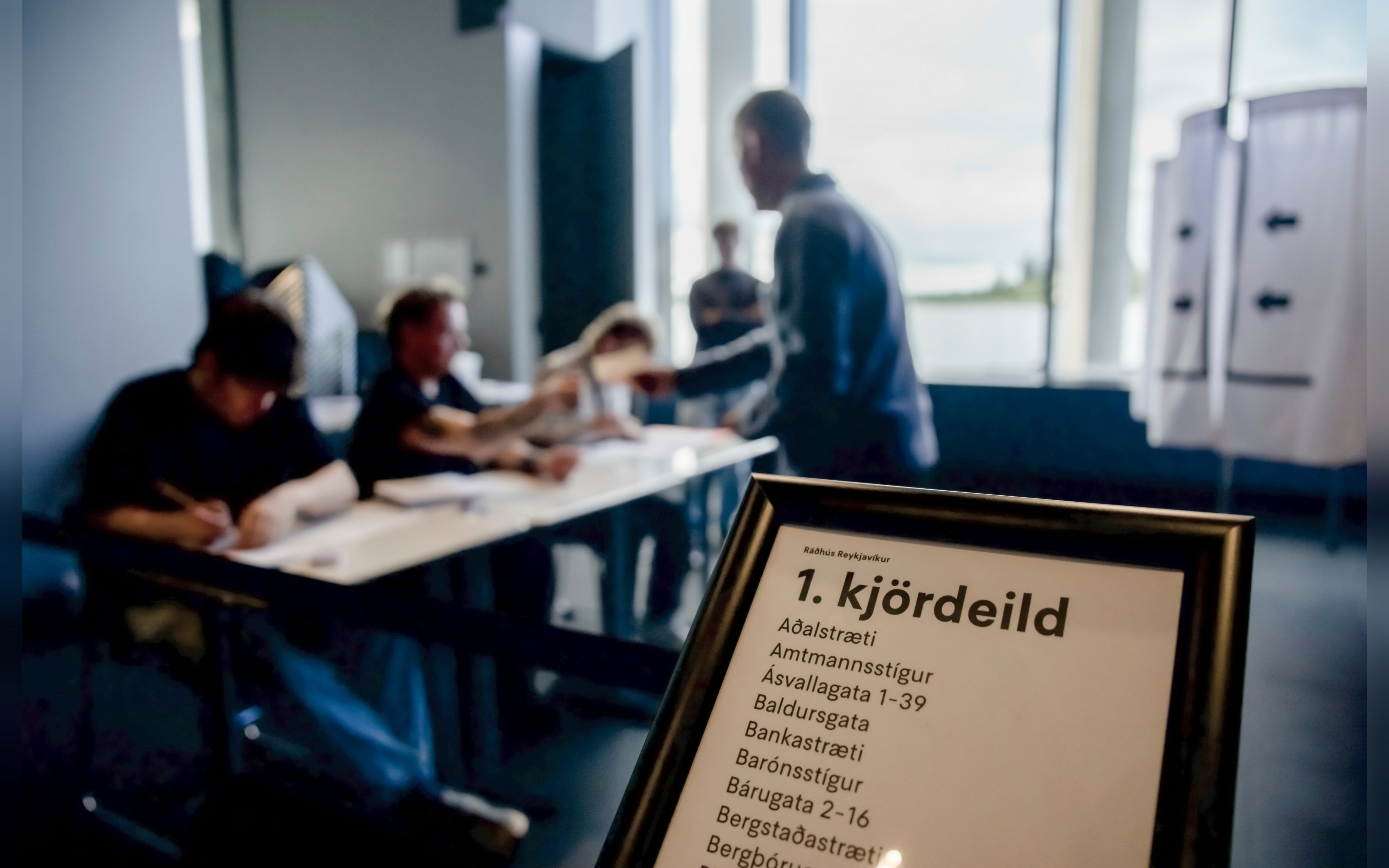
Iceland's electorate has delivered a close but definitive rejection of resuming membership negotiations with the European Union, marking a significant setback for the pro-EU government that had staked considerable political capital on the initiative. With 52.8 per cent voting against restarting accession talks compared to 47.2 per cent in favour, the result underscores the profound ambivalence among Icelanders about closer European integration at a moment when geopolitical calculations might have swung public sentiment in Brussels' favour.
The referendum concluded on Saturday evening with polls closing at 2200 GMT, resolving a question that the centre-left Social Democratic government had pledged to settle after securing power in the 2024 election. The government had framed reopening membership discussions as a measured response to shifting international circumstances, particularly the security implications of regional tensions affecting Nordic countries. However, the narrow margin—just 5.6 percentage points separating the two camps—suggests that ordinary Icelanders remain fundamentally sceptical of the European integration project, regardless of contemporary strategic considerations.
Iceland's relationship with EU membership has been complicated and intermittent since first applying for accession in 2009. The application emerged from the devastating global financial crisis, which struck Iceland with particular ferocity and forced the government to seek EU membership as part of a broader economic stabilisation strategy. For nearly four years, accession negotiations proceeded, but momentum collapsed when eurosceptic political forces took office in 2013, leading officials to suspend talks indefinitely. The decision reflected the strength of anti-EU sentiment within Icelandic society, even during a period when the country remained economically vulnerable.
The sovereignty argument has persistently dominated Iceland's EU membership debate, with opponents consistently portraying integration as incompatible with Icelandic independence. This concern extends beyond abstract principles of national decision-making to concentrate intensely on fishing rights, an issue that resonates emotionally and economically across the small island nation. Iceland's fishing industry represents far more than a sector of economic activity; it constitutes the foundation of national prosperity, employment, and cultural identity.
The fishing industry's centrality to Iceland's economy cannot be overstated. Seafood exports remain among the nation's most valuable foreign exchange earners, and fishing communities dot the coastline, maintaining traditions stretching back centuries. Many Icelanders view EU membership as inherently threatening to these interests, fearing that Brussels bureaucrats would impose quotas, regulations, and resource-sharing arrangements that would diminish Icelandic control over its maritime domain. This anxiety proves difficult to assuage through rational economic arguments about trade benefits or integration gains.
The pro-EU Social Democratic government, having returned to office on a platform promising to explore renewed membership discussions, now faces an awkward political position. The referendum result provides democratic legitimacy to the membership rejection, yet the closeness of the vote suggests that roughly half the population remains open to European integration. Government officials must now calibrate their response carefully, avoiding the appearance of defying public will while preserving options for future engagement with EU institutions.
For Malaysia and other Southeast Asian nations observing Nordic and European political developments, Iceland's referendum outcome carries instructive lessons about the persistence of nationalist sentiment even among wealthy developed democracies. The Icelandic case demonstrates that economic integration arguments alone prove insufficient when populations perceive threats to national autonomy or traditional economic sectors. Similar tensions between globalisation and sovereignty have animated political debates throughout the region, from concerns about foreign investment in strategic industries to agricultural trade negotiations.
The referendum result also reflects broader patterns evident across Europe, where euroscepticism has gained ground despite the apparent logic of integration. Iceland, despite its small size and geographic isolation, has evidently concluded that independence and sovereignty justify accepting the trade-offs associated with non-membership. This suggests that European integration, far from representing an inexorable historical trajectory, remains contested and reversible even among relatively affluent nations historically sympathetic to Western institutional frameworks.
Iceland's rejection of membership talks carries implications for EU expansion strategy and European geopolitics more broadly. Nordic security concerns—driven partly by Russian actions and evolving regional tensions—might have been expected to push even eurosceptical populations toward closer integration. The referendum result indicates, however, that security considerations alone cannot overcome deep-rooted concerns about sovereignty and economic autonomy. The EU must therefore reconsider whether any revised offer might prove sufficiently attractive to shift Icelandic public opinion, or whether the nation will remain permanently outside European institutional structures despite its geographic proximity and cultural alignment with Western Europe.
Looking forward, Icelandic politics will likely continue grappling with European integration questions as regional circumstances evolve. The narrow referendum margin suggests that the debate remains genuinely contested rather than settled, with future governments potentially reopening the question should political conditions shift. Nevertheless, the current result demonstrates that Icelanders prioritise control over fishing resources and national sovereignty above the institutional benefits and security guarantees that EU membership would provide.

