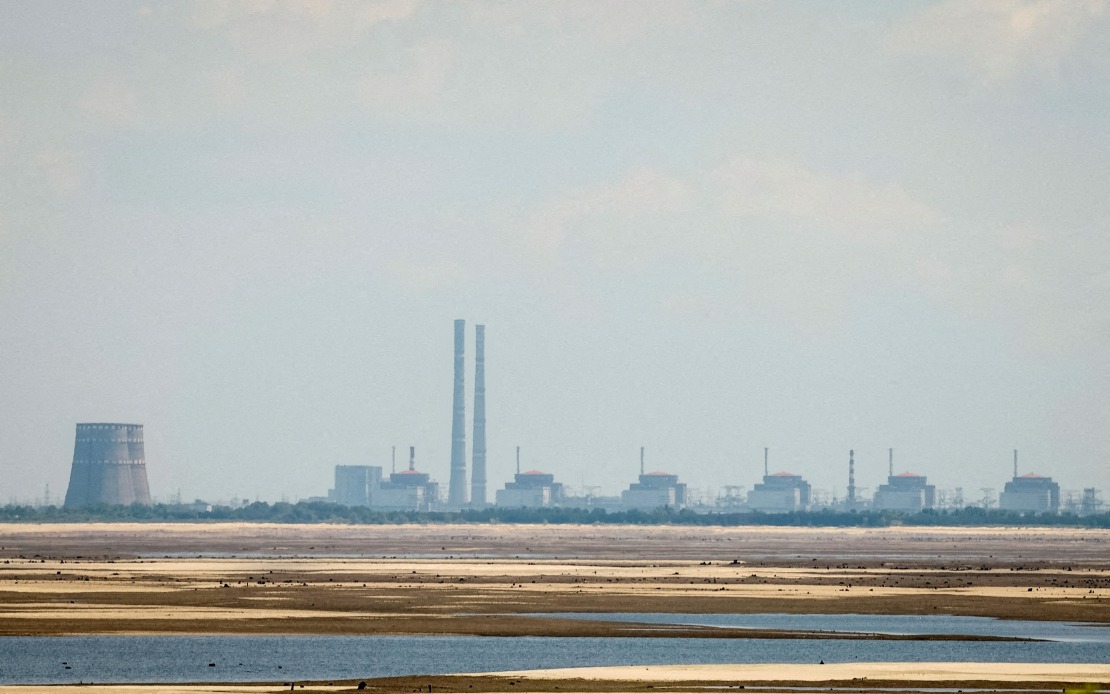
The International Atomic Energy Agency has raised urgent alarms over deteriorating nuclear safety conditions at the Zaporizhzhia Nuclear Power Plant following another power failure that marks the 21st loss of external supply since the Ukraine conflict escalated. The outage on Friday underscores a dangerous pattern of electrical disruptions that threatens the stability of one of Europe's most significant atomic installations, located in southeastern Ukraine.
The plant's connection to the 330 kV Ferosplavna-1 transmission line was severed when military operations in the region triggered protective systems along the electrical infrastructure linking the facility to the grid. According to IAEA representatives stationed on-site, the disruption was an indirect consequence of military activity rather than direct targeting of the power station itself, though the cumulative effect remains deeply troubling for nuclear safety authorities worldwide.
When external power disappeared, the facility's emergency diesel generators activated automatically to supply critical electricity for reactor cooling systems and other essential safety mechanisms. This backup capability has functioned as intended, preventing immediate danger, yet the reliance on diesel reserves—which have finite capacity and maintenance requirements—cannot indefinitely substitute for stable external power supplies. Each incident depletes these emergency reserves and increases the probability of a catastrophic failure if multiple outages occur in rapid succession or if the backup systems themselves sustain damage.
Rafael Grossi, the IAEA Director General, characterised the situation in starkly measured terms, emphasising that the extreme vulnerability of nuclear safety at Zaporizhzhia demands urgent military restraint from all parties in the conflict. His statement reflects the agency's assessment that current conditions have become untenable from a nuclear safety perspective, regardless of how well the emergency systems perform in individual incidents. The pattern itself—not any single event—represents the genuine threat.
For Malaysia and Southeast Asian nations, the Zaporizhzhia crisis carries significant implications beyond the immediate Ukrainian context. Regional energy security discussions increasingly involve nuclear power as a climate-friendly alternative to fossil fuels, with several Southeast Asian countries exploring nuclear technology partnerships. The deteriorating conditions at Zaporizhzhia provide a sobering case study in how geopolitical instability can rapidly undermine nuclear safety protocols, even at facilities operated by experienced personnel with sophisticated backup systems in place.
The repeated power losses also illuminate vulnerabilities in grid infrastructure during conflict. Nuclear facilities require constant, reliable electricity supply—not occasionally, but permanently. Unlike conventional power plants that can tolerate brief interruptions, nuclear reactors demand uninterrupted cooling to prevent meltdown. The 21 documented outages in a relatively short timeframe suggest that maintaining such stability in an active conflict zone has become practically impossible, regardless of good intentions or technological safeguards.
Zaporizhzhia's predicament reflects a broader challenge facing civilian nuclear infrastructure in geopolitically volatile regions. The facility became operational during the Cold War when electricity supply security was guaranteed by the Soviet state apparatus, then operated under Ukrainian control following independence. Its current circumstances—under Russian military control but internationally monitored—represent an unprecedented scenario in nuclear safety history. No international regulatory framework adequately addresses nuclear plant operations in active war zones where both parties possess military capabilities that can disrupt electrical systems.
The diesel generators currently sustaining critical functions are themselves subject to vulnerability. These backup systems require regular fuel deliveries, maintenance by trained technicians, and protection from potential damage. Prolonged reliance on emergency power represents a temporary solution masking an unsustainable fundamental problem: the plant cannot maintain safe operations without restored external power stability. Each incident consumes fuel reserves and accelerates equipment wear, narrowing the window before catastrophic failure becomes inevitable.
International observers have increasingly called for demilitarisation of the zone surrounding the nuclear facility, though achieving such agreement between Russia and Ukraine has proven impossible. The IAEA's repeated warnings reflect the agency's frustration with a situation where technical expertise and safety protocols cannot substitute for political and military restraint. Without cessation of hostilities affecting electrical infrastructure, no amount of engineering excellence can guarantee the plant's long-term safety.
For Southeast Asia, this situation underscores why nuclear development must occur only in stable, well-governed environments with robust dispute resolution mechanisms and absolute commitment to civilian infrastructure protection. Countries considering nuclear expansion must establish ironclad legal, regulatory, and security frameworks that insulate power generation facilities from geopolitical disputes. Malaysia's energy policies, whether embracing nuclear technology or alternatives, must incorporate lessons from Zaporizhzhia about infrastructure vulnerability in uncertain geopolitical conditions.
The cumulative effect of 21 power losses represents not merely a series of operational challenges overcome by emergency systems, but rather evidence that fundamental preconditions for safe nuclear operation have collapsed. Each outage demonstrates anew that external conditions—military conflict, electrical grid instability, infrastructure destruction—now dominate the safety equation more than any internal safeguards. This represents a fundamental shift from normal nuclear operations where mechanical and technical factors predominate, to a situation where geopolitical factors determine safety outcomes.
The IAEA's measured warnings carry greater weight than headline alarmism precisely because the agency typically operates with diplomatic restraint. Director General Grossi's language about "extreme fragility" and need for "maximum military restraint" signals genuine, deep concern within the international nuclear safety community. His statements function as diplomatic pressure, attempting to convince both Russia and Ukraine that continued military operations affecting the electrical grid jeopardise not only Ukrainian civilians but potentially contaminate vast territories across Eastern Europe.
Looking forward, Zaporizhzhia's trajectory depends entirely on developments in the broader Ukraine conflict. If the situation stabilises and external power supply can be reliably restored, the plant might gradually return to normal operations, though accumulated damage from repeated outages would require careful assessment. If instability persists, the mathematical reality becomes unavoidable: diesel reserves will eventually deplete, backup systems will eventually fail, and meltdown becomes inevitable. The 21st power loss was not necessarily the final warning—but each successive incident moves the facility closer to the point where contingency becomes catastrophe.

