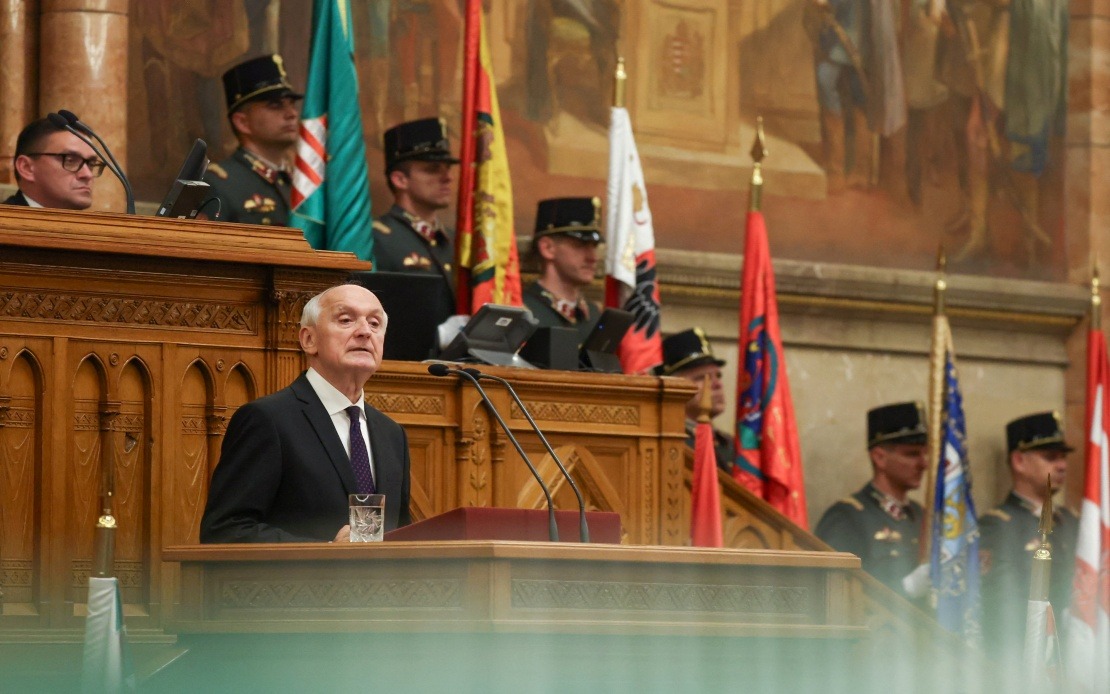
Hungary has a new president in Andras Baka, who assumed office on August 19, 2026, following his election by the Hungarian Parliament on August 11. Prime Minister Peter Magyar announced the transition on social media, offering congratulations to the incoming leader and expressing hopes for his success in steering the Central European nation through its current political complexities.
Baka's path to the presidency reflects a career shaped by judicial service and institutional reform. He previously served as president of Hungary's Supreme Court from 2009 until 2011, when he departed from the position following significant structural changes to the Hungarian judiciary under then-Prime Minister Viktor Orban. Before taking charge of Hungary's highest court, Baka worked at the European Court of Human Rights in Strasbourg, bringing international human rights experience to his judicial background. Following the Supreme Court's transformation, Baka led the Hungarian Curia, the newly established judicial body, from 2012 through 2020.
The transition to Baka's presidency occurs against a backdrop of serious political division within Hungary's parliament. Opposition parties, specifically Fidesz and the Christian Democratic People's Party, declined to participate in the presidential election entirely. Their boycott represented a formal protest against the constitutional amendments that led to the removal of the previous president, Tamas Szujok. This withdrawal signals deep fractures within Hungary's political establishment regarding the legitimacy of the electoral process and the methods used to alter the presidency.
The circumstances surrounding this change warrant attention from observers of Central European politics. The constitutional amendments that enabled Szujok's departure represent a significant shift in how presidential succession operates within Hungary's system of government. When major opposition blocs refuse to participate in elections, it raises questions about the democratic legitimacy of the resulting outcomes, regardless of procedural compliance with formal legislative requirements.
For Malaysia and Southeast Asian readers, Hungary's experience offers instructive parallels and contrasts to regional political dynamics. Like several Southeast Asian nations, Hungary faces tensions between executive authority and judicial independence, though the specific mechanisms differ considerably. The removal of a sitting president through constitutional amendment, rather than through electoral defeat, represents an extreme form of political transition that most established democracies avoid. It reflects broader anxieties about democratic backsliding in Central Europe that international observers have documented extensively.
Baka's judicial background, particularly his experience at the European Court of Human Rights, positions him as someone with exposure to international human rights standards and cross-border judicial cooperation. His appointment may signal Hungary's continued engagement with European legal frameworks, even as the country navigates political turbulence. The timing of his elevation to the presidency, following judicial reforms that he himself navigated as a senior judge, creates an unusual dynamic where someone fundamentally affected by institutional restructuring now holds the ceremonial and symbolic leadership role.
The broader context reveals ongoing tensions between Hungary's government and its opposition regarding the direction of judicial independence and democratic institutions. The Supreme Court reform that prompted Baka's original resignation in 2011 has remained a contentious issue, with critics arguing that it reduced judicial autonomy. His subsequent leadership of the Curia from 2012 to 2020 placed him in a position where he oversaw the reformed judicial structure, making him simultaneously a product of and participant in the very institutional changes that many observers regard as problematic.
Hungary's political environment has grown increasingly polarized since Orban took office, with disputes over judicial independence, media freedom, and constitutional governance dominating national debate. The parliamentary boycott by opposition parties underscores how deeply these divisions run. When major political forces reject participation in constitutional processes, it indicates that disagreements have moved beyond policy disputes into fundamental questions about the legitimacy of the system itself.
Baka's assumption of the presidency represents continuity with Hungary's recent judicial reform trajectory rather than a departure from it. As a figure who navigated and ultimately led within the reformed judicial system, his selection suggests that Hungary's government intends to maintain its approach to institutional restructuring. International observers will likely scrutinize whether his presidency brings any shifts in judicial independence or whether reforms accelerate further.
The implications extend beyond Hungary's borders. The European Union and international human rights organizations have expressed concern about judicial independence in Hungary, and Baka's appointment will inevitably invite renewed scrutiny of these issues. His background working at the Strasbourg court positions him to understand and potentially engage with European standards, though whether that translates into substantive changes remains uncertain.
For regional observers, this transition illustrates how constitutional tools designed for routine institutional functioning can become vehicles for managing deeper political conflicts. Hungary's experience demonstrates that formal procedural compliance does not automatically ensure democratic legitimacy when significant political constituencies reject the underlying political decisions embedded in constitutional amendments. As Southeast Asian nations continue strengthening their democratic institutions, Hungary's experience provides cautionary lessons about the consequences of using constitutional mechanisms to resolve fundamental political disagreements.

