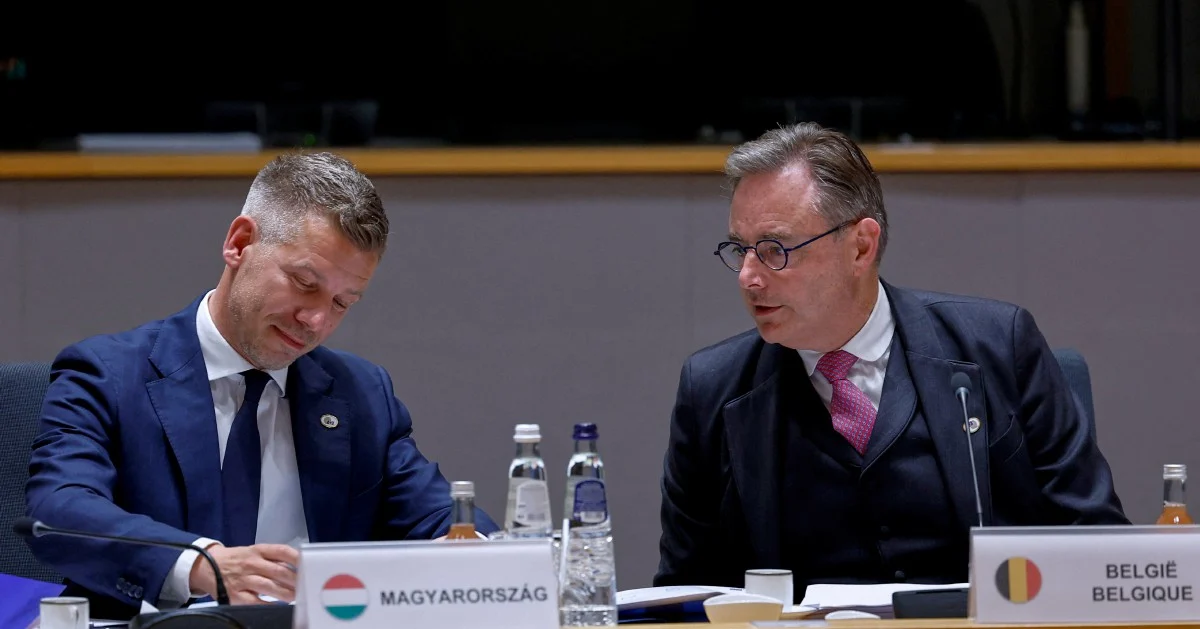
Hungarian lawmakers are set to pass a slate of anti-corruption measures this week as part of Prime Minister Peter Magyar's ambitious reform agenda, a strategic move designed to convince the European Union that Budapest has addressed governance failures sufficiently to warrant the release of substantial financial support currently held in abeyance. The timing of the legislative push signals Magyar's determination to reshape Hungary's political and institutional landscape following his ascent to power, with the anti-graft package serving as both a confidence-building exercise and a concrete demonstration that systemic reforms are underway.
The European Union had frozen access to billions in funds destined for Hungary, citing persistent concerns about judicial independence, transparency in public procurement, and the concentration of state resources in hands close to the previous administration. This financial isolation came as Hungary faced mounting pressure from Brussels over adherence to democratic standards and rule of law principles that underpin the EU's foundational values. The frozen tranche represents a significant portion of Hungary's development resources, making its release critical to the country's economic trajectory and infrastructure investment capacity.
Magyar's ascent represents a pivot in Hungarian politics, breaking with the trajectory established by his predecessor and signaling openness to the institutional safeguards that the EU has repeatedly demanded. His reform platform explicitly targets corruption and governance deficiencies, framing these not merely as technical adjustments but as fundamental reshaping of how state power operates. The anti-graft measures under consideration reflect Brussels' core grievances and appear calibrated to address specific mechanisms through which previous administrations had insulated political allies from accountability.
The legislative package carries substantial political risk for Magyar, as comprehensive anti-corruption reform inevitably attracts resistance from entrenched interests who benefited from opaque governance structures. Previous attempts at meaningful institutional reform in Hungary have foundered when powerful constituencies mobilized against measures threatening their advantages. The fact that Magyar is pushing forward despite these dynamics suggests either robust parliamentary backing or a calculation that the electoral and international benefits of securing EU funding outweigh the domestic opposition he will face.
For Southeast Asian observers monitoring governance trends across regions, Hungary's situation offers instructive parallels regarding how international financial pressure can incentivize domestic reform, but also how superficial compliance can masquerade as genuine institutional change. The EU's approach—linking financial resources to measurable governance improvements—mirrors mechanisms increasingly employed by development organizations and donor countries worldwide. Whether Hungarian reforms prove substantive or performative will carry implications for how international institutions structure conditionality in future engagements with member states struggling with corruption.
The scale of withheld EU funding at stake underscores the financial leverage that Brussels exercises over member states, particularly those whose economies remain heavily dependent on European transfers for capital projects and social spending. For Hungary specifically, the unfrozen funds would enable advancement of infrastructure development, environmental remediation, and skills training initiatives currently stalled. The economic cost of extended non-compliance extends beyond budgetary constraints to investor confidence and competitiveness concerns as neighboring states forge ahead with development.
Magyar's reform drive also occurs within a regional context where Hungary has occupied an increasingly isolated position within the EU following years of friction with Brussels. The country's previous stance on judicial independence and media freedom drew criticism not only from EU institutions but from democratic partner nations across Europe. A successful passage and implementation of anti-corruption measures could facilitate Hungary's gradual reintegration into the European mainstream, potentially reshaping its diplomatic positioning within the bloc.
The mechanism through which Budapest hopes to unlock funds reveals the EU's sophisticated approach to institutional enforcement. Rather than imposing reforms through external pressure alone, Brussels has structured incentives that make compliance domestically advantageous by directly linking state financial capacity to governance improvements. This approach aligns the interests of reform-minded domestic constituencies with external requirements, creating coalition opportunities that pure conditionality might not generate.
Implementation fidelity will ultimately determine whether the legislative measures produce meaningful institutional change. Hungarian civil society organizations and international observers have flagged the importance of monitoring not merely the passage of laws but their enforcement, the independence of oversight bodies, and the willingness of authorities to apply standards uniformly across political and economic elites. Previous Hungarian governance disputes have sometimes hinged less on the legal framework than on its selective application in ways that preserved political protection for favored actors.
The Hungarian parliament's expected approval this week marks a potential inflection point in the country's EU relationship, but observers caution that legal reforms represent merely the opening chapter in what must be an extended demonstration of institutional change. The EU has indicated readiness to release funds contingent on sustained progress and verifiable reforms, suggesting that the financial unlock will likely occur incrementally rather than as a single transaction. For Budapest, this means that the anti-corruption measures passed this week must form the foundation for consistent implementation and institutional adaptation over coming months and years.