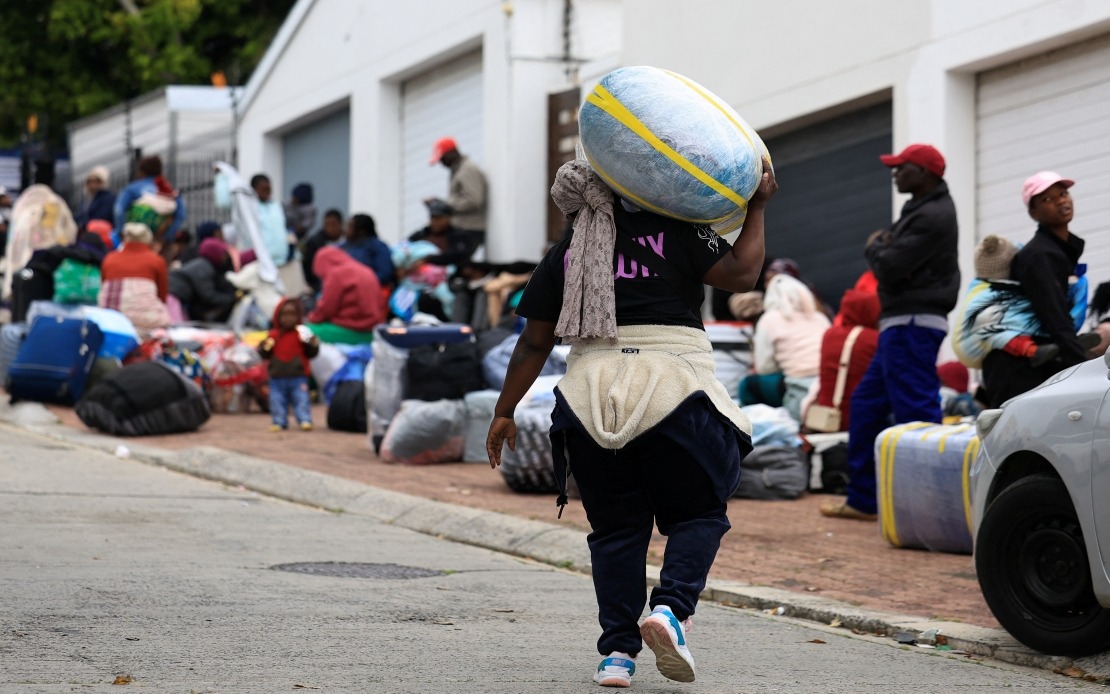
South African immigration authorities commenced a large-scale relocation operation on Saturday, transferring hundreds of Zimbabwean nationals and some Malawian citizens from the Epping processing centre in Cape Town to Musina in Limpopo Province, where additional processing and repatriation arrangements await them. The movement marks a significant administrative response to mounting pressure from anti-immigrant sentiment that has destabilised the Western Cape region in recent weeks.
The buses departing the Epping facility were headed to what authorities described as a centralised processing hub in Musina, where thousands of other foreign nationals were already queued for documentation processing and eventual repatriation to their respective home countries. Government officials simultaneously encouraged any remaining applicants still in Cape Town to relocate voluntarily to the Limpopo site rather than waiting for official transfer, effectively accelerating the consolidation of foreign nationals into a single processing location away from the volatile Cape Town environment.
Humanitarian conditions at the Epping centre have deteriorated markedly, with aid organisations reporting that residents lack adequate food supplies, shelter facilities, and basic sanitation infrastructure. Medical concerns have also emerged, as aid workers documented cases of diarrhoea and influenza-like symptoms spreading among the concentrated population, raising serious public health questions about the adequacy of facilities designed to accommodate such large numbers on a temporary basis.
The processing delays have created an overflow crisis, with approximately 400 additional arrivals accumulating overnight in the immediate vicinity of the centre after being turned away as staff prepared to close the facility. These newly arrived migrants remain stranded with minimal access to services, exemplifying the chaotic conditions surrounding the relocation effort. The bottleneck reflects broader systemic challenges in South Africa's immigration and processing infrastructure, which has struggled to manage the surge in applications and requests for repatriation.
Testimonies from those affected underscore the severe human toll of the crisis. Zimbabwean national Yekuai Mokoena, who had sought refuge at the site together with her two children after previously spending multiple nights outside the Zimbabwean consulate building in Cape Town, offered a bleak assessment of her circumstances, describing the situation in starkly simple terms as fundamentally untenable. Her account reflects the desperation facing thousands of migrants caught between their desire to return home and the logistical constraints of the repatriation system.
The current crisis originated approximately three weeks earlier when roughly 3,000 migrants converged outside the Zimbabwean consulate in Cape Town, having fled violent confrontations tied to anti-immigrant protests spreading across the region. The psychological pressure intensified when activist groups announced an unofficial June 30 deadline demanding that undocumented foreign nationals depart South Africa voluntarily, threatening unspecified consequences for those who remained. This manufactured deadline catalysed panic among vulnerable populations and prompted authorities to relocate the gathered crowds to the temporary Epping facility to prevent further street violence and humanitarian deterioration.
The broader context reveals escalating xenophobic tensions across South Africa that disproportionately affect African migrants from neighbouring nations. Zimbabwe, in particular, has experienced sustained out-migration driven by economic collapse, political instability, and currency crises that have made South African employment and commerce attractive to desperate workers and their families. The anti-immigrant movement, while articulating concerns about job competition and resource allocation, has increasingly adopted coercive tactics that violate international humanitarian norms and South Africa's constitutional protections for vulnerable populations.
For Malaysian and Southeast Asian observers, the Cape Town crisis illustrates the destabilising consequences when governments fail to regulate anti-immigrant rhetoric and allow informal vigilante movements to set de facto policy boundaries. The precedent of activist groups successfully imposing repatriation deadlines through threat of violence creates dangerous incentives for similar movements elsewhere. In Southeast Asia, where intra-regional migration remains economically vital yet politically contentious, the South African example demonstrates how xenophobic sentiment can rapidly escalate from rhetorical opposition to orchestrated expulsions affecting hundreds of thousands of people.
The logistical consolidation in Musina represents an attempt to remove the immigrant population from public view in Cape Town's urban areas, potentially reducing immediate tensions but creating new pressures at the Limpopo site. The facility in Musina was already accommodating thousands of foreign nationals, and the arrival of additional contingents from Cape Town will strain already stretched resources and processing capacity. Observers question whether the centralised approach will accelerate repatriation timelines or simply concentrate vulnerable populations in a location further from media scrutiny and humanitarian organisation oversight.
South African authorities have not issued official timelines for completing the relocation or commencing repatriation flights, leaving thousands in extended limbo regarding their eventual return home. Zimbabwean consular officials have indicated they are coordinating with the Department of Home Affairs on documentation and scheduling, but progress has been incremental. The absence of transparent communication about next steps perpetuates anxiety and uncertainty among the relocated populations, many of whom have exhausted savings and are dependent entirely on humanitarian assistance for basic survival.
The humanitarian dimension extends beyond immediate provisioning to encompass psychological trauma inflicted by weeks of threatened violence and forced displacement. Many of those relocated spent extended periods sleeping outdoors in winter conditions, living in fear of mob violence, and navigating bureaucratic processes they only partially understand. Aid workers have documented elevated stress levels and anxiety disorders among the population, particularly among children who witnessed or experienced the anti-immigrant violence that triggered the crisis.
Regional implications warrant close attention from ASEAN governments managing their own migration challenges. The South African experience demonstrates that inadequate regulation of xenophobic movements can create humanitarian catastrophes affecting hundreds of thousands and destabilise bilateral relationships with sending countries. For Zimbabwe, already struggling with severe economic crisis and brain drain, the forced repatriation of citizens through coercive means rather than orderly managed migration channels risks further destabilising an already fragile economy and intensifying domestic political pressures.

